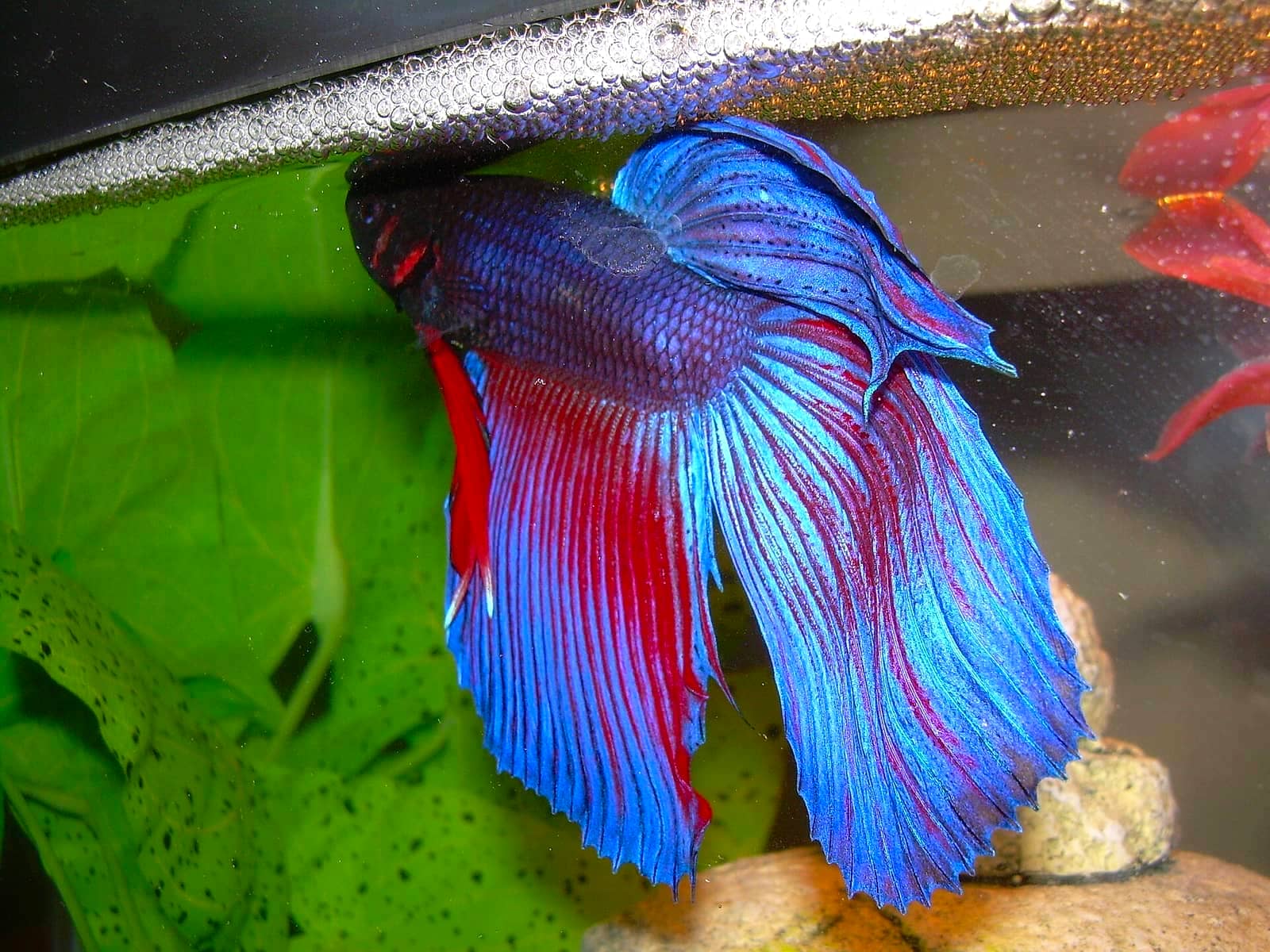
Breeding Betta splendens takes about five months from the day you pick a pair to the day the first juveniles are jarred and sellable. The process has five phases: pair selection, 14 days of conditioning, a controlled spawning in a dedicated tank, removal of parents and fry raising for 30 days, and juvenile grow-out for another 10 weeks. A single successful spawn produces 100 to 500 fry, a bioload problem and a small ethical weight; most hobbyists raise 30 to 70% of hatched fry to juvenile stage, and adult males must be individually housed by week 10.
This page is the summary. Each phase has its own article with the full detail.
One honest check before you start: should you breed the betta you already have? Usually not. Most pet-store bettas are unlineaged farm crosses, so their fry won’t breed true to any predictable color or fin pattern. Breeding also isn’t a weekend project; it’s 30 to 50 small containers, live food cultures, and daily water changes for months. Worth doing if you can commit to the project for six months and already have homes lined up for the fry you don’t keep. Skip it if you just want more bettas.
Phase 1, pair selection
Start with a pair that have complementary traits and documented lineage. A pet-store betta and an unknown female produces unpredictable fry. For a project that matters, work with named breeders or source from IBC-affiliated lines.
Considerations:
- Fin type. Crossing halfmoon with plakat produces mixed fin ratios you have to cull.
- Color genetics. See the genetics guide for the color inheritance matrix.
- Age. Both fish ideally 6 to 12 months. Younger may not spawn reliably. Older males have reduced fertility.
- Condition. Pair should both be visibly healthy, full-finned, active.
Full detail: pair selection.
Phase 2, conditioning (14 days)
Both fish separated but visible to each other through a tank divider or sight line. Fed heavily on live or frozen protein (bloodworms, brine shrimp, daphnia) 2-3 times daily. Water changes every other day to keep parameters excellent. The female fills with eggs; the male builds practice bubble nests. Both fish become ready.
Full detail: conditioning.
Phase 3, spawning
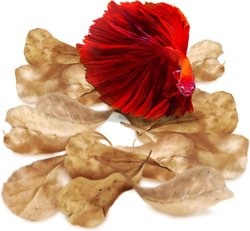
Spawning tank: 10-gallon long, 4 to 6 inches of water, bare-bottom or thin substrate, styrofoam square or indian almond leaf at the surface for nest construction, hiding places (plants, ceramic tubes) for the female, heater at 27-28 °C.
Add the male. Let him settle 24 hours and build a nest. Add the female in a clear chimney (inverted bottle with the bottom removed) so both can see each other but not touch. 4 to 24 hours for the pair to signal readiness. Release the female.
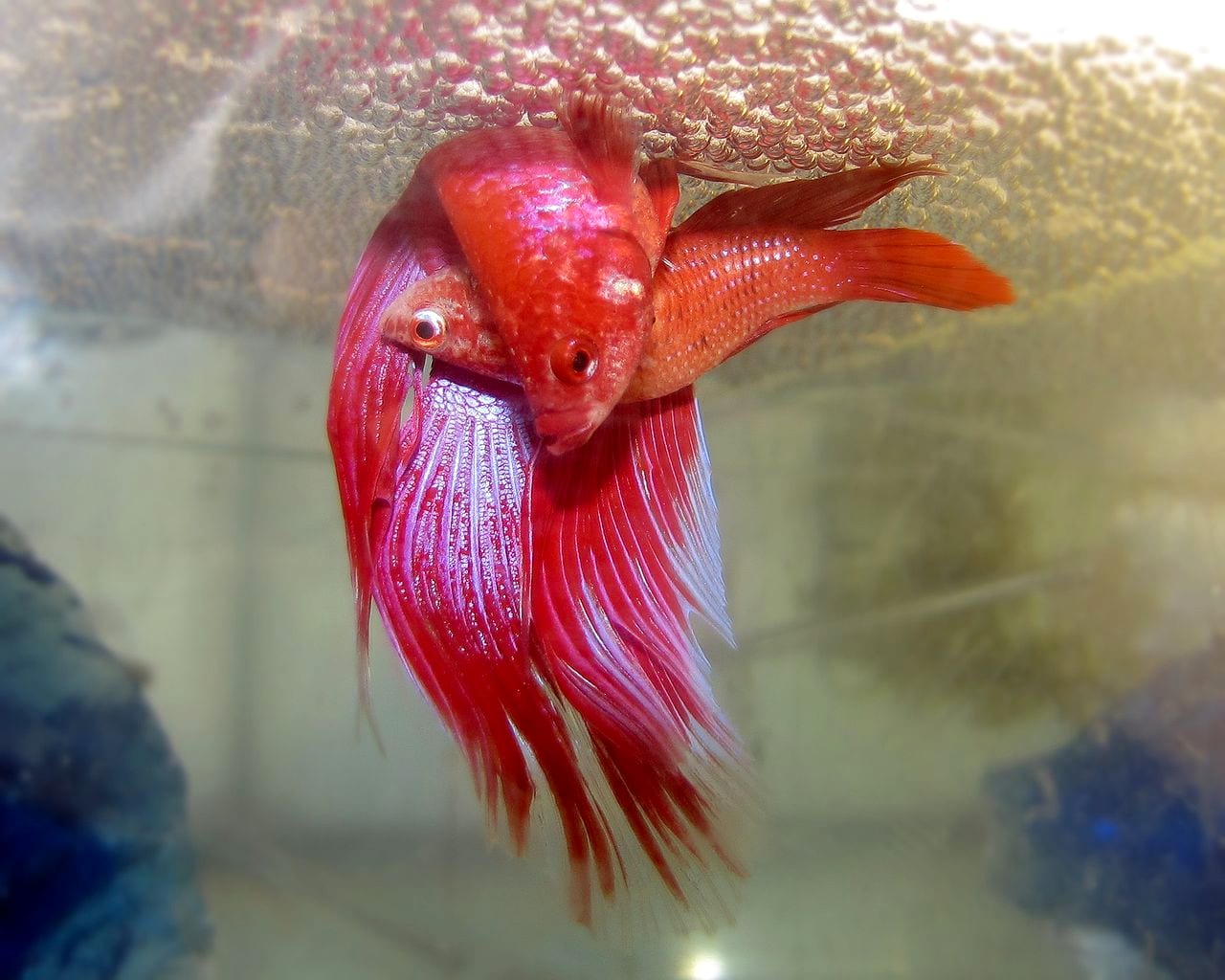
Courtship: 15 minutes to 6 hours of flaring, chasing, nest-building adjustments. Spawning: the male wraps around the female, she releases 5 to 40 eggs, he fertilizes and collects them in the nest. Wrapping repeats 10 to 50 times over 1 to 3 hours. Total eggs: 100 to 700. A first-time pair typically brings 100 to 300 of those eggs to free-swimming fry; a mature, well-conditioned pair can push 300 to 500.
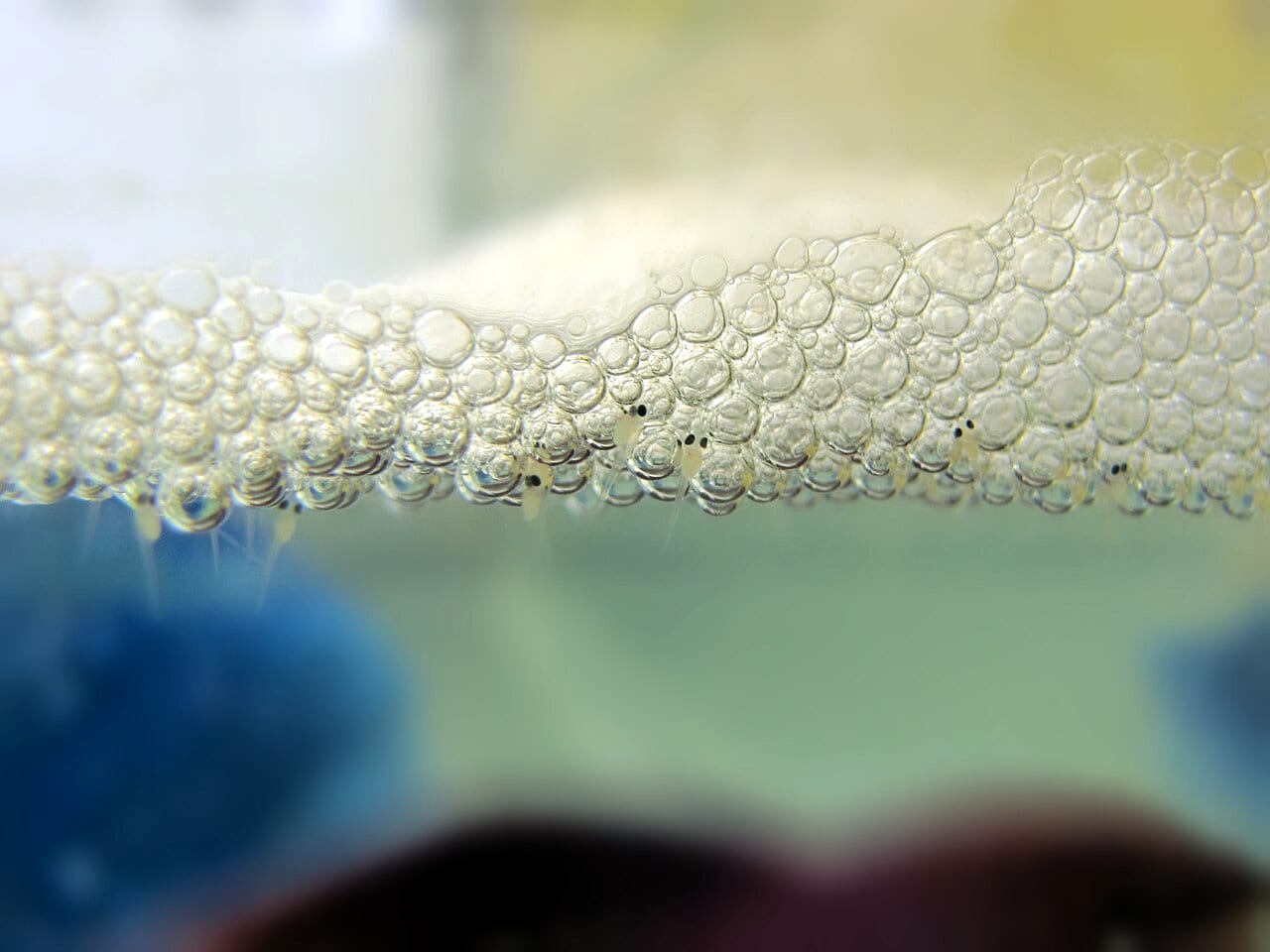
Remove the female immediately after spawning. The male defends the nest and will damage her. The male tends the nest for 36 to 48 hours until eggs hatch, then 3 to 5 more days until fry are free-swimming.
Full detail: spawning setup and spawning methods.
Key supplies
The three consumables you’ll go through fastest in a breeding project:

Full equipment breakdown in the breeding gear guide.
Phase 4, fry raising (day 1 to day 30)
Day 1 to 2: fertilized eggs in the nest. Male tends.
Day 3: hatch. Fry hang from the nest, tail-down, absorbing yolk sac. No food.
Day 4 to 5: free swimming begins. Remove the male. First food: infusoria or vinegar eels, 3 to 4 times per day. Fry too small for baby brine shrimp (BBS) initially.
Day 5 to 10: transition to BBS (freshly hatched Artemia). Feed 3 to 5 times per day.
Day 10 to 30: continue BBS plus microworms. Small daily water changes (10% with siphon through airline tubing). Fry reach 10 to 15 mm.
Full detail: fry: first 30 days.
Phase 5, juvenile grow-out (day 30 to 120)
Transition to crushed pellets around week 6. Growth accelerates. By week 8 to 10, males become visually distinguishable by longer fin growth and more vivid color, and aggression increases.
Jarring. By 8 to 12 weeks, males must be separated; they start fighting once color and aggression come in fully. Standard practice: plastic shoebox bins (64 oz to 1 gallon), often arranged in racks with a central sump system, or individual jars. Females can stay together in a sorority tank with plenty of cover, but keep watching for bullying.
By month 4 to 5, juveniles reach sellable size and color. Rejected fish (fin deformities, color failures, spinal issues) are culled. See culling ethics for the hard conversation about culling.
Full detail: the breeding gear guide for the hardware side.
The genetics summary
Color in bettas derives from four pigment layers (melanophores, erythrophores, xanthophores, iridophores) interacting with pattern genes. Basic inheritance:
- Extended red (Cr) over cambodian (c): red body over yellow wash.
- Black melano (bl/bl): infertile females. A breeder’s dead-end; cross to bl/+ carriers.
- Marble (Mb): unstable pattern, polygenic and mechanistically unresolved. Mapped in PubMed 36129976, 2022, which states the molecular basis has not been investigated.
- Dragon scale: iridophore intensification producing scale-outlined metallic look.
- Double tail (DT): homozygous produces split caudal; single allele produces broader dorsal and deeper body.
Full detail: the genetics guide and black melano.
The practical timeline
| Day | Activity |
|---|---|
| -14 | Start conditioning |
| 0 | Introduce pair to spawning tank |
| 1-3 | Spawn |
| 5 | Remove male, fry free-swim |
| 5-10 | Feed infusoria, transition to BBS |
| 30 | Reduce BBS, start microworms + crushed pellets |
| 60 | Transition fully to crushed pellets |
| 70-90 | Jar males |
| 120-150 | Juveniles ready for sale/show |
The hard truths
- Most fry die. Even in good conditions, 30 to 50% of hatched fry don’t make it to juvenile. This is normal biology, not a failure.
- You will cull. Some fish will have deformities, will not thrive, or will be low-quality for your project. Ethical culling (humane euthanasia, not dumping live) is part of the hobby. See culling ethics.
- Space becomes a problem. A successful spawn of 200 males needs 200 jars by week 10. Most breeders reduce to 30 to 50 high-quality fish through early sorting.
- Females aren’t easier. A female sorority of 30 from one spawn is barely manageable, and bullied fish appear.
- It’s a commitment. Four to five months of daily water changes, live food cultures, and maintenance.
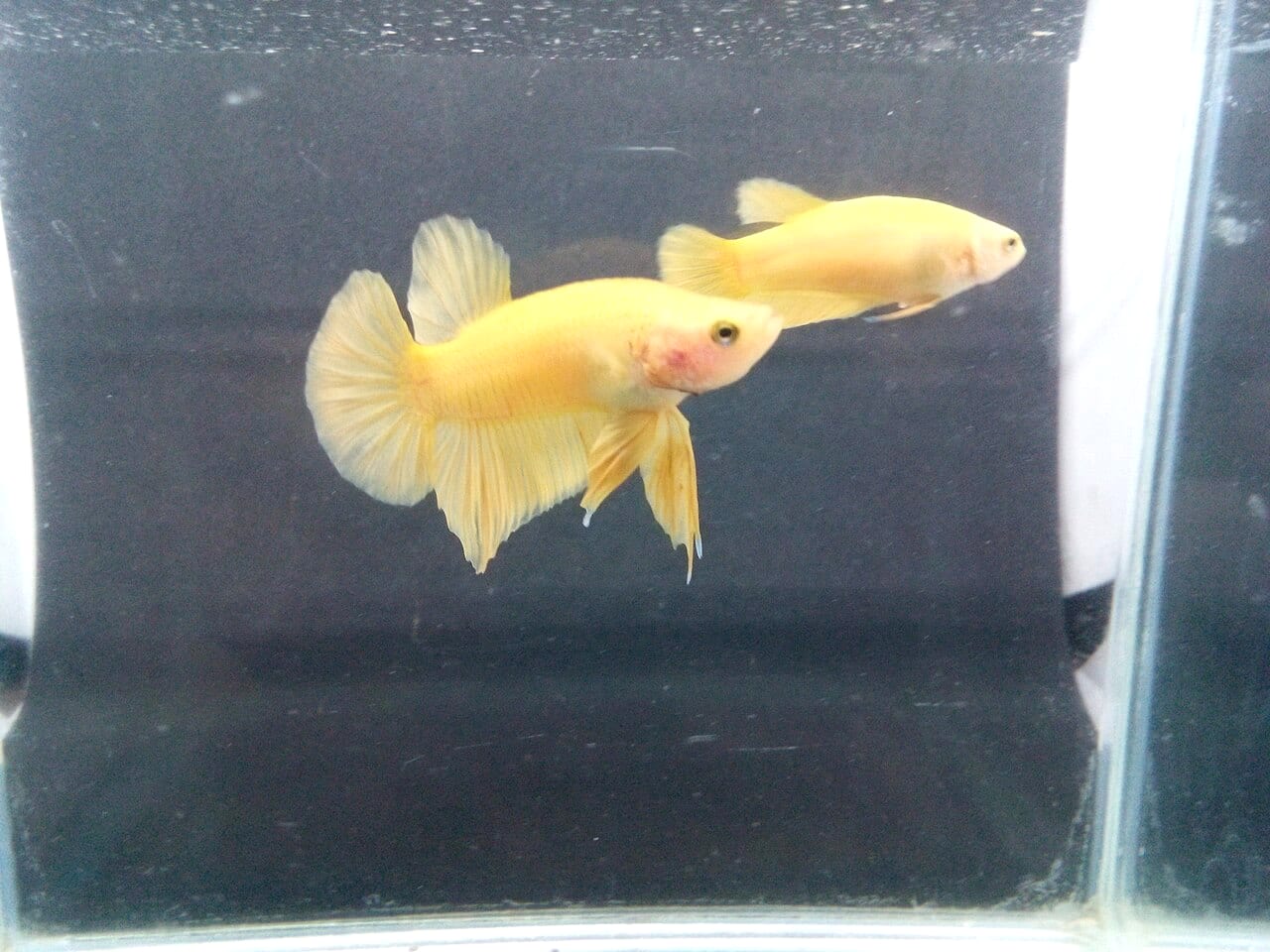
- It won’t pay for itself. Hobbyist breeders sell quality juveniles for $15 to $40 each; a good 100-fry spawn might net $300 to $1,000 total, minus food, equipment, and shipping. Treat it as a hobby, not a side income.
Why do it anyway
Breeding bettas connects you to a 600-year lineage of Thai fighter-fish husbandry and 120 years of Western show breeding. The 2022 genetic-architecture paper (PubMed 36129976) maps the pigment genes working in your hands. The 2020 chromosome assembly (PubMed 32385046) is the genetic reference your crosses work against. When a halfmoon color you selected for appears in a fry at week 8, it’s not an accident; it’s three generations of patient selection finally paying off.
If that sounds worth the work, start with pair selection.