A tank divider splits one aquarium into separate compartments, usually so two or more male bettas can be housed in a single footprint without physical contact. It’s a real tool with a real, narrow use case: breeders who need several males on hand at once, keepers whose collection has outgrown their shelf space, or a temporary setup while a second tank cycles. It’s also a tool this site is genuinely cautious about, and this page says so plainly rather than selling dividers as a clean substitute for separate tanks.
This page has affiliate links. See our affiliate disclosure.
Why divide instead of running separate tanks
The honest reason is space, not fish welfare. A 10-gallon tank with a center divider takes up one spot on a shelf, needs one stand rated for one tank’s weight, and can share a footprint that two standalone 5-gallon tanks can’t match in a cramped fishroom or apartment. Seriously Fish’s Betta splendens profile is explicit that this species “does not support the practice of keeping this species in tiny aquaria,” and a 45×30cm base (roughly a standard 10-gallon footprint) is its floor for one adult male. A divider doesn’t lower that floor. It lets you fit two of those floors into one piece of furniture.
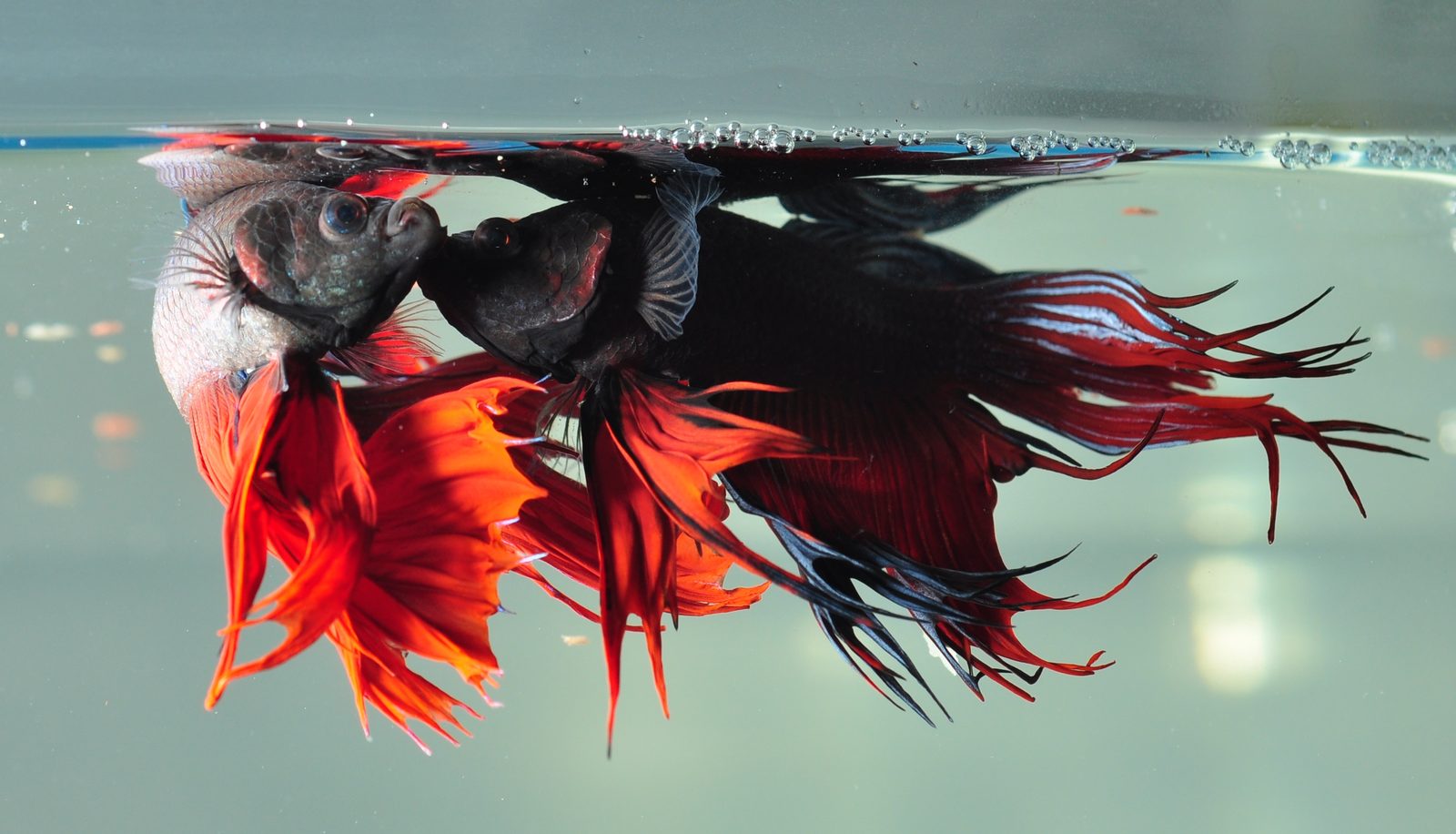
Breeders use dividers for a second reason: conditioning. A male placed where he can briefly see another male, or a female, through a divider will flare and posture, which is part of the standard pre-spawn conditioning routine before a pair is introduced (see the 14-day conditioning protocol). Some breeders also use a divider with a small viewing gap to exercise a show betta’s flare for a few minutes at a time. Both uses are intentional, brief, and supervised, which is a different thing from two bettas living permanently in sight of each other.
Can bettas see each other through a divider, and is that a problem?
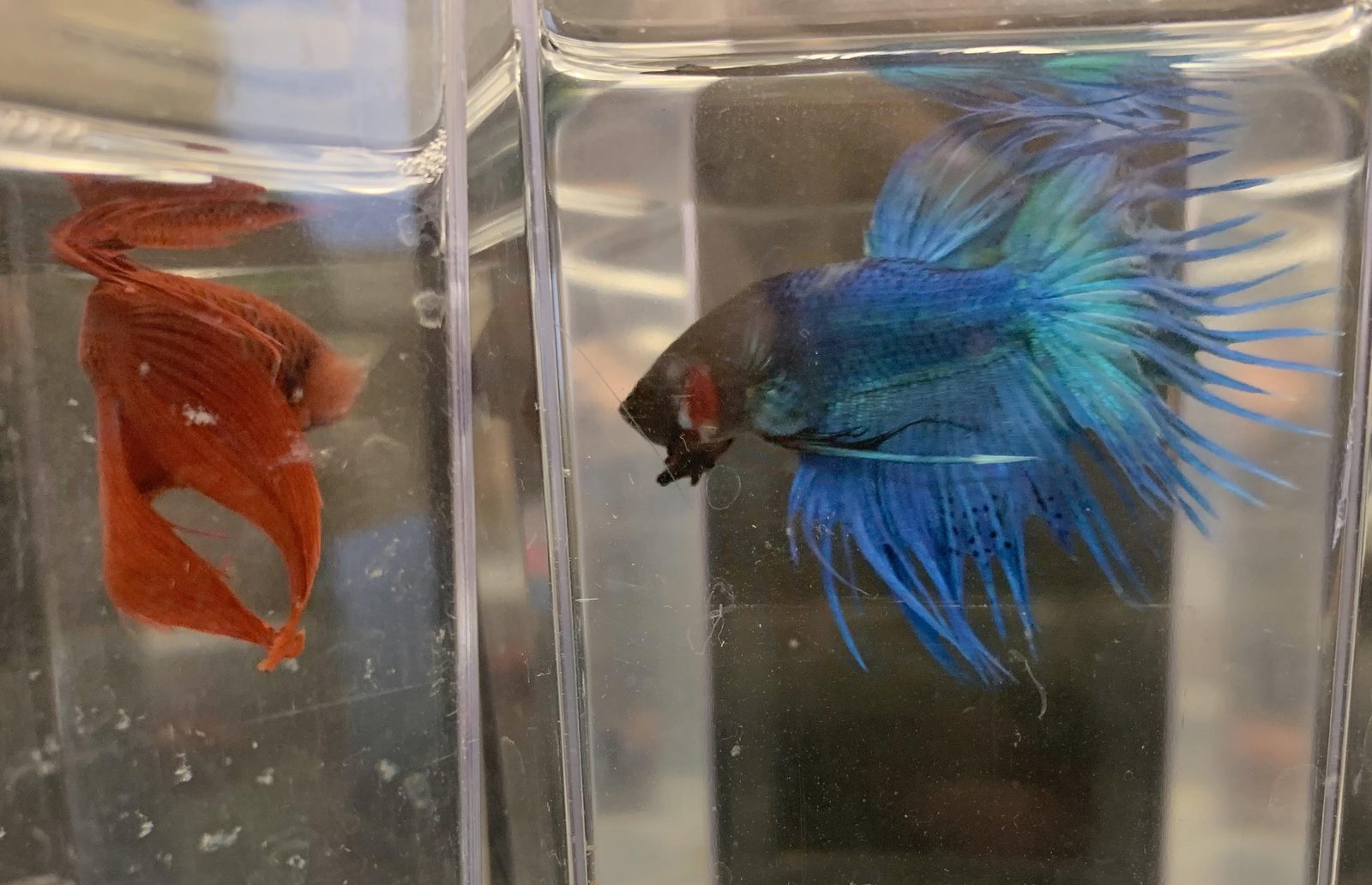
Through mesh or clear acrylic, yes, easily, and it can absolutely be a problem. bettafish.org’s divided-tank guide puts it plainly: “If visibility between each section is not controlled, one fish (or both) could become extremely agitated and aggressive,” and describes the failure case as “non-stop flaring, refusal to eat, and attacks at the divider” that can leave a betta so stressed it eventually dies. That’s not a hypothetical outlier; it’s the documented reason experienced keepers treat divider opacity as non-negotiable rather than optional.
The fix isn’t the divider material alone. It’s the divider plus everything else that blocks the sightline: an opaque or dark-colored panel, and then plants and decor stacked against both faces of it so there’s no clean window between the two fish. A single sheet of clear acrylic “divider,” by itself, does close to nothing for visual stress even though it stops physical contact. Bettas are highly visual, and a rival held permanently in view is a different animal than one seen for sixty seconds during a supervised flare session (see stress signs to watch for).
Opinion in the hobby is genuinely split on how far this gets you. Some long-time keepers run divided setups for years without visible fin damage or chronic stress once the sightline is properly killed. Others, including this site’s own tank mates guidance, hold that a divider stresses both fish even with opaque material, and that separate tanks with zero sightline are the only real answer when a second tank is a realistic option. Both positions come from people who’ve kept a lot of bettas. If you have the space and budget for two tanks, that’s the safer default. A divider is the compromise for when you don’t.
Mesh or solid: the material tradeoff
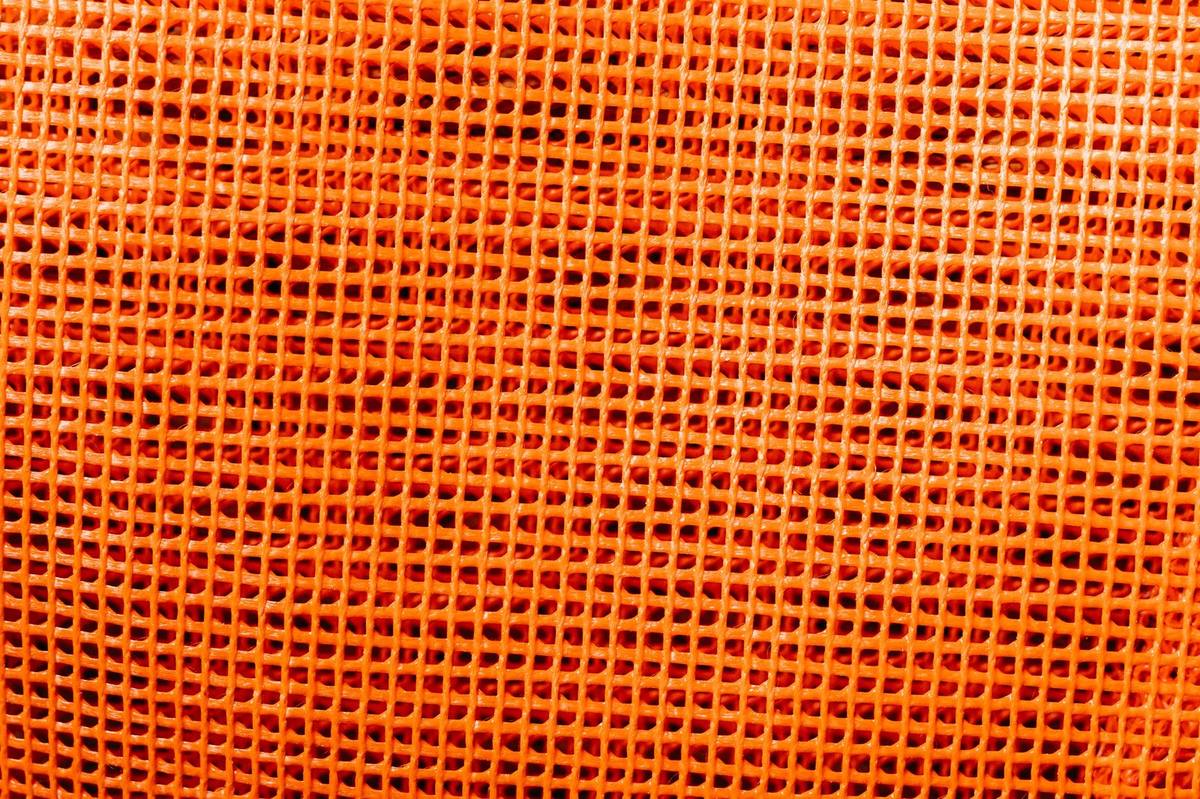
Craft or plastic canvas mesh. Sold in craft stores for a dollar or two a sheet, easy to cut with scissors, and rigid enough to hold its shape once trimmed to size. Water and heat pass through it freely, which means a single filter and heater can often serve both sides if the mesh spans the full width of the tank. The catch: it’s usually see-through or lightly tinted, so it does nothing for the visibility problem above unless doubled up, chosen in a dark color, or backed with plants. Every cut edge has to be checked for burrs; a snagged fin against jagged mesh is a routine injury in DIY builds. bettafish.org recommends finishing edges with binder-report splines or a bead of aquarium silicone so nothing catches a fin on the way past.
Egg crate (plastic light-diffuser grid). The same rigid grid sold for drop-ceiling light fixtures, repurposed as an aquarium divider. It’s thicker and more rigid than craft mesh and comes in much larger sheets, so it’s the practical choice for anything wider than a standard 10-gallon. Its half-inch-square cells are too large to contain a betta safely on their own; egg crate is a structural divider, not a fish-safe one, and needs a layer of fine mesh zip-tied or glued to one face before it goes in the tank.
Solid acrylic or glass. The only material that actually functions as a real visual barrier as well as a physical one, provided it’s opaque or a dark solid color. Clear acrylic defeats the purpose entirely: it stops the bite, not the stare. bettafish.org also notes a durability wrinkle worth knowing before you build one yourself: plexiglass dividers held in with aquarium silicone can start to detach from the glass within about six months, because silicone bonds far better to glass than it does to acrylic. A commercial divider designed to wedge under the tank’s rim, rather than one silicone-bonded in place, sidesteps that failure mode. A fully solid divider also blocks water exchange between sides, which pushes flow and heat into a problem you have to solve deliberately (next section), not one that solves itself.
What’s the minimum size per divided section?
The same floor as an undivided tank, not a fraction of it. IBC husbandry guidance and Seriously Fish both treat roughly 5 gallons, long and shallow rather than tall, as the minimum for one adult male betta, divided tank or not. The community convention that’s held up across breeder forums and care guides alike is straightforward: a 10-gallon becomes two 5-gallon sections, a 20-gallon long becomes up to four 5-gallon sections, and so on. Dividing a tank doesn’t shrink the requirement per fish; it just lets you meet that requirement twice (or four times) in one piece of glass.
That math has a hard floor. A 5-gallon tank split in half gives each betta 2.5 gallons, well under the accepted minimum, and a handful of divider walls thick, that’s tighter still once you subtract the divider’s own footprint. Don’t divide anything smaller than 10 gallons. If the only tank available is a 5-gallon, it houses one betta, full stop; see best 5-gallon tanks if that’s the build you’re planning instead.
Do you need a separate filter and heater per section?
Usually, yes, or a shared design built specifically to avoid the problem. A mesh divider that spans the tank and lets water move freely can, in principle, run on one filter and one heater. In practice it rarely works out evenly: a single hang-on-back filter mounted on one side pulls flow and turnover toward that side, and the far compartment slowly accumulates waste and drifts in temperature while the near one gets the current. That imbalance shows up over weeks, not days, which is exactly why it gets missed until water quality is already off in the neglected half.
Two fixes hold up better. The first is a small sponge filter in each compartment; sponge filters are already the standard low-flow recommendation for bettas generally (see best filters), they’re inexpensive enough to run one per side without much added cost, and each one filters and oxygenates its own water independently of what’s happening on the other side of the divider. The second is a shared center compartment, roughly one to two inches wide, sandwiched between two mesh (not solid) dividers: the heater and filter both sit in that center strip, and water gently exchanges with both betta compartments through the mesh on either side. That design gets you one heater and one filter instead of two of each, while still keeping each betta’s water moving.
A fully solid divider removes the shared-water option entirely. Each side needs its own heater and its own filtration, sized the same as it would be for a standalone 5-gallon tank (see best heaters for wattage by tank size). Budget for the duplicate equipment before buying a solid divider, not after.
Real dividers and materials worth buying
Plastic egg crate divider set. Sold as a multi-pack of rigid grid panels with sucker clips for mounting. Buy this if you’re building a wider divider (20-gallon long and up) and are willing to add a fine-mesh liner yourself, since the stock half-inch cells are too large to trust alone with a betta’s fins.
Check egg crate dividers on Amazon Affiliate link. See our disclosure.
Lifewithpets 10-gallon divider. A pre-made solid, opaque panel sized to wedge under the rim of a standard 10-gallon without suction cups. This is the closest thing to a true visual-plus-physical barrier you can buy without cutting acrylic yourself. Pair it with a heater and filter for each side, since it doesn’t allow shared flow.
Check solid dividers on Amazon Affiliate link. See our disclosure.
Adjustable suction-cup mesh divider. Mesh panel on a slotted frame that adjusts to fit a range of tank widths, mounted with suction cups top and bottom. Useful for an odd-sized or secondhand tank where a fixed-width panel won’t fit, or for a temporary divide (conditioning, a brief hospital separation) you plan to remove later. Because it’s mesh, treat it like the craft-mesh option above: opaque coloring plus dense planting, not a bare screen.
Check adjustable dividers on Amazon Affiliate link. See our disclosure.
Installing a divider without it becoming a hazard
- Measure before you cut. The panel needs to fit snugly under the tank’s rim and press against both side walls without bowing the glass. Loose ends, especially at the corners, are the weak point where a determined betta pushes through.
- Trim every edge. Mesh and cut acrylic both leave burrs. Run a finger along every cut line; anything that catches gets sanded, filed, or capped with a binder spline before the divider goes anywhere near the tank.
- Anchor it to the substrate. Push gravel or sand against both sides of the divider once it’s in place. This stabilizes it and closes the gap at the bottom where a betta could otherwise squeeze under.
- Keep the water level below the divider’s top edge. Bettas are strong jumpers, and a divider that doesn’t clear the waterline by an inch or two turns into a launch ramp instead of a wall.
- Cover the sightline on both faces, not just one. Tall plants, driftwood, or floating cover breaks the direct line of sight without blocking flow.
- Quarantine before introducing a new betta to either side. A divided tank still shares water on any design that isn’t fully solid on both faces, so a sick or parasite-carrying newcomer can infect the established fish through the divider. Run a full quarantine period first regardless of the setup.
When not to divide
Skip a divider and get a second tank if the total volume is under 10 gallons, if either fish shows non-stop flaring, refusal to eat, or fresh fin damage at the divider after the first week, or if you simply have the room and budget for two standalone setups. A divider is a real, useful compromise for the specific situations where floor space is genuinely the limiting factor. It isn’t an upgrade over separate tanks, and this site won’t pretend otherwise just to sell a product.
Related on this site
- Betta Tank Mates: What Actually Works and What Doesn’t
- Betta Tank Setup: A 5-Gallon Minimum Build, Step by Step
- Betta Quarantine Tank: Setup, Duration, and What to Watch For
- Betta Breeding Conditioning: The 14-Day Protocol
- Best Filters for Betta Tanks in 2026
- Best Betta Heaters in 2026
- Best 5-Gallon Betta Tanks in 2026