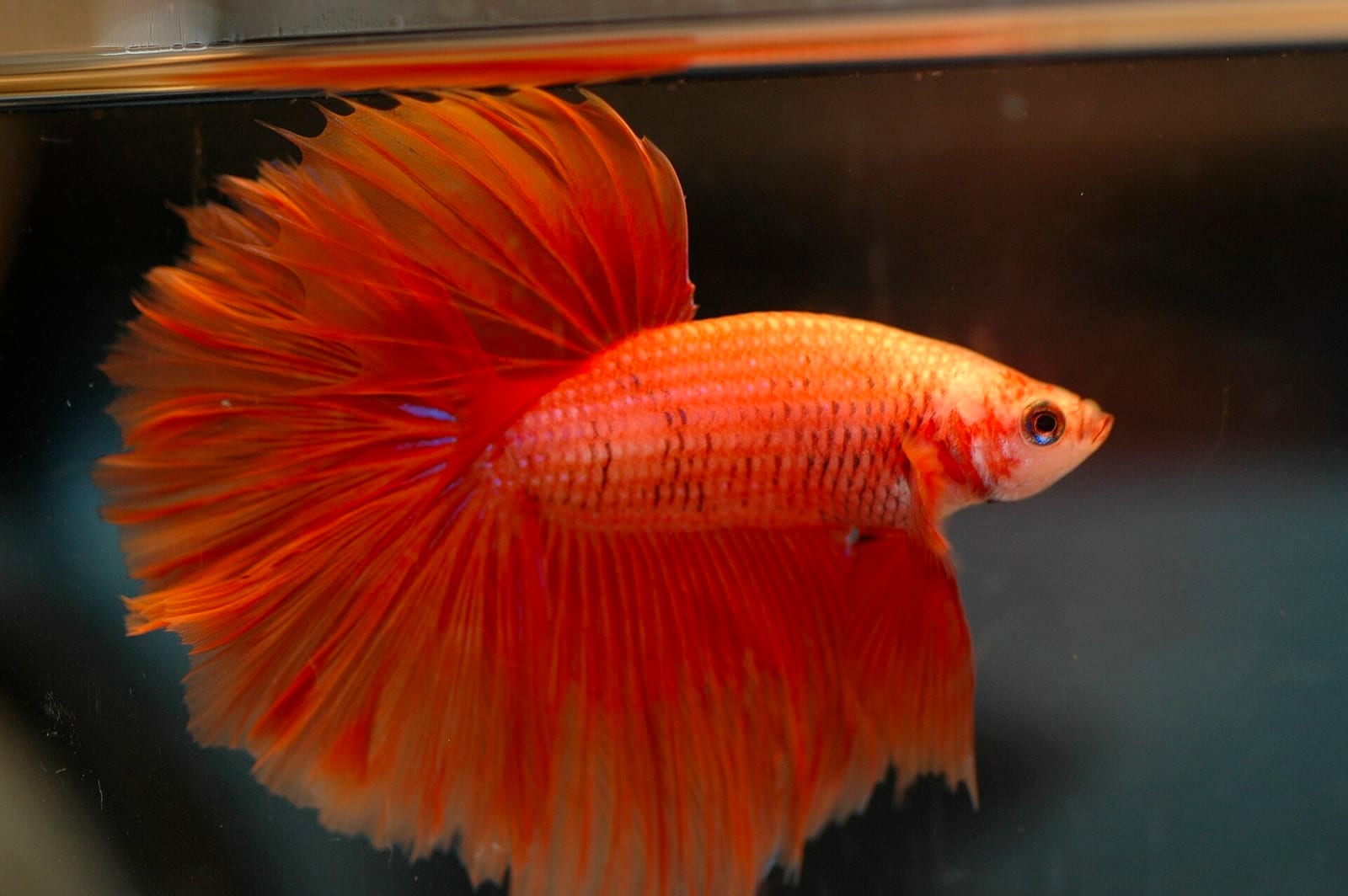
A single male Betta splendens needs at minimum a 19-liter (5-gallon) heated, filtered, cycled aquarium. Stable temperature 25 to 27 °C, ammonia zero, nitrite zero, nitrate under 20 ppm. Feed a varied diet once a day, fast one day a week. Almost every betta death in the hobby is a water-quality failure, not a disease.
That’s the summary. The rest of this page is the detail, with citations you can check.
Why the pet-store bowl is the problem
A 500 ml cup is a stress chamber. Ammonia from gill waste rises past 2 ppm within hours in a container that small, and bettas don’t have a neurological off-switch for that kind of chronic toxicity. They tolerate it until they don’t. The slow-motion death looks like old age, but it’s nitrogenous poisoning on a two-year timeline.
The hobby repeats a tired half-truth: “they live in puddles in the wild.” Wild Betta splendens are found in rice paddies, canals, and roadside ditches that are shallow but measured in cubic meters of water volume, with constant exchange, dense plant cover, and an actual food web. The 2022 Aceh Betta diversity survey (Taylor & Francis) found wild bettas in stretches of water up to 30 m long with flowing connections to larger drainage networks. The “puddle” in August becomes a half-hectare habitat in September when the monsoon returns. A teacup is not a puddle.
Five gallons is the floor because it buys you thermal stability, dilution of ammonia spikes, room for plants, and a water volume where a small filter can actually establish nitrifying bacteria. Ten gallons is better. Twenty is luxurious, not wasteful.
The six decisions that matter
Everything else is downstream of these six. Get them right and you have a fish that lives four years. Get any one wrong and you have a fish that dies at fourteen months from “nothing we could figure out.”
1. Tank size
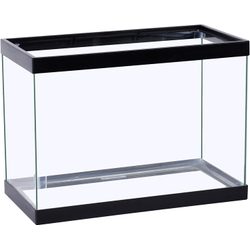
5 US gallons (19 L) minimum for a single male. The International Betta Congress and most modern veterinary references treat that number as a floor, not a target. See tank setup for the full breakdown on footprint over height (bettas prefer horizontal swimming room), substrate depth, and how to reserve the surface for labyrinth breathing.
2. Heater
A 25W preset heater for 5 gallons, 50W for 10 gallons, thermostat-controlled. Preset heaters at 78 °F (25.5 °C) are the cheapest safe option. Cold bettas go sluggish, stop eating, and slip into a secondary fin rot infection. Cold is the second biggest husbandry mistake after small tanks.
3. Filter
A sponge filter on a gentle air line is the classic choice: cheap, bulletproof, no impeller to shred long fins. If you use a hang-on-back, baffle the outflow with filter floss or a foam guard. Bettas in strong current pin themselves to the corner and stop eating. The only legitimate reason to skip a filter entirely is doing full 100% water changes every 48 hours, and nobody actually keeps that up for years. See the nitrogen cycle for why you cycle the filter before the fish goes in, not after.
4. Water parameters
Ammonia zero. Nitrite zero. Nitrate under 20 ppm. pH between 6.5 and 7.5, stable matters more than exact. Temperature 25 to 27 °C. Full details and the test-kit shortlist: water chemistry.
5. Food
A varied diet. A quality pellet (New Life Spectrum Betta, Fluval Bug Bites, Hikari Betta Bio-Gold are the three that don’t embarrass themselves on ingredient lists) as the staple. Frozen brine shrimp, bloodworms, or daphnia twice a week. One fast day per week. The 2022 laboratory-care review (PMC9334006) cautions that overfeeding is a bigger welfare issue in research facilities than underfeeding, and the same is true in living rooms. Full feeding schedule at betta feeding.
6. Tank mates (or no tank mates)
A single male in 5 gallons, alone, is always safe. Mixed stocking starts at 10 gallons and gets harder from there. Never more than one male in the same visible water column, and skip fin-nippers entirely (tiger barbs, serpae tetras will shred a betta’s fins on sight). A single male in a 10-gallon planted tank with six pygmy corydoras is a combination that actually works. Female sororities are a minefield; see tank mates for what actually works.
Essential gear (the short list)
Every item below is linked in the relevant buyer’s guide. These four are non-negotiable for any betta tank.
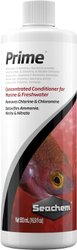
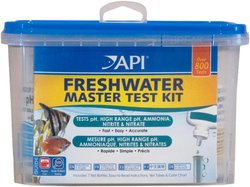
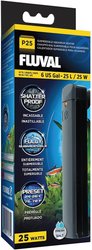
Full equipment breakdowns: best heaters, best filters, best test kits.
The myths that kill the most fish
The peace-lily vase. Popularized by a 1990s marketing campaign that claimed the betta fed on the lily’s roots. It doesn’t. The fish starves in cold, under-oxygenated, un-cycled water while the florist’s roots foul it further. Animal cruelty dressed as minimalist décor. See the betta vase myth.
“They like small tanks.” No species of fish likes a small tank. They tolerate one because they have nowhere else to go. This myth survived because a stressed betta stops flaring and swims less, which looks like contentment. It’s shutdown behavior.
“One water change a month is plenty in a small bowl.” The math doesn’t work. A 1-gallon bowl with a betta generates roughly 1.5 to 2 ppm ammonia per day. You need daily 50% changes to keep ammonia under 0.5 ppm, and even then nitrite climbs. The only way to make a bowl safe is to do enough water changes that you stop calling it a bowl and call it a full-time job.
What a day in a betta’s life looks like
At 7 a.m. the heater has kept the tank within 0.3 °C of setpoint overnight. The sponge filter is pushing a slow stream of bubbles. You drop in five or six pellets (about 2 mm each), watch them eat all of them inside 60 seconds. Water parameters, spot-checked twice a week with an API freshwater master kit, read 0 / 0 / 10 ppm. You do a 25% water change on Sunday, gravel-vac half the substrate, top up with pre-treated, temperature-matched tap water. Friday is fast day. Once a month you pull the sponge filter, squeeze it in the removed tank water (never tap), put it back.
That’s the whole protocol. A five-minute daily pass, a twenty-minute weekly pass, a thirty-minute monthly pass. A fish living that life reaches three years confidently and four years plausibly.
When something goes wrong
Early warning signs, in rough order of alarm: refused food for two consecutive feeds, clamped fins, resting on the substrate for long stretches, a visible dulling of color, any white or gray fuzz, any red streaks in fins, bloat with pineconing scales. Each of those maps to specific issues at the disease guide. The rule is simple. First check water parameters. Second check temperature. Ninety percent of “mystery illnesses” resolve at step one or two before you have to reach for medication.
The betta you buy at PetSmart is usually already nine to twelve months old, and males are typically shipped at two to three months old. Well-kept bettas typically live two to four years; the oldest confirmed captive bettas in hobbyist records have passed six, but those are outliers, and the full data behind those numbers is at how long betta fish live. A pet-store fish has already lived through a real share of a typical run by the time it reaches your tank. A fish that lives three more years with you has had a good life. Set the clock fairly.
Further reading on this site
- Care deep-dives: tank setup, betta feeding, water chemistry, water parameters reference, the nitrogen cycle, how to cycle a betta tank, tank mates, temperature.
- Behavior and health signals: betta behavior, stress stripes, do betta fish sleep?, bubble nests.
- Female bettas: female betta fish care and sorority tanks.
- New fish: acclimation, quarantine tank setup.
- Troubleshooting: betta not eating, fin damage vs fin rot.
- Practical guides: vacation care.
- Common diseases: fin rot, ich, mycobacteriosis.
- Breeding, if you want to go further: the breeding guide.
- Buyer’s guides with affiliate disclosure: best 5-gallon tanks, best heaters, best pellets, best filters, best test kits.
Related on this site
- Betta Anatomy: What You’re Looking At When You Look at a Betta
- The Betta Vase Myth: Why Peace-Lily Setups Are Animal Cruelty
- Betta Feeding: What to Feed, How Often, How Much
- Female Betta Fish: Identification, Care, Housing, and Sorority Tanks
- Humane Betta Euthanasia: Clove Oil Method, With Dosage Math
- How Long Do Betta Fish Live? 2 to 4 Years, With Real Data