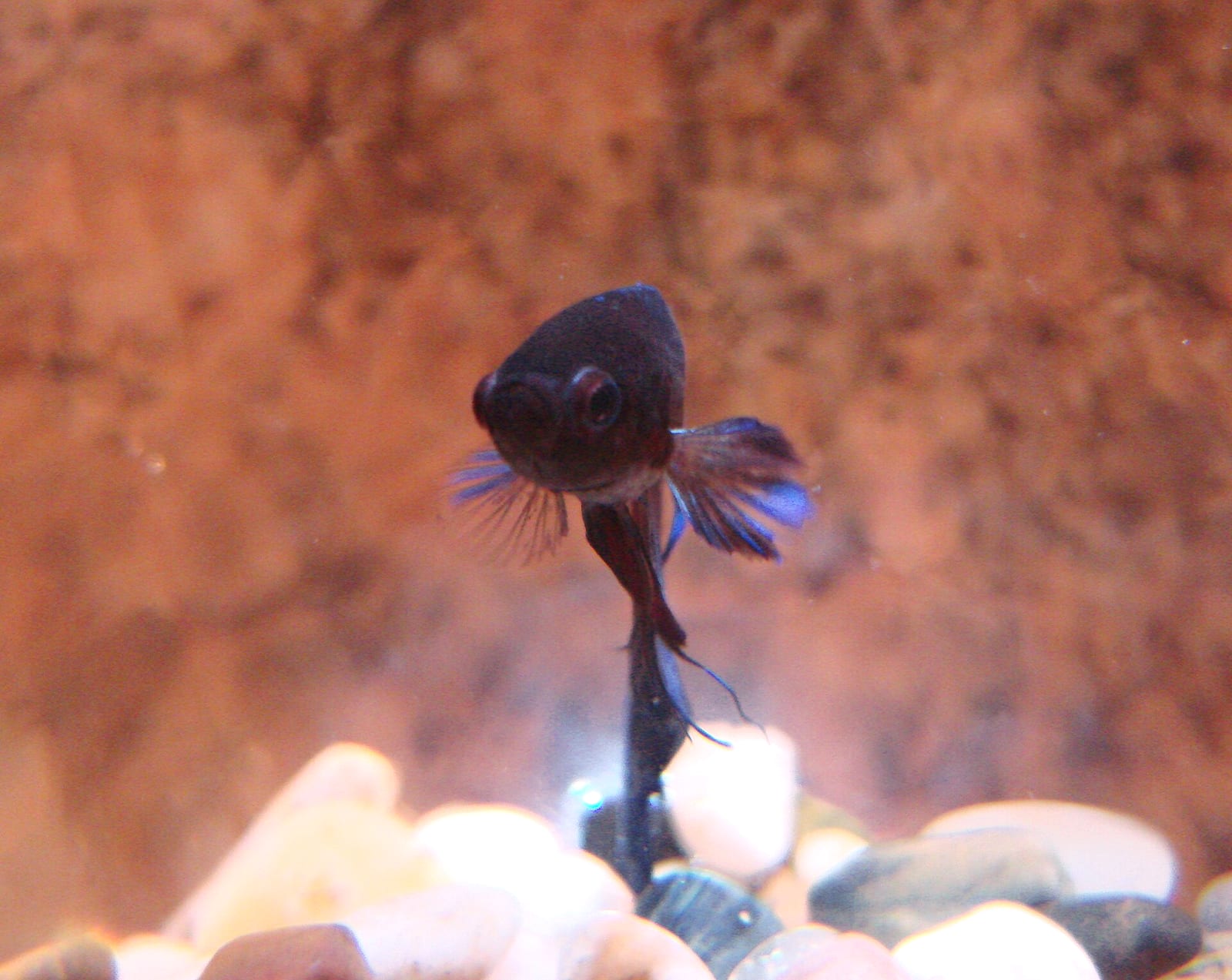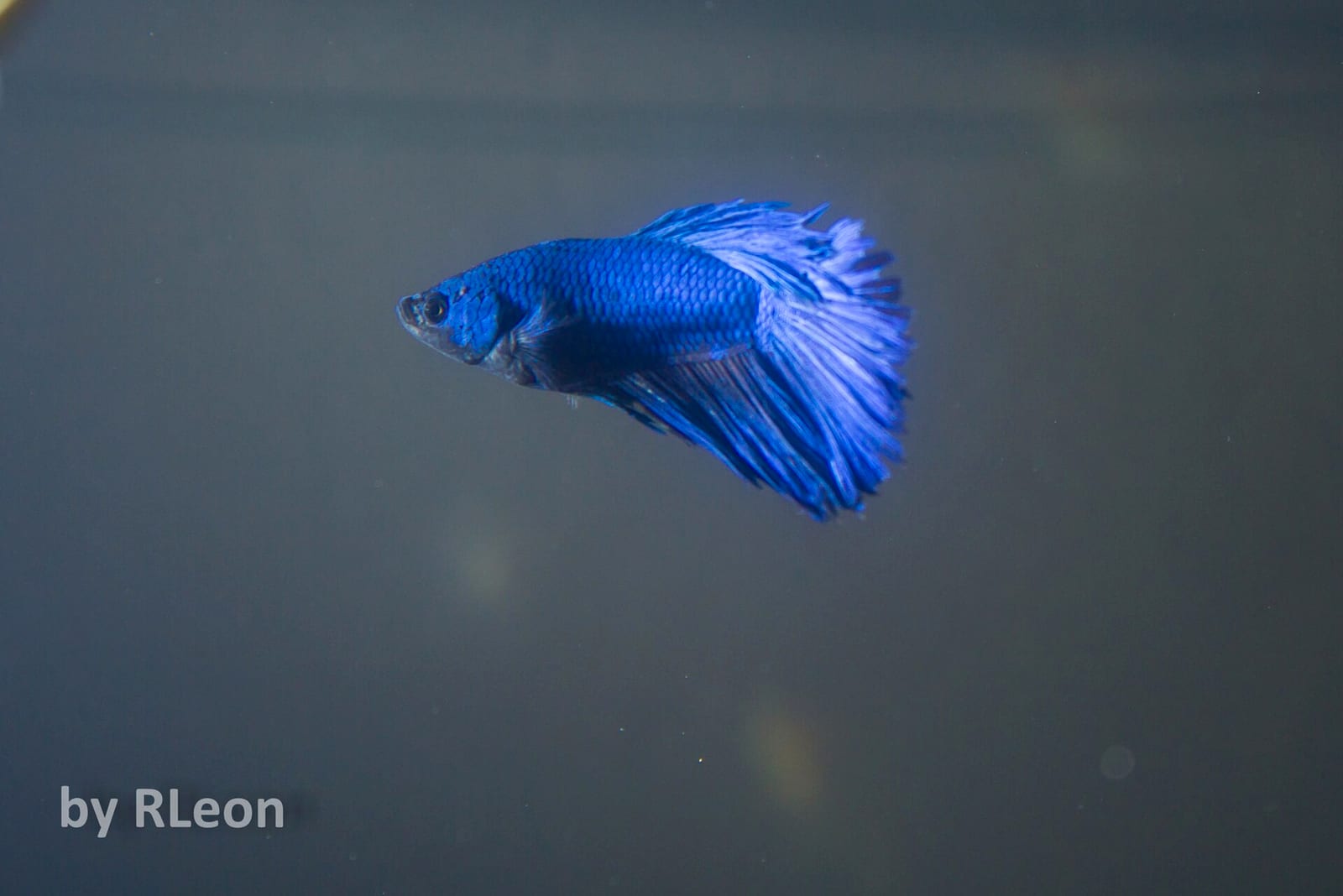
A betta has seven fins, a labyrinth organ that lets it breathe atmospheric air, a full lateral line sensory system, and color from four pigment layers. The Seriously Fish species profile provides the morphological reference for Betta splendens anatomy as it applies to captive care decisions. Everything about its behavior (the flaring, the bubble nesting, the territorial strikes at reflection) traces back to this anatomy. Understanding the fish’s parts explains why the 5-gallon rule exists, why you cover the tank, and why male bettas can’t share water.
The fins
Seven, from front to back:
Pectoral fins (2). Small paired fins on either side behind the gills. Used for fine maneuvering, hovering, and braking. Watch a betta in a current: the pectorals beat constantly.
Pelvic fins (2). Elongated, ventral, tucked under the body. On males these extend into the thread-like feelers often called “ventral fins” in the hobby. Sensory and display.
Dorsal fin (1). Top fin. In veiltails it’s a modest triangle; in halfmoons it’s elaborately extended. Spiny in front, soft-rayed in back.
Anal fin (1). Long fin running along the belly from the vent almost to the tail. Also elaborated in show strains.
Caudal fin (1). The tail. The most morphologically varied fin, and the one hobbyists use to categorize strain types: veiltail, halfmoon, crowntail, double tail, rosetail, plakat, delta, super delta.
Fin types in the hobby:
- Veiltail: long asymmetric tail, the wild-type pet trade fish through the 1990s.
- Halfmoon: tail opens to 180 degrees. 1990s Rajiv Massillamoni innovation.
- Crowntail: webbing recedes between rays, producing spike-like extensions.
- Plakat: short-finned, closer to the wild form. Fighting lineage.
- Double tail: caudal fin fully split into two lobes.
- Rosetail: extreme ray branching producing a ruffled appearance; prone to spine issues.
The labyrinth organ
Bettas are in the suborder Anabantoidei, which includes gouramis and paradise fish. All anabantoids have a labyrinth organ: a folded bony chamber in the suprabranchial cavity, inside the operculum, above the gills. The chamber is lined with thin respiratory epithelium so gas exchange happens directly from atmospheric air the fish gulps at the surface.
This is why:
- Bettas survive in stagnant, low-oxygen water that would kill a tetra.
- Bettas need surface access. Sealing the tank top prevents air breathing and kills the fish over hours to days.
- Cold drafts directly above the tank cause respiratory infections when the fish gulps cold air.
- A tightly covered shipping cup over 24 hours depletes the tiny air space and suffocates the fish.
The labyrinth organ develops gradually in fry. Fry under 3 weeks old are obligate gill breathers. This is why fry tanks need low water, high surface area, and zero surface film until the labyrinth is functional around week 4.
Scales, slime coat, and color
Cycloid scales cover the body. Under the scales sit four pigment cell types:
- Melanophores (black/brown).
- Erythrophores (red).
- Xanthophores (yellow).
- Iridophores (iridescent blue, green, steel; structural color from layered crystalline platelets).
Colors we see result from combinations. A solid red betta expresses erythrophores without much iridophore. A royal blue is heavy iridophore over a melanistic background. Marble pattern is unstable melanophore expression. The 2022 genetic-architecture paper (PubMed 36129976) mapped it as polygenic and states that its underlying molecular basis has not been investigated. Full breakdown at the genetics guide.
The slime coat is a mucous layer on the skin. It carries antibodies, reduces friction, and helps protect against parasites. Handling a betta by hand removes slime coat and is a direct infection invitation. Use a net. For prolonged transport, Seachem StressGuard (affiliate) or API Stress Coat (affiliate) add synthetic mucous to buffer transport losses.
The lateral line
A row of pressure-sensing neuromasts running from behind the gills to the tail base. The lateral line detects water movement, current direction, and the vibrations of nearby prey or predators. It’s why a betta can hunt mosquito larvae in murky water where sight is useless.
Lateral line damage (hole-in-the-head disease, or HLLE) presents as pitting along the line. Usually linked to poor nutrition and activated carbon overuse. Rare in well-fed fish.
The operculum and gill flare
The operculum is the bony gill cover. When a betta flares:
- The opercula extend outward.
- The branchiostegal membrane (the red membrane between the gill covers, under the jaw) extends downward.
- The body broadens laterally.
- Fins expand to maximum.
The net effect is a display that doubles apparent body size. Used against rival males, intruding fish, mirrors, and occasionally against the reflection in a clean glass panel on a dark evening. Flaring is normal; constant flaring is stressful. A small mirror held up for 60 seconds a day is exercise; a mirror left propped against the tank is harassment.
Sexual dimorphism
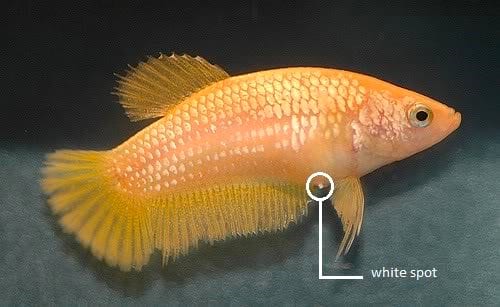
Males are larger in the pet trade (though wild-type females are similar size), with elaborately extended fins and more saturated color. Females are smaller, shorter-finned, with a visible ovipositor: a white tube between the ventral fins, used for depositing eggs during spawning. An ovipositor is the gold-standard female indicator; color and fin length can mislead (some short-finned males look female-ish, some plakat females look male-ish).
Why this matters for care
Every anatomy fact above maps to a care decision:
- Labyrinth organ → surface access mandatory, lid to prevent jumping, no sealed kritter keepers.
- Lateral line → no sharp décor, no heavy current.
- Pigment layers → dietary carotenoids (shrimp, krill) enhance red; diet affects visible color.
- Slime coat → don’t hand-handle, use a soft net, use slime coat conditioner on transport.
- Gill flare → flaring in the tank means a perceived rival; check for reflections on dark glass at night.
The fish you’re looking at is a compact piece of tropical freshwater engineering. Treating it as one, rather than as a “beginner” fish that “doesn’t need much,” is the whole shift from pet-store bowl thinking to real hobbyist care.