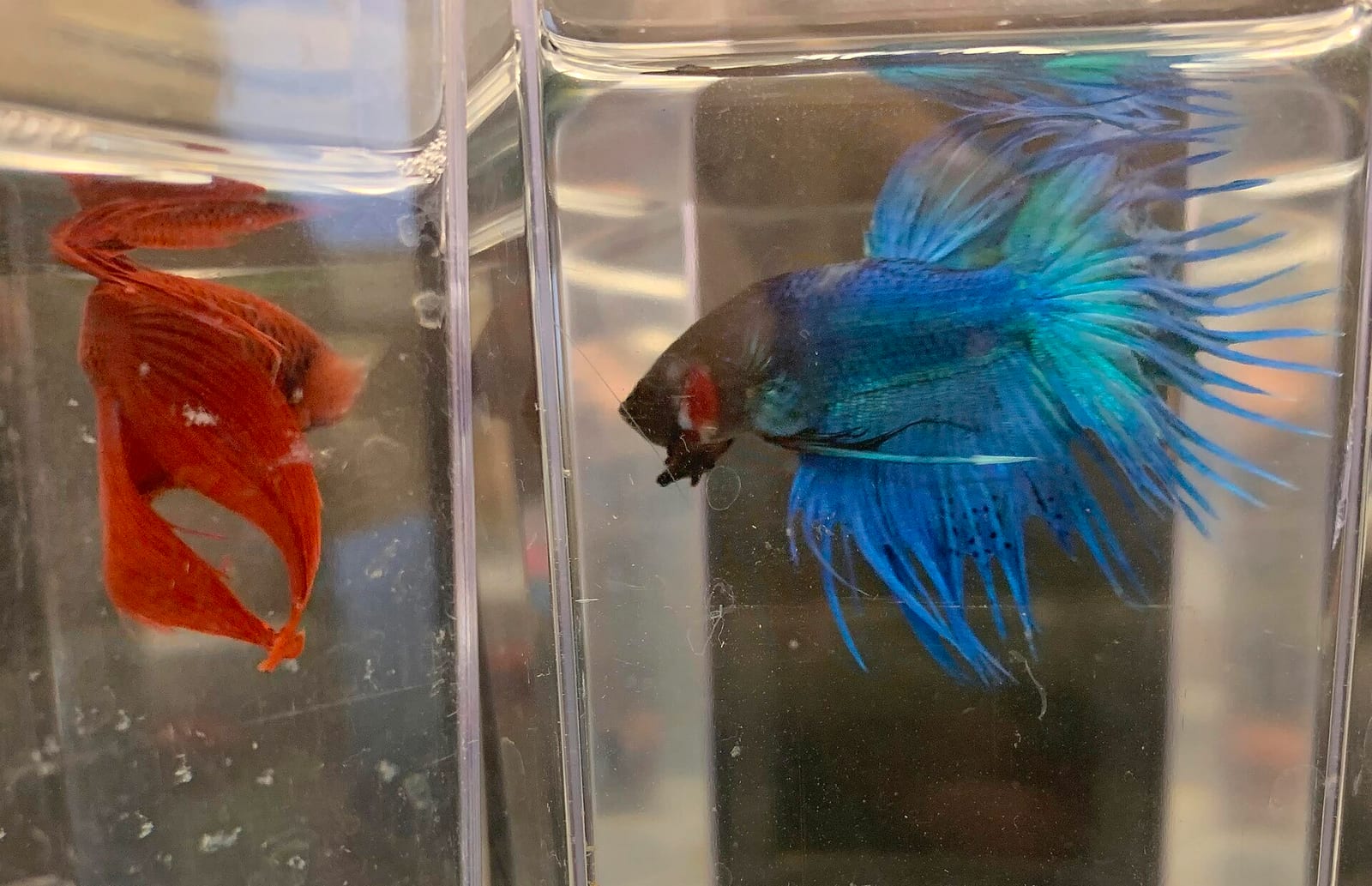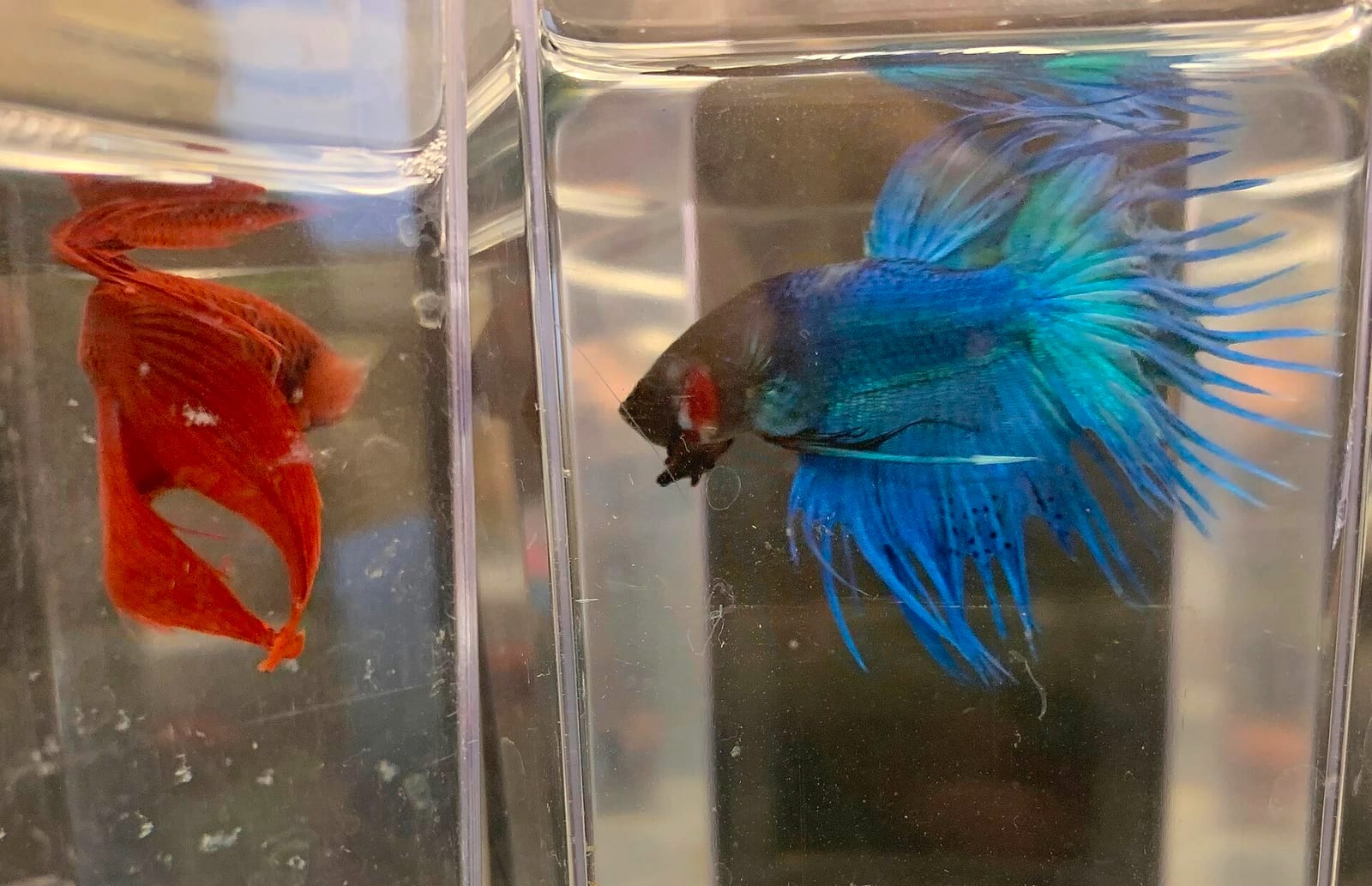
Betta splendens is one of the more behaviorally rich fish in the aquarium hobby. Males are territorial and display to rivals; they build nests, respond to their environment, and show visibly different behavior when healthy versus stressed or ill. Reading that behavior accurately is one of the most practical skills a betta keeper can develop.
Normal behaviors
Flaring
Flaring is a threat display. The fish spreads its fins and gill covers (opercula) to maximum extension, making itself appear larger. In the wild, bettas flare at rival males encountered in shared territory. In captivity, they flare at:
- Their own reflection in tank glass or decorations
- Other bettas visible through dividers or adjacent tanks
- Certain toys or objects introduced to the tank
Flaring is normal and healthy in short bursts. It is exercise, and males in good condition flare vigorously. The problem is duration and frequency. A tank with a highly reflective back wall that triggers continuous flaring creates chronic stress. Bettas observed flaring and exhausted from flaring are being chronically stressed by their environment.
Ramos et al. (2021) sampled male bettas after presenting them with either a size-matched live rival behind a transparent partition or a mirror image, and found a pronounced increase in plasma androgens and cortisol in response to the challenge, independent of which stimulus produced it. To the fish’s endocrine system, a reflection is a rival. If the tank glass itself is the trigger, dark backing paper on the outside of three walls kills the reflection and calms the flaring down. Betta personality and intelligence covers what a mirror costs and what to use instead.
Bubble nest building
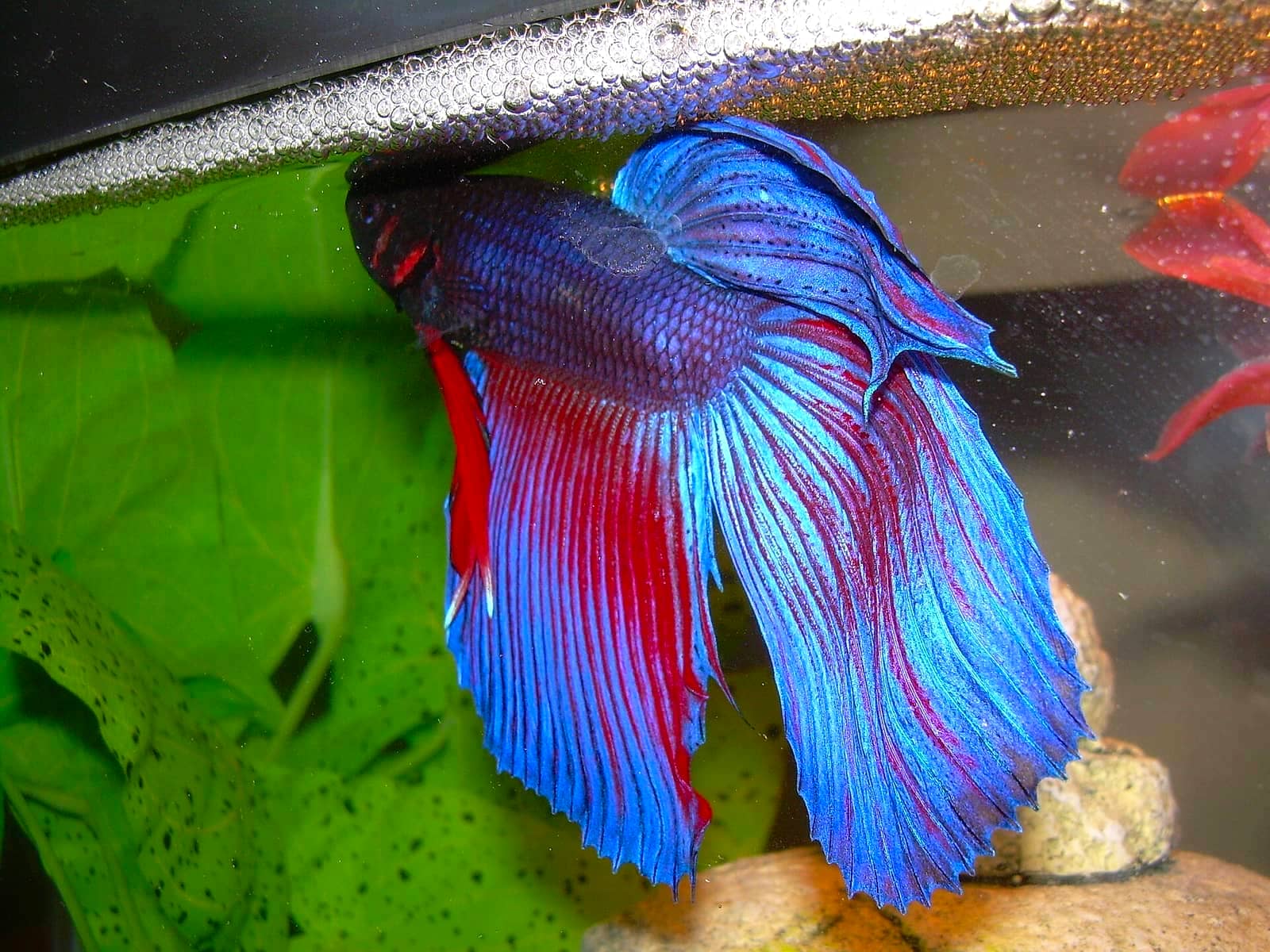
Male bettas build foam nests at the water surface by blowing mucus-coated air bubbles. This is spawning preparation behavior. A male will build nests with no female present; the behavior is driven by good condition, correct temperature, and low stress, not specifically by a female’s presence.
A male building bubble nests is a healthy male. Absence of nest building is not automatically a problem (some males are less prolific builders), but a male that was previously building and has stopped is worth monitoring.
Surface breathing
Bettas are obligate air breathers. They surface to gulp atmospheric air through the labyrinth organ every few minutes. This is not optional. Block the surface access and a betta will drown despite the dissolved oxygen in the water. A betta surfacing regularly at normal intervals is healthy. Gasping urgently at the surface constantly indicates a water quality or temperature problem.
Exploring and foraging
A healthy betta investigates its environment, investigates new objects, and actively patrols its territory. A male will establish a preferred resting spot (often a leaf or decoration) and return to it repeatedly.
Responsiveness at feeding
Bettas that are healthy and comfortable come to the front of the tank at feeding time, often before food hits the water. They follow the feeding hand. Whether that counts as actually recognizing you, in any cognitively meaningful sense, is genuinely debated, but the behavioral pattern itself is real and consistent enough to use as a health check. A betta that does not respond to food when food has always produced a response is displaying early illness behavior.
Warning behaviors
Clamped fins
Clamped fins (fins held close to the body rather than extended) are an early, non-specific distress signal. They indicate the fish is uncomfortable. Causes include:
- Water temperature below optimal range
- Ammonia, nitrite, or high nitrate
- Early bacterial or parasitic infection
- Recent transport stress
Clamped fins alone without other symptoms: test the water and check the temperature before assuming disease.
Glass surfing
Rapid vertical movement along the tank glass, repeated over minutes, is a stress response. It typically indicates that something in the environment is wrong. Test sequence: temperature first, then ammonia/nitrite/nitrate. If parameters are in range, consider: external stimulation (movement outside the tank that the fish is reacting to), tank too small, or a new decoration or chemical that has entered the water.
Lethargy
A betta that rests motionless in an abnormal location (at the bottom, wedged behind a filter, lying on its side) and does not respond to food or stimulus is displaying illness behavior. Lethargy plus clamped fins plus reduced surface breathing is an emergency. Test water immediately and consider disease.
Resting on the bottom or on a leaf is normal, especially overnight. What separates that from a problem is whether it carries into the fish’s active daytime hours with no response to food. Lying flat on the gravel unresponsive during the day is not normal.
Faded color
A betta’s color reflects its condition. A fish in good health shows richly saturated, fully-pigmented color. A stressed or ill betta often shows faded, washed-out coloration. This can happen within hours of a water quality event or temperature crash. Faded color in a fish that was previously bright is a clinical sign worth investigating. Sneddon et al. (2014) discuss the physiological stress indicators common across teleost fish, of which color change is one of the most reliable early markers.
Fin clamping + color fading + hiding
This combination (fins clamped, color dull, fish hiding behind a decoration and unresponsive) is the betta equivalent of a sick animal going to ground. It warrants immediate water testing and a careful look for disease symptoms (white spots, fuzzy growths, fin deterioration).
Aggression toward tank mates
Males are aggressive to other males. Non-negotiable. Two adult males cohabiting will fight to serious injury or death, regardless of tank size. Do not house adult males together.
Male-female aggression occurs and is the primary risk in breeding attempts. A male that pursues a female relentlessly and tears her fins before she is ready to spawn will injure her seriously. See pair selection and spawning setup for conditioning protocols that reduce this risk.
Female bettas can sometimes be housed in groups (sororities) in larger, heavily planted tanks, but female aggression and hierarchy stress are real management problems. This is not a beginner setup.
Jumping
Bettas jump. This is normal exploratory and escape behavior, not a sign of a problem. The problem is the gap in the tank lid. Every betta tank needs a fitted cover. A betta found dead outside its tank died because a gap existed. A well-fitted lid eliminates the risk entirely.
A fish that behaves like this page describes is a fish in a correctly set up tank. The two products that fix the most behavioral problems: a water conditioner (affiliate) for clean water, and an API test kit (affiliate) to confirm it. Behavioral anomalies almost always trace to parameters.