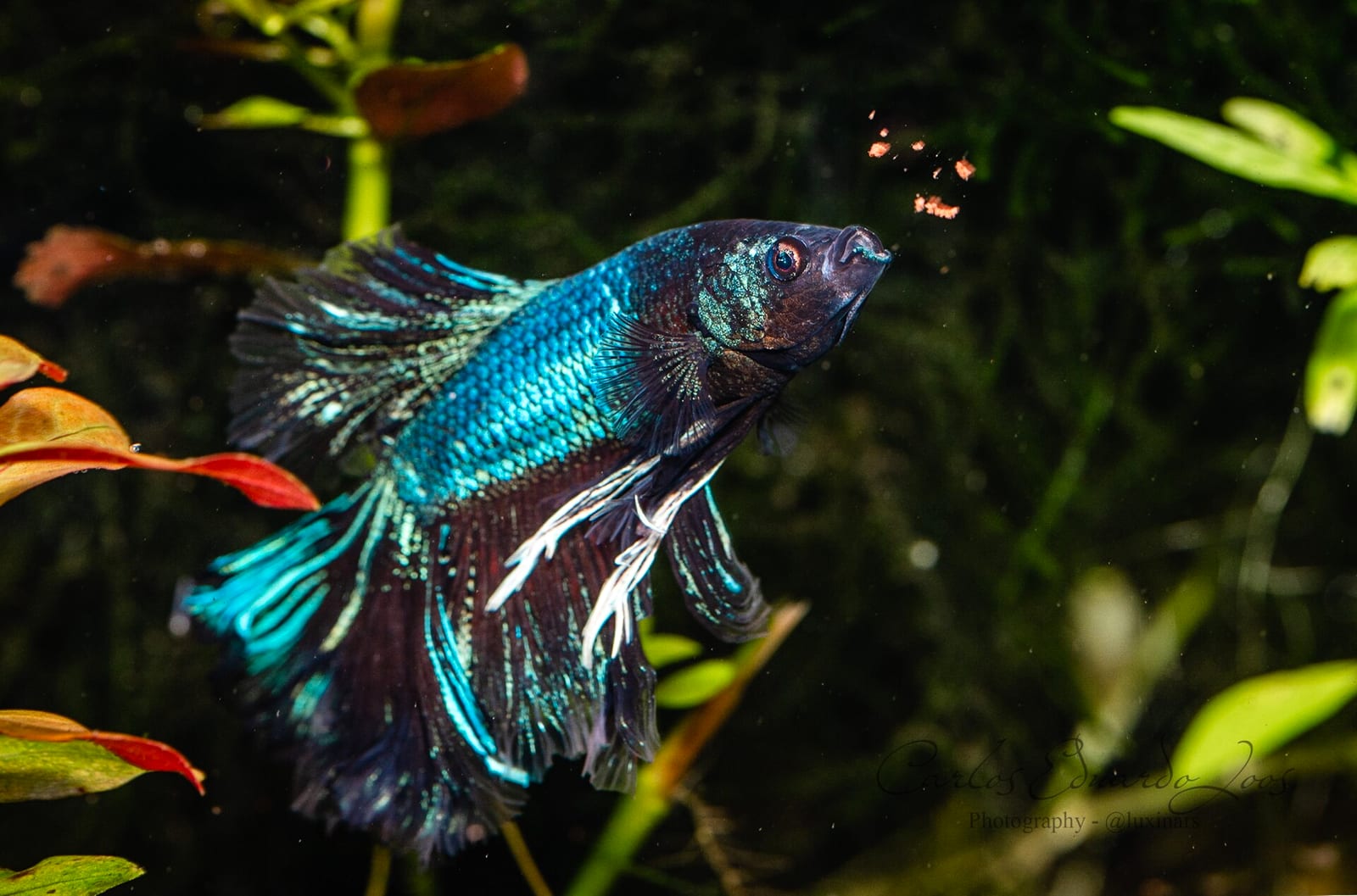
Feed an adult betta four to six small pellets once per day, with one full fast day per week. Staple diet is a high-protein sinking or slow-floating pellet (40%+ protein, fish or insect meal listed first). Supplement twice a week with frozen brine shrimp, daphnia, or bloodworms. The 2022 laboratory-care review (PMC9334006) calls overfeeding the primary welfare issue in research betta colonies, and the same pattern shows up in living rooms.
What bettas actually eat
Wild Betta splendens in an Aceh rice paddy eats mosquito larvae, bloodworms (chironomid larvae), daphnia, cyclops, and whatever else fits in a fish the size of a thumb. Zero plant matter. They’re obligate insectivores.
A pellet that mimics this is 40 to 50% protein from fish meal, whole fish, or insect meal (black soldier fly larvae meal has become common). The first ingredient matters. “Fish meal” first is good. “Wheat flour” first is cat food dressed up.
Generic tropical fish flakes don’t clear that bar either. Most run 30 to 35% protein, formulated for omnivorous community fish, not a strict insectivore. A betta can survive on flakes. It won’t thrive on them.
The short list of pellets worth buying
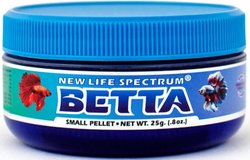
- New Life Spectrum Betta Formula. 45% protein, krill meal first. This is the boring correct answer. $8 for a 1 oz jar, lasts 6 months feeding one fish.
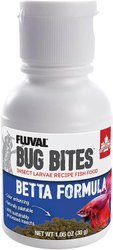
- Fluval Bug Bites Betta. Black soldier fly larvae first, 40% protein. Newer product, good ingredient profile. Floats briefly then sinks.
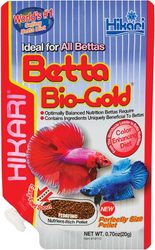
- Hikari Betta Bio-Gold. 45% protein, a legacy product, consistent quality.
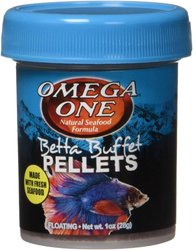
- Omega One Betta Buffet Pellets. 42% protein, whole salmon first. Smells of actual fish, which is a good sign.
| Pellet | Protein | Buy |
|---|---|---|
| New Life Spectrum Betta Formula | 45% | Amazon |
| Fluval Bug Bites Betta | 40% | Amazon |
| Hikari Betta Bio-Gold | 45% | Amazon |
| Omega One Betta Buffet Pellets | 42% | Amazon |
Amazon links are affiliate links. See our disclosure.
Skip the grocery-store generic betta pellets. The ingredient list usually starts with wheat, and the fish either refuses them or eats them and bloats.
The feeding schedule
| Day | Meal |
|---|---|
| Monday | 4-6 pellets |
| Tuesday | 4-6 pellets |
| Wednesday | 3-5 frozen bloodworms OR brine shrimp |
| Thursday | 4-6 pellets |
| Friday | Fast |
| Saturday | 4-6 pellets |
| Sunday | 3-5 frozen daphnia OR brine shrimp |
That’s six feed days and one fast day. The Friday fast isn’t a punishment: bettas are prone to constipation and swim-bladder stress from a gut that’s never empty, and the weekly break resets that. On feed days, the fish eats within 30 to 60 seconds and the water stays clean.
If a betta stops taking pellets, it’s usually one of three things: a cold tank, stale food, or a new fish still settling in. Check the heater first, then the date on the pellet jar (opened pellets go stale in 3 to 4 months). Offer a single frozen bloodworm; a fish that turns down even that is more likely sick than picky. See Betta Not Eating: Diagnostic Guide for the full workup.
How much is too much
A betta’s stomach is roughly the size of its eye. Four to six 1 to 1.5 mm pellets is about right. The simplest check: if pellets are still sitting on the bottom after 60 seconds, you dropped in too many. More than that and you see bloat: a visibly rounded belly that doesn’t slim down by the next morning. Chronic overfeeding produces the classic pet-store obese betta with a sagging ventral line and constipation-linked swim-bladder episodes.
Uneaten food is the second biggest ammonia source in a tank after fish waste itself. If you drop eight pellets and the fish eats five, two of those sink into the substrate and rot. That’s a 20% ammonia contribution with no fish benefit.
Frozen vs live vs freeze-dried
Frozen is the right default. Frozen brine shrimp, daphnia, and bloodworms retain moisture, don’t transmit disease (the freezing kills parasites on bloodworms), and thaw in a shot glass of tank water in 90 seconds. Buy Hikari or San Francisco Bay brand cubes. Hikari frozen food on Amazon (affiliate)
Live is the gold standard but a logistics project. Live blackworms, brine shrimp, and daphnia are excellent protein and give the fish a foraging stimulus. Risk: wild-caught live food can carry parasites. Hobbyist-grown cultures are safer. A small live blackworm colony lives in a Tupperware in the fridge and feeds a betta for months.
Freeze-dried is a distant third. Dehydrated chitin swells in the gut. Linked to constipation and swim-bladder issues. The Merck Veterinary Manual’s fish nutrition section recommends moisture-rich foods as the primary protein source for captive carnivorous fish; freeze-dried products consistently fall below this standard. Occasional treat at most, and only if pre-soaked in tank water for two minutes before feeding.
Fry and juvenile feeding
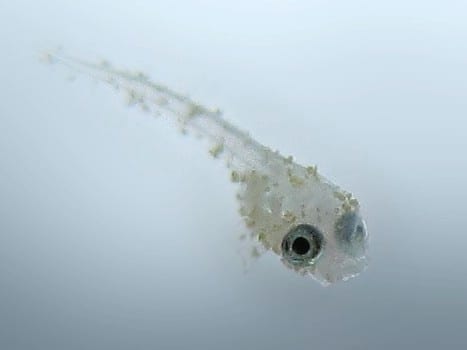
Fry under 4 weeks need live microorganisms: infusoria for the first 4 to 5 days, then newly hatched brine shrimp (BBS) 3 times per day, then eventually microworms and decapsulated brine cysts. Dry food fails for fry; the yolk sac is gone by day 3 and they need something moving to trigger the feeding response. See fry: first 30 days for the full schedule.
Juveniles (4 to 12 weeks) transition from live to crushed pellets around week 6 to 8. Feed four to six times per day in small amounts. This is the growth window; underfeeding here stunts the adult.
The bloat protocol
If the betta refuses food for two days and looks visibly swollen, do this before reaching for medication:
- Skip all food for 48 to 72 hours.
- On day 4, offer one thawed pea, skin removed, quarter-section. The fibrous interior acts as a mild laxative.
- Resume normal feeding day 5.
Nine times out of ten this resolves. The tenth time the fish has pineconing scales and you’re in dropsy territory; see Dropsy.
A two-year-old betta on a varied diet, fed once daily with a fast day, eating in under a minute per meal, rarely has feeding-driven health problems. The rest of the hobby’s feeding folklore (feeding twice a day, feeding flakes as a staple, freeze-dried bloodworms for breakfast) comes from the pet-store bowl era and should die with it.
Related on this site
- Betta Fish Care: The Evidence-Based Guide
- Betta Fry Care: The First 30 Days
- Betta Anatomy: What You’re Looking At When You Look at a Betta
- The Betta Vase Myth: Why Peace-Lily Setups Are Animal Cruelty
- Humane Betta Euthanasia: Clove Oil Method, With Dosage Math
- Betta Not Eating: Diagnostic Guide
- Constipation: Fasting Protocol and the Daphnia Fix
- Vacation Care: Leaving Your Betta Alone