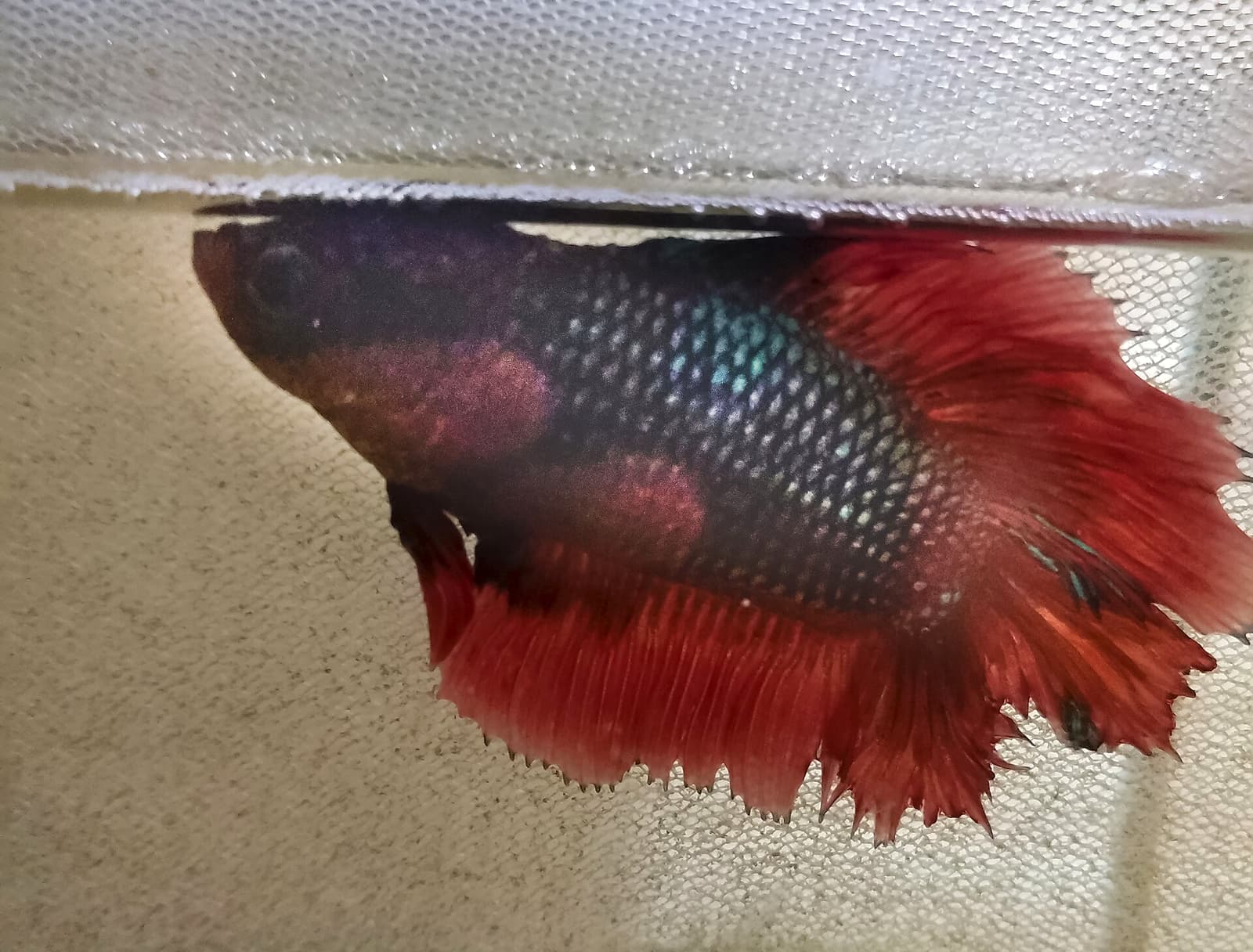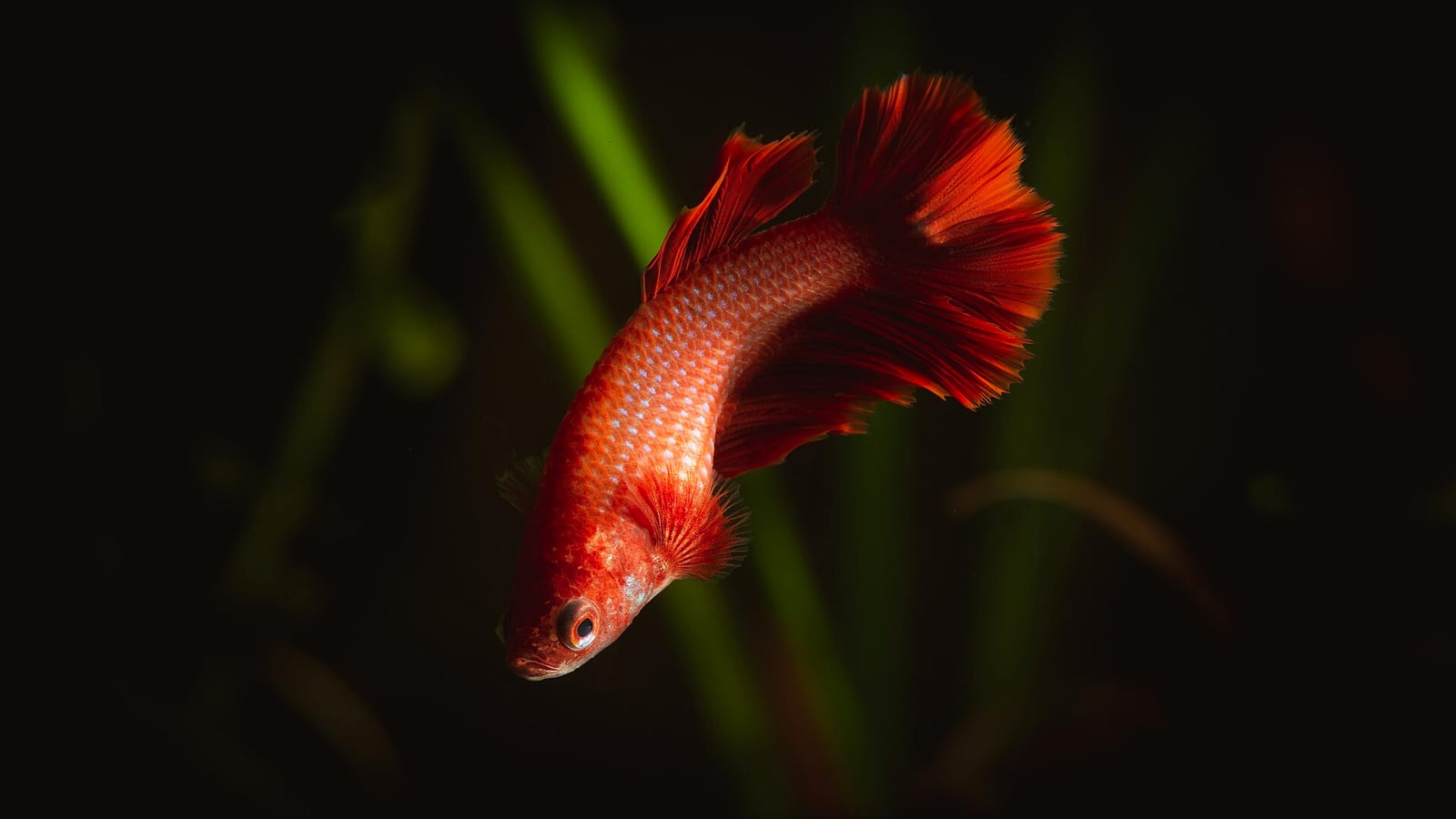
This is the most common diagnostic confusion in the betta hobby. Fin rot and physical fin damage both result in missing fin tissue. They look similar in photographs. They need different responses. Treating fin damage as fin rot, or ignoring fin rot as “just a tear,” costs the fish time and tissue.
The distinction is learnable in about five minutes.
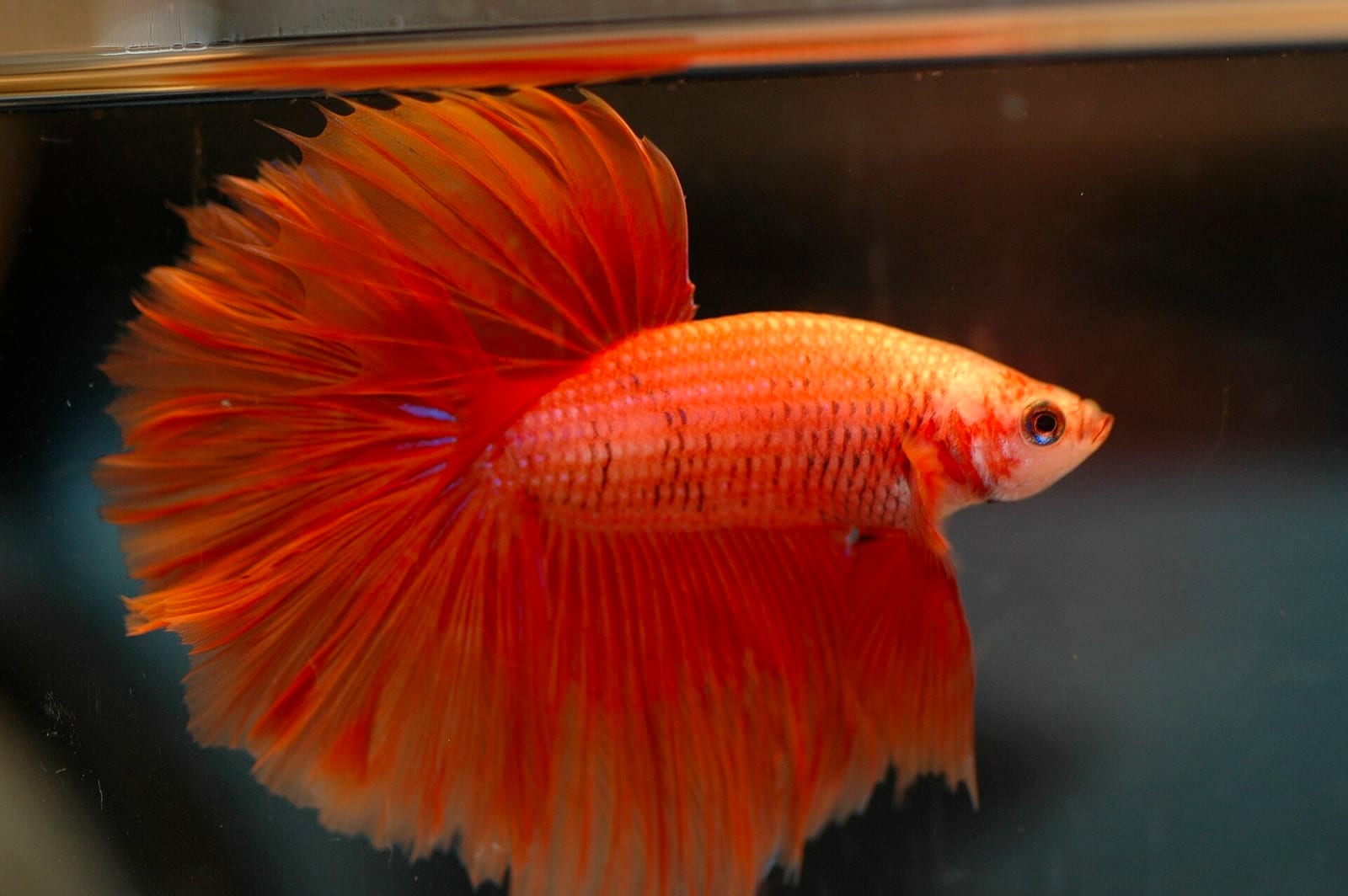
The visual differential
Look at the damaged fin edge under good light.
Physical damage (tear, scratch, fin nip from a tank mate)
- Edge character: Clean, sharp, well-defined. Like a cut.
- Tissue color at the margin: Normal (same color as the rest of the fin)
- Progression: Does not progress. Yesterday’s tear is the same size today.
- Other fin tissue: Healthy, held out normally, not clamped
- Context: New decoration in the tank, known fin-nipping tank mate, the fish hit the glass
Bacterial fin rot (Aeromonas, Pseudomonas, Flavobacterium)
- Edge character: Ragged, frayed, irregular. Like something is being eaten
- Tissue color at the margin: Darkening (black or brown tinge), cloudiness, or white/pale discoloration at the affected edge
- Progression: Gets worse daily or every few days; more fin disappears
- Other fin tissue: May be slightly clamped; fin rays visible as the webbing erodes
- Context: Water quality has been poor; the fish has been stressed; other disease symptoms may be present
The 48-hour test
When uncertain: do a 25–30% water change with dechlorinated water at the correct temperature. Observe for 48 hours.
- If the damage stops progressing: likely physical damage, possibly very mild fin rot that stalled with clean water
- If it progresses further within 48 hours: fin rot, requiring active treatment
This test works because mild fin rot is often a water quality opportunist. Remove the unfavorable conditions and it can stall. If the bacteria are established enough to continue in clean water, the progression confirms the diagnosis.
Treatment by type
Physical damage
- Remove the source (decoration, tank mate). Not sure which decoration is the culprit? Run it against a nylon stocking: if the fabric catches, it will catch fins too. Swap anything that snags for a smooth piece, or go with live or silk plants.
- Ensure water quality is correct (zero ammonia, zero nitrite, temperature 76–82°F)
- Do nothing else. Clean water promotes regeneration. Adding salt or medications to a clean tank with physical damage does not help and may slow healing by adding unnecessary chemical stress.
Fin regeneration appears as clear tissue growth at the tear edge, typically visible within 1–2 weeks. Full regeneration of a significant tear may take 4–8 weeks.
Fin rot: mild (slow-progressing, early-stage)
- Water change: 25–30% with temperature-matched dechlorinated water
- Correct any underlying water quality issues
- Improve tank hygiene: vacuum the substrate, reduce feeding if overfeeding has occurred
- Observe for 5 days; mild cases with a good water quality correction often stall and reverse
The Merck Veterinary Manual’s bacterial fish diseases section and the 2022 laboratory-care review (PMC9334006) both identify water quality failure as the primary enabling condition for opportunistic bacterial fin infection in captive bettas.
Fin rot: moderate to severe (fast-progressing, body involvement approaching)
- Move to a hospital tank (bare bottom, heater, air stone, no biological filter)
- Antibiotic treatment: Seachem NeoPlex (affiliate) or kanamycin (Seachem KanaPlex) (affiliate), per product dosing instructions
- 10-day treatment minimum; do not stop early because improvement is visible
- Daily 30% water change with antibiotic redosing
- See fin rot for the complete treatment protocol
When bite trauma becomes infection
Physical damage and bacterial rot are not mutually exclusive. A clean tear, left in poor water quality, becomes colonized by Aeromonas or Flavobacterium within 48–72 hours. The tear edge that was clean on Monday is ragged on Wednesday. This is the most common path: trauma creates the entry point, water quality provides the permissive environment.
The diagnostic clue is timeline. A tear that progresses after the first 24 hours was either always fin rot (you caught it late) or became fin rot (the water let bacteria establish). Either way, the treatment shifts to the fin rot protocol once progression is confirmed.
Healing timeline for physical damage (clean water, no secondary infection):
- Days 1–3: Tear edges stable, no color change, fins held normally
- Week 1–2: Clear tissue appears at the tear margin (new fin growth is transparent before pigment develops)
- Week 2–8: Progressive in-filling. Speed depends on extent of damage and fish age; young fish regenerate faster
- Weeks 6–12 for severe tears: Full regeneration possible but pattern may not be perfectly symmetrical
If any day in that timeline shows darkening at the margin, the case has moved from physical damage to fin rot. Restart from the fin rot protocol.
Successfully treated fin rot regenerates the same way, new clear tissue filling in from the margin, but the resulting fin edge is less likely to come back perfectly symmetrical than a clean mechanical tear.
Why long-finned bettas are more vulnerable
The fin surface area of a halfmoon or veiltail betta is dramatically larger than a plakat. More surface area means more exposure to bacterial opportunists, more potential contact with decorations, and higher metabolic cost to maintain. Bettas bred for extreme fin elaboration (rosetails especially) have fin tissue under chronic strain from its own weight.
If a long-finned betta repeatedly develops fin rot despite good water quality, the fin form itself may be the predisposing factor. Reducing decorations with contact surfaces, maintaining perfect water quality, and accepting that occasional mild fin rot is a long-term management task rather than a fixable problem is the practical response.
Tail biting: the third category
Tail biting is neither physical damage from external causes nor bacterial disease; it is self-inflicted. The fish nips its own caudal fin, usually at the fin edge, producing semicircular bite-radius notches that are distinct from linear tears (physical damage) or ragged erosion (fin rot). Causes vary: boredom, general stress, or simply a tail long enough that it drifts into the fish’s own field of vision and gets treated as a threat. See betta behavior for the stress and environmental factors that trigger tail biting.