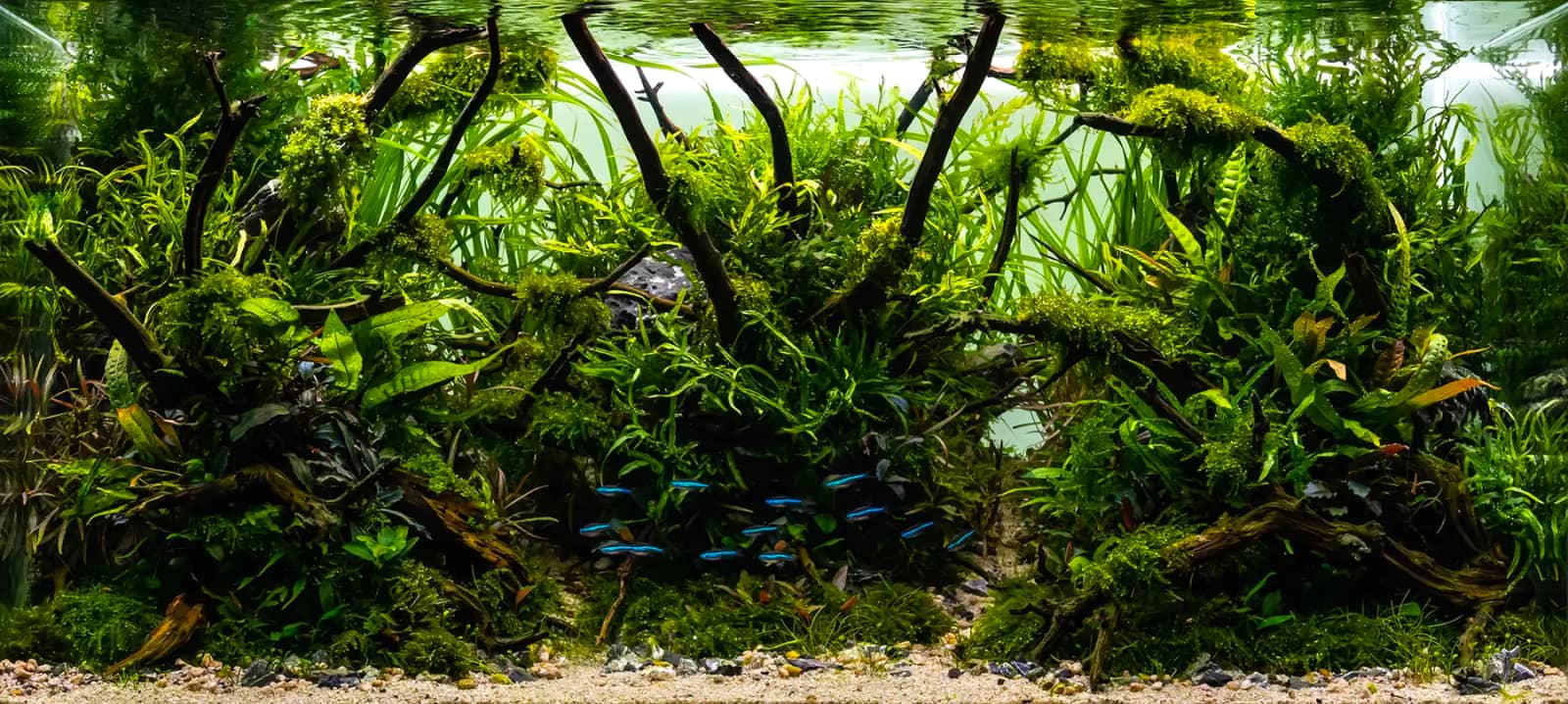
A correct betta tank is 5 US gallons (19 L), filtered with a baffled or air-driven filter, heated to 25 to 27 °C, and cycled before the fish arrives. The cheapest honest build in 2026 costs about $110 new and about $50 used. Cycling takes 3 to 6 weeks if you do it right, which you should, because the alternative is ammonia poisoning your new fish for the first two months of his life (IBC Exhibition Standards, tank requirements). The 2022 laboratory care review for Betta splendens (PMC9334006) confirms 19 L as the minimum for stable water chemistry in single-male housing.
You can run a 3-gallon tank instead. You shouldn’t. That size forces daily water testing and 30% changes twice a week just to keep ammonia in check, and the margin for error shrinks fast the moment you skip a day. Five gallons is the point where a sponge filter and a normal weekly water change routine are actually enough on their own. The tank-size minimums most hobbyist organizations recommend trace back to studies of wild population ecology, including the USGS Nonindigenous Aquatic Species profile for Betta splendens, which documents the thermal and spatial range these fish evolved in.
Parts list
-
5-gallon glass aquarium, any brand. The Aqueon 5-gallon kit and the Top Fin 5.5-gallon kit both work. Rectangle preferred. The cube shape is fine if the footprint is at least 12 by 12 inches. Avoid tall, narrow tanks; bettas swim horizontally. 5-gallon tanks on Amazon (affiliate)
-
Sponge filter, Hygger or Hikari brand, rated 5-10 gallons. Sponge filter on Amazon (affiliate)
-
Air pump, Tetra Whisper 10 or Hygger Quiet. Air pump on Amazon (affiliate)
-
Airline tubing and check valve. Airline tubing on Amazon (affiliate)
-
Preset heater, 25W, Fluval P25 or Eheim Jager 25. Avoid the cheapest unbranded heaters; they fail stuck-on and cook the fish. Fluval P25 heater on Amazon (affiliate)
-
Thermometer, stick-on or glass. Aquarium thermometer on Amazon (affiliate)
-
Substrate, 2 to 5 lb of inert aquarium sand (CaribSea Super Naturals, Black Diamond Blasting Sand) or fine gravel. CaribSea aquarium sand on Amazon (affiliate)
-
Hardscape, one piece of Mopani or spiderwood driftwood, boiled to sink. Mopani driftwood on Amazon (affiliate)
-
Plants, 3 to 5 starts of Anubias nana, Java fern, cryptocoryne wendtii, Java moss. Live aquarium plants on Amazon (affiliate)
-
Glass lid, if the kit doesn’t include one. Skip this and sooner or later you’ll find a dried-out fish on the carpet. Bettas are labyrinth breathers, but they’re just as often surface jumpers, and any gap wide enough for a fish is a bet you’ll eventually lose. The stock kit lid works fine. Glass canopy on Amazon (affiliate)
-
Water conditioner, Seachem Prime. A 100 ml bottle lasts a year. $8. If your utility uses chloramine rather than chlorine, that changes which bottle works, covered in the water conditioner guide. Seachem Prime on Amazon Affiliate link. See our disclosure.
-
Test kit, API Freshwater Master Kit. $30. Buy it, not the strips. API Freshwater Master Test Kit on Amazon Affiliate link. See our disclosure.
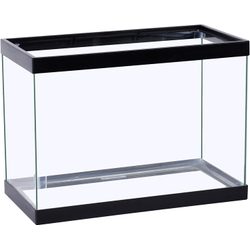
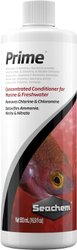
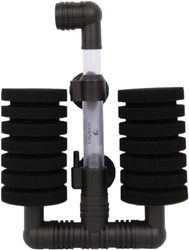
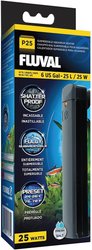
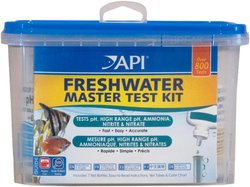
That’s about $110 for the core build: roughly $30 for the tank itself, $20 for the sponge filter and air pump together, $25 for the heater, $15 for substrate, and $20 for plants. The test kit, conditioner, glass lid, and driftwood in the list above push a fully-equipped build higher, but that’s mostly one-time gear that outlasts the fish. A used tank, filter, and heater off local marketplaces bring a working setup down to $40 to $60.
Layout
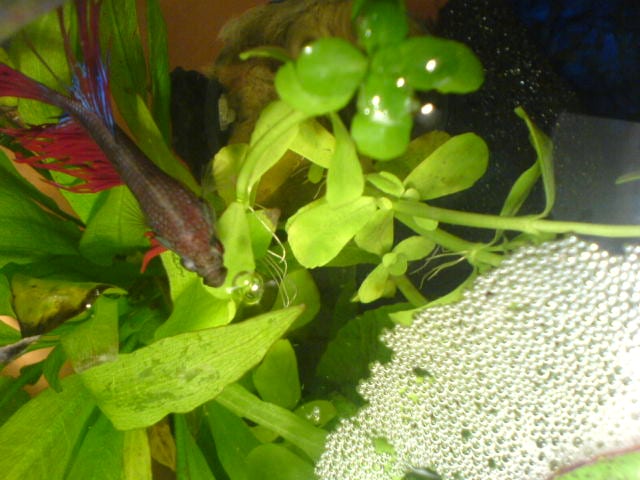
Footprint over height. A 20-long (30 inches × 12 × 12) is a better betta tank than a 20-high (24 × 12 × 16), because the fish uses the floor area and surface area; vertical swimming is a stress response, not exercise. In a 5-gallon, stick with the standard 16 × 8 × 10 inch rectangle.
Substrate 1 inch deep. Deeper sand traps anaerobic pockets and releases hydrogen sulfide when disturbed. One inch is enough to root plants.
Hardscape placed off-center, in the rule-of-thirds spot. Gives the fish sight-line breaks and hiding space.
Plants aren’t strictly required, but they earn their place: live plants pull ammonia and nitrate straight out of the water, add surface cover, and give the fish territory to explore. Silk plants are a fine substitute if live isn’t an option. Skip hard plastic ones; the sharp edges shred fins. Tie Java fern and Anubias to the driftwood with cotton thread or superglue gel (the cyanoacrylate is inert once cured, this is standard practice). Never bury Anubias rhizomes; they rot. Cryptocorynes go in the substrate. Java moss gets wedged into crevices.
Fill line 1 inch below the rim. Bettas need surface air. Never fill the tank to the top edge.
Cycling the tank
Do not put the fish in an uncycled tank. This is the single most preventable mistake in the hobby.
A cycled tank has a biofilm of Nitrosomonas and Nitrobacter bacteria living on every surface, converting ammonia → nitrite → nitrate. Ammonia and nitrite are acutely toxic. Nitrate is mostly harmless below 40 ppm.
Fishless cycling protocol:
- Fill and run the tank with filter and heater on.
- Dose 99% pure household ammonia (Dr. Tim’s Ammonium Chloride on Amazon (affiliate), or ACE Hardware Janitorial Strength Ammonia, no surfactants) to 2 ppm.
- Test ammonia and nitrite every 48 hours.
- When ammonia drops, redose to 2 ppm. When nitrite starts reading, let it climb and process.
- The tank is cycled when a 2 ppm ammonia dose drops to zero and nitrite is zero within 24 hours.
Expect 3 to 6 weeks. Seeding with a piece of filter media from an established tank (ask a local fishkeeping club or a trustworthy shop) cuts this to 7 to 10 days.
When cycled, do a 50% water change to drop accumulated nitrate, then add the fish.
Adding the fish
Float the bag in the tank for 15 minutes to equalize temperature. Then drip-acclimate: siphon a small air-line drip from your tank into a container holding the bag water and fish. Fill to double the starting volume over 45 minutes. Net the fish into the tank. Throw away the bag water; don’t pour it in.
Turn off the room light. Leave the tank completely alone for 48 hours. No feeding. First feed at hour 48 is two or three pellets. If the fish eats, you’re clear.
What not to do
Don’t use a Betta Bowl Kit under $20 that promises “no filter needed.” Those kits make the manufacturer’s margin and cost the fish its life.
Don’t use the starter “ammonia detoxifier” chemicals that claim to substitute for cycling. Seachem Prime is not a cycle replacement; it binds ammonia for 24 hours, which buys time, not a solution.
Don’t rinse filter media in tap water. Chlorine kills the bacteria you spent six weeks growing. Rinse in a bucket of water pulled from the tank during a water change.
Don’t add a snail or shrimp “to help.” Add them as companions after the tank is stable, not as bioload boost. Tank mates are a separate decision.
The tank above, once running, is the baseline. Graduate to a 10-gallon planted setup when you have the itch. The 5-gallon floor is a welfare minimum, not an optimization.