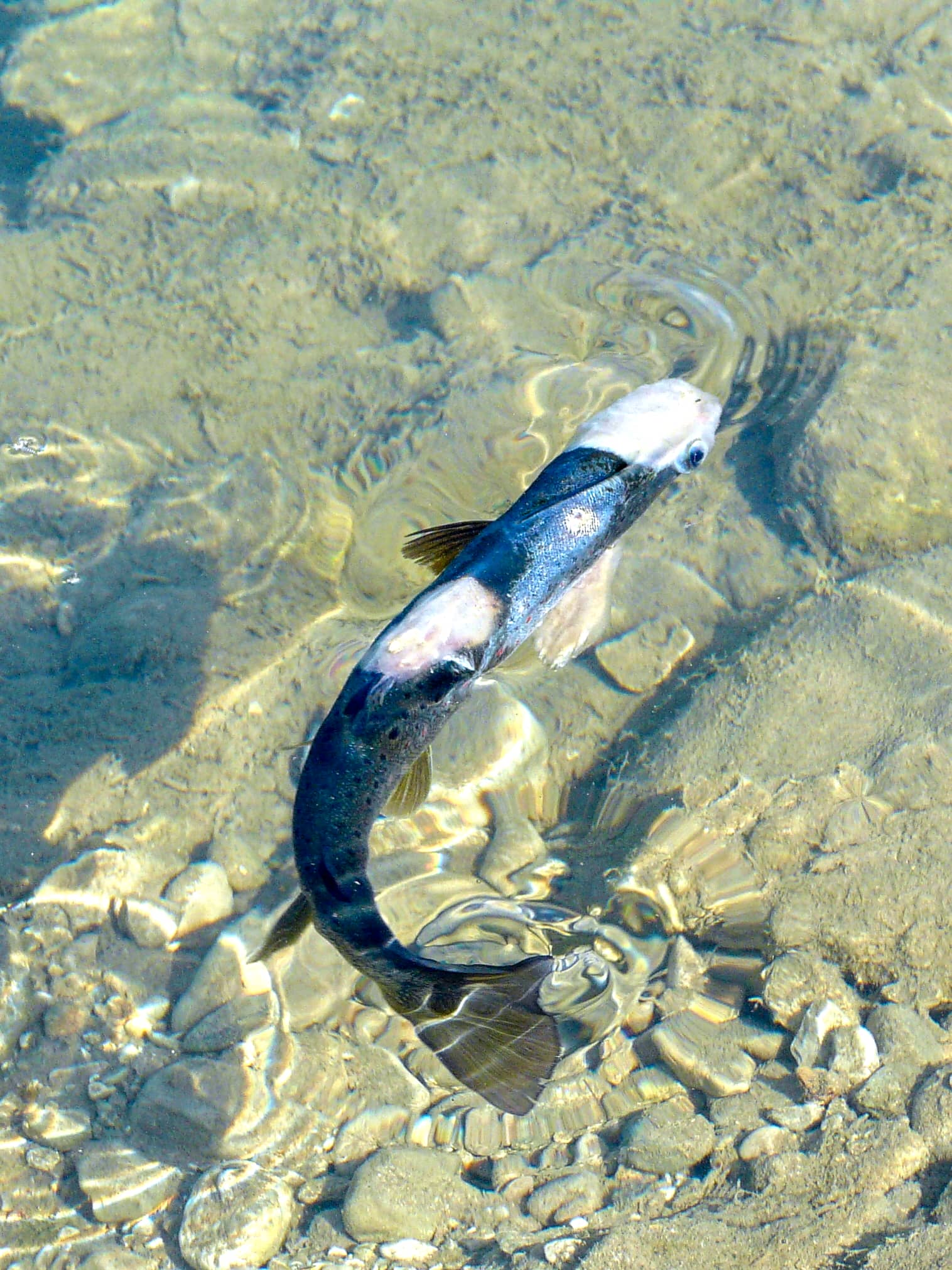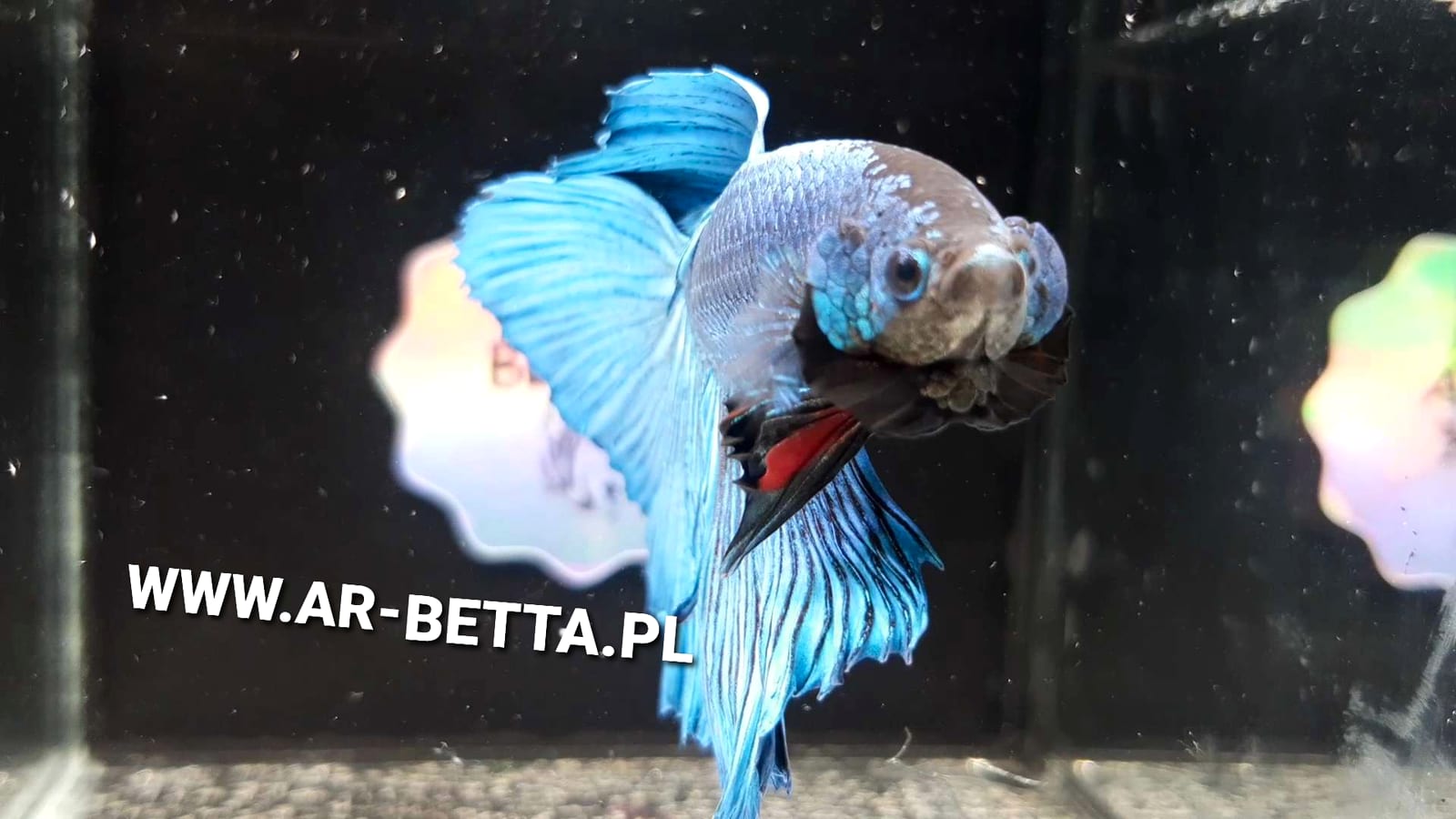
A white fuzzy patch on a betta is not automatically a fungal infection. Three distinct conditions produce white patches: true fungal infection, columnaris (bacterial), and ich (parasitic). Each requires different treatment. Treating columnaris with antifungal medication wastes time while the bacteria advance. Treating ich with antibiotics does nothing (Merck Veterinary Manual, Fungal Diseases of Fish).
Get the diagnosis right first.
What true fungal infection looks like
True fungal infections in bettas are caused by water molds, most commonly Saprolegnia and Achyla species (Oomycetes, technically not fungi in the modern taxonomic sense, but they behave like fungi in clinical presentation and treatment).
Visual characteristics:
- White or grey cotton-wool or wool-like fuzzy growth
- Three-dimensional and fluffy in texture when observed at an angle
- Usually attached to a wound, damaged fin tissue, or mouth ulcer
- May grow from the edges of a fin rot lesion
- Sometimes has brown or orange coloration at the base where it attaches to the tissue
Context: Almost always secondary to another problem: an injury site, a bacterial lesion, a scale loss event, mouth damage from an attempted spawn. Finding true primary fungal infection on an intact fish with no wounds is rare. If you see fungal-like growth with no visible wound, look harder for the underlying injury.
Saprolegnia life cycle: The organism alternates between mycelial growth on the host (the visible cottony mass) and asexual spore production. Zoospores are released from zoosporangia at the tips of hyphae, swim briefly, then encyst and germinate on nearby tissue or substrate. At water temperatures below 18°C (65°F), the life cycle accelerates considerably, which is why cold tanks produce worse outbreaks. Above 26°C (79°F), Saprolegnia growth slows substantially, which is one reason maintaining warm water is both a treatment and prevention factor. The spores are always present in aquarium water; disease occurs only when they find compromised tissue to colonize (Noga, Fish Disease: Diagnosis and Treatment, 2nd ed., 2010).
The differential: three white-patch conditions
| Feature | True fungal (Saprolegnia) | Columnaris (bacterial) | Ich (parasitic) |
|---|---|---|---|
| Texture | Fuzzy, 3D, cottony | Flat, patch, or saddle-shaped | Pinpoint white dots |
| Location | On wounds, fin edges, mouth | Dorsal fin, mouth, body saddle | Distributed across body and fins |
| Progression speed | Moderate (days) | Fast (hours to 1–2 days) | Moderate (completes life cycle in 4–7 days at 78°F) |
| Associated signs | Usually secondary to injury | Fin fraying, skin ulcers, rapid spread | Scratching on objects, gill irritation |
| Temperature sensitivity | Worse in cold water | Worse in warm water (25°C+) | Faster at warm temperatures |
| Treatment | Antifungal (Victoria Green, Paraguard) | Antibiotic (KanaPlex, NeoPlex) | Heat treatment or copper |
Treatment: confirmed fungal infection
Hospital tank setup
Move the fish to a hospital tank. Bare-bottom, 5 gallons minimum, heater set to 76–78°F (do not run hot; high temperatures favor Saprolegnia growth), air stone, daily water changes.
Antifungal treatment
API Fungus Cure (affiliate) (active ingredients: Victoria Green B + acriflavine) is the most readily available OTC antifungal. Follow package dosing. API Fungus Cure treats true fungal infections and has some mild antibacterial activity, useful given that fungal and bacterial infections frequently co-occur.
Seachem Paraguard has both antifungal and antibacterial properties Seachem Paraguard on Amazon Affiliate link. See our disclosure. and is gentler on biological filtration.
Methylene blue can be used as a dip (brief immersion, not continuous exposure) for mouth fungus. Concentration and duration are important; follow established protocols.
Aquarium salt (sodium chloride) at 1 tablespoon per 5 gallons has mild antifungal properties, but it isn’t reliable as a stand-alone treatment for an infection that’s already established. Used alongside one of the medications above, it also eases the osmotic stress the fish is under while it heals.
Duration and monitoring
Treat for a minimum of 7–10 days. Improvement should be visible within 3–5 days: the fuzzy growth shrinks and the underlying tissue begins healing. If the lesion continues spreading or the texture changes from fuzzy to flat/discolored, reassess for columnaris.
If treatment fails
No improvement within 48–72 hours on antifungal? Reassess. If the lesion is progressing and changing character, it is likely columnaris rather than or in addition to a fungal infection. Switch to an antibiotic (kanamycin or Seachem NeoPlex) and continue water changes. See columnaris for the full protocol.
Treatment: columnaris that looks like fungal
Columnaris (Flavobacterium columnare) produces white patches that new keepers frequently mistake for fungal infection. The key differences: columnaris patches are flatter and more adherent to the skin, they progress within hours not days, and they often appear at the dorsal fin first (“saddleback” lesion) or at the mouth.
Columnaris requires antibiotic treatment; antifungal medications have no effect. See columnaris for the complete treatment protocol.
Prevention
Fungal infections follow compromised tissue. A betta that keeps developing them doesn’t have bad luck, it has an underlying problem: inadequate water changes, chronically elevated ammonia or nitrite, or a bacterial infection that was never fully cleared. Fix that first. The prevention strategy is:
- Maintain water quality: zero ammonia, zero nitrite, nitrate below 40 ppm
- Remove sharp decorations that cause physical injury
- Treat bacterial infections promptly; untreated fin rot creates the wound surface that Saprolegnia colonizes
- Correct temperature: Saprolegnia thrives in cold water; maintaining 76–82°F reduces fungal growth rate
- Quarantine new fish to prevent importing disease
Saprolegnia and Achyla spores are already present in most aquarium water at low levels; a betta with intact skin and a functioning immune system just resists them. A fish with an active fungal infection isn’t a high direct contagion risk to tank mates, but whatever let the infection take hold in the first place, usually water quality, puts every fish in that tank at risk.