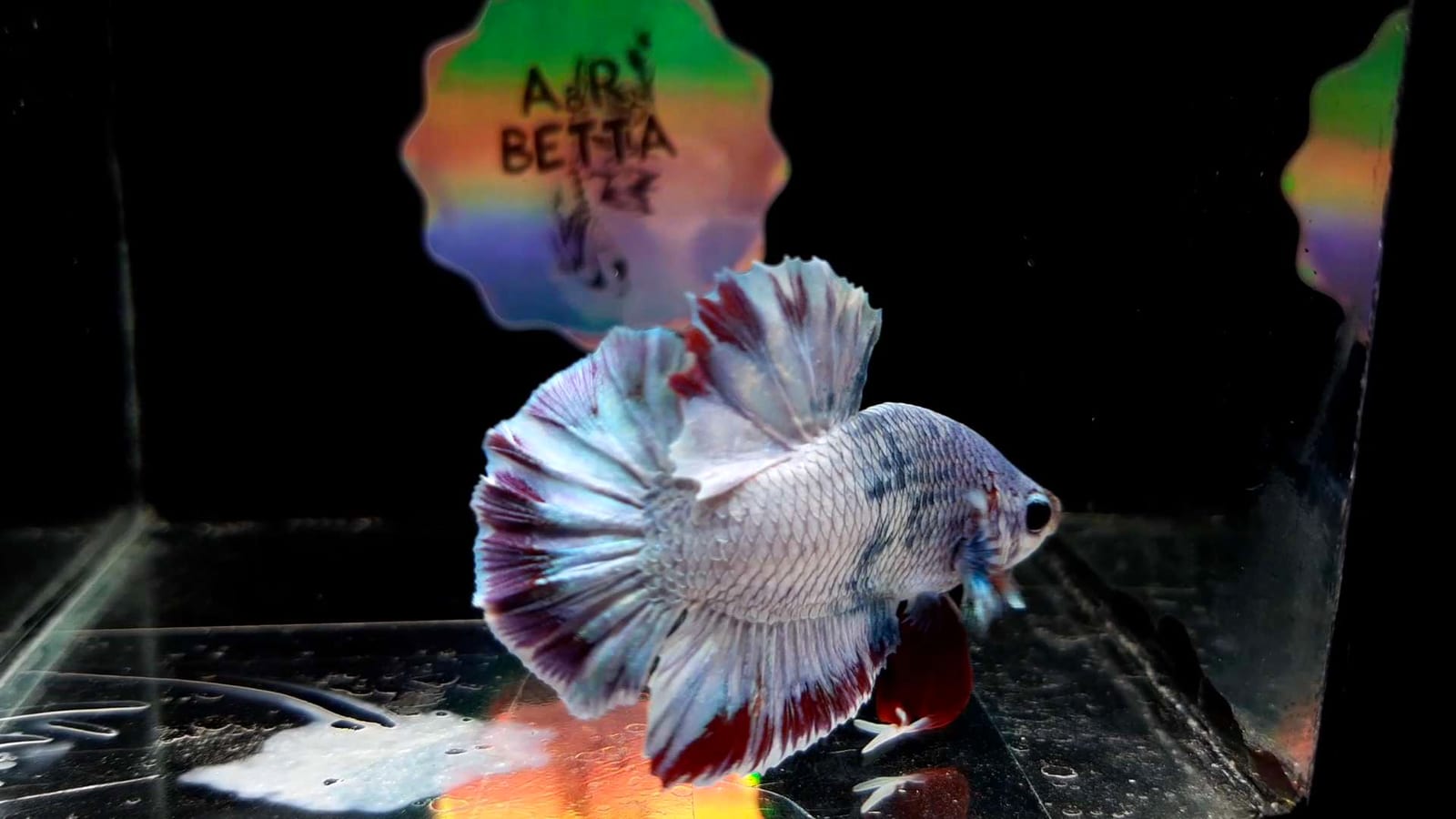
Ich is Ichthyophthirius multifiliis, a ciliate parasite that lives under the fish’s skin as a feeding trophont, drops off to form a cyst on the substrate, then releases hundreds of free-swimming theronts that find a new host. The parasite is only vulnerable to medication during the theront stage. Raising temperature speeds the cycle and shortens the vulnerable window. The standard protocol is heat to 30 °C plus Hikari Ich-X for 14 days (USGS NAS fact sheet, Ichthyophthirius).
How to recognize it
Small round white spots on the body and fins, each 0.5 to 1 mm across, like grains of table salt stuck to the fish. Spots appear first on fins and head, then spread to body. Infected fish often flash (rub against objects), breathe rapidly, and act itchy.
The key differential:
- Ich: round discrete white spots, 0.5-1 mm, evenly distributed.
- Velvet: gold or rust dusting, finer than ich, requires a flashlight to see clearly.
- Fungus: tufted cotton-wool appearance, larger patches, not granular.
- Mycobacterial granuloma: raised white bumps that don’t move or drop off. Very different.
Ich in a betta-only tank is usually introduced with a new fish or new plants from a pet store. Quarantine prevents this.
The stakes are real, but not automatically dire. Untreated ich kills 60 to 90% of affected fish within 14 to 21 days. Caught at the first visible spots and treated correctly, survival runs 85 to 95%. That gap is almost entirely about how fast you act.
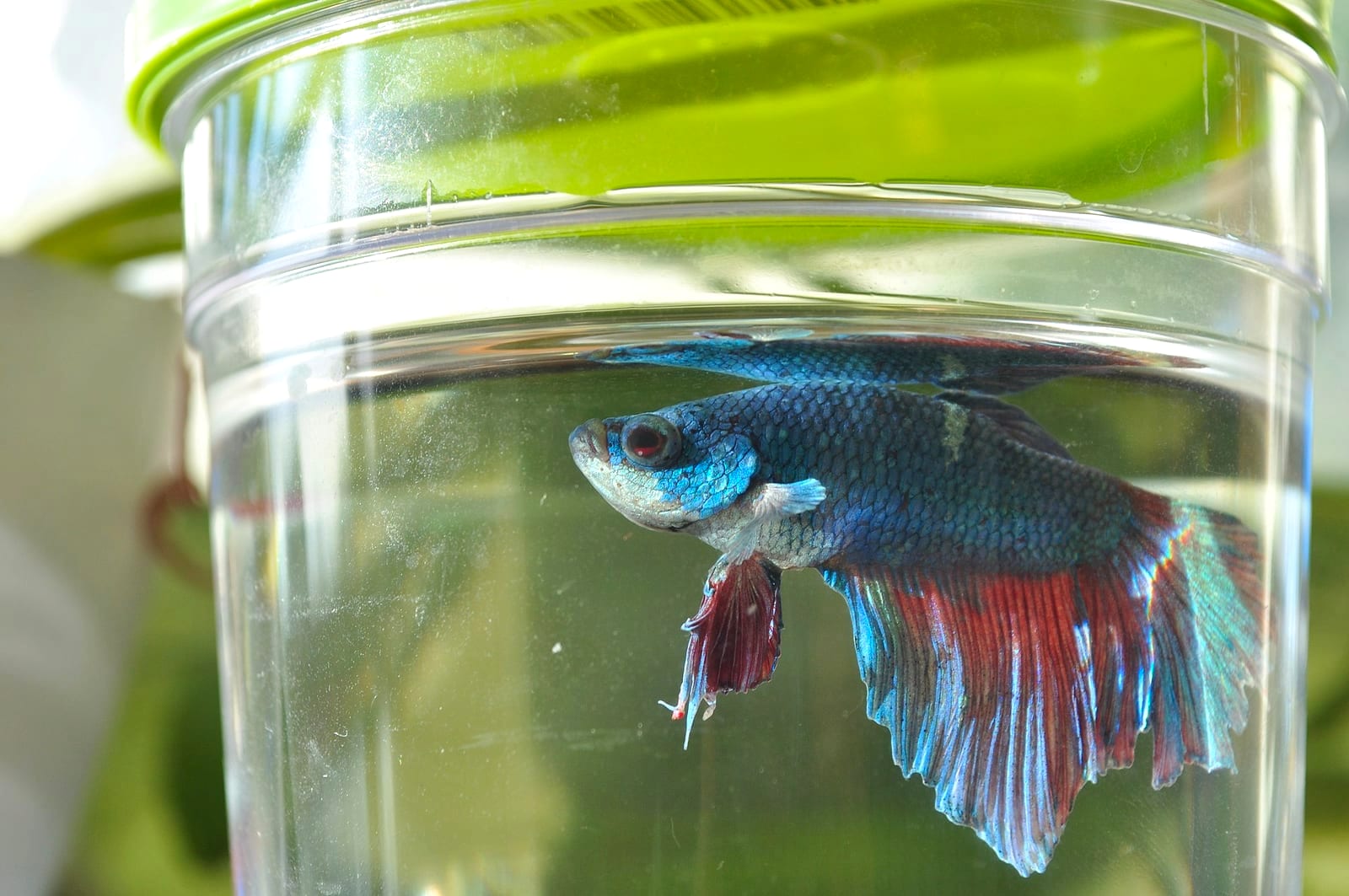
The life cycle (this is why heat works)
- Trophont stage. Parasite lives in pits under the fish’s skin for 3 to 7 days. Visible as a white spot. Protected from medication by the host tissue.
- Tomont stage. Trophont drops off, falls to substrate, forms a protective cyst. Invulnerable to medication.
- Theront stage. Cyst ruptures, releases hundreds of free-swimming theronts that must find a host within 24-48 hours or die. Vulnerable to medication.
At 25 °C, the full cycle takes 7 to 10 days. At 30 °C, it takes 3 to 4 days. Raising temperature means the parasite cycles faster, which means more theronts released and exposed to medication in the same treatment window. Higher temperature also boosts fish immune response (Dickerson, Ichthyophthirius multifiliis life cycle, Fish Diseases and Disorders, 2006).
Treatment protocol
Hospital tank or main tank? Ich is contagious across all fish. If the main tank has other fish, treat the whole tank. If only the betta is affected and is in a 5-gallon by himself, treat in place. Either way, remove invertebrates and activated carbon first.
Setup
- Remove activated carbon from the filter.
- Remove snails and shrimp to a separate holding container (copper is toxic to invertebrates).
- Raise temperature 1 °C per day up to 30 °C. Sudden temperature changes trigger stress.
- Increase surface agitation; higher temperature holds less dissolved oxygen.
- Don’t exceed 30 °C for a betta. Higher than that adds stress without much additional parasite benefit.
Heat alone, no medication, can sometimes clear ich on a healthy adult betta in a quiet tank: the compressed life cycle exposes the parasite to the fish’s immune response faster than the parasite can rebuild its numbers. It’s harder on the fish than it sounds, since warmer water holds less dissolved oxygen right when the fish needs more of it. Heat plus Ich-X together is faster and more reliable, and it’s the combination this protocol assumes.
Medication
Hikari Ich-X is the current standard of care. Uses malachite green and formalin at therapeutic-but-mild concentrations. Dose: 5 ml per 10 gallons, every 24 hours, with a 25% water change before each redose. Continue for 10 to 14 days.
Hikari Ich-X on Amazon Affiliate link. See our disclosure.
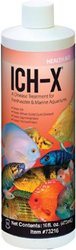
API Super Ich Cure is an alternative. Same active ingredients, different concentration. Follow label.
Aquarium salt at 1 tablespoon per 5 gallons is an adjunct, not a replacement, run for the same 10 to 14 days as the Ich-X course. It adds osmotic stress that live plants and most invertebrates can’t tolerate, one more reason to pull them before treatment. In a betta-only hospital tank it’s simply supportive.
Copper-based medications (CuSO4, CopperSafe) work but are strong. Reserve for fish that tolerate copper (not bettas as a first choice). Copper poisoning is one of the top causes of fish death in ich treatment.
Daily protocol
Day 1: Test water. Remove carbon and inverts. Begin heating. Dose Ich-X. Day 2: 25% water change, redose Ich-X. Day 3 to 14: continue 25% water change and Ich-X daily. Monitor spots.
By day 5 to 7 at 30 °C, visible spots should diminish. The full 14-day course is required because the life cycle takes a full 14 days to complete at therapeutic temperature. Stopping early produces relapse.
Day 14: 50% water change. Lower temperature 1 °C per day back to 26 °C. Run activated carbon 48 hours. Return invertebrates.
What not to do
Don’t stop treatment when spots disappear. Spots disappear on day 5-7 when trophonts drop off, but theronts are still cycling. Treat the full 14 days.
Don’t treat without heat. Ich-X alone at 25 °C takes 21+ days and often fails. Heat compresses the life cycle.
Don’t overdose. Malachite green at high concentrations damages kidneys. Follow label.
Don’t combine medications. Ich-X plus copper at the same time has killed many fish. One treatment at a time.
Don’t ignore flashing behavior without spots. Flashing (rubbing on décor) can be gill flukes or early ich. If no spots appear in 5 days, look for other parasites.
Prevention
- Quarantine every new fish for 14 days in a separate tank before adding to main.
- Don’t buy from shops with visibly sick fish in any tank on the system.
- Don’t share nets, siphons, or tools between tanks without drying for 24 hours.
- Plants can carry ich theronts. Bleach-dip new plants (19 parts water to 1 part household bleach, 90 seconds, rinse thoroughly) or quarantine plants for a week in a fishless bucket at 30 °C before adding.
- Stable temperature. Temperature swings of 4+ °C often trigger latent ich.
Ich is one of the most survivable parasitic diseases when caught early. The pattern that kills fish is not treating, or stopping treatment at day 5 when the spots “go away,” or refusing to do heat because it seems aggressive. Follow the protocol, count to 14, lower the temperature back at the end. The fish comes back clear.
Related on this site
- Betta Disease: Diagnosis and Treatment, Evidence-Based
- Betta Velvet Disease (Piscinoodinium): Darkness and Copper Protocol
- Betta Columnaris: Fast-Moving Bacterial Disease with a 5-Day Window
- Betta Dropsy: Bloat, Pineconing, and a Terminal Prognosis
- Betta Euthanasia Protocol: When Treatment Isn’t the Right Answer