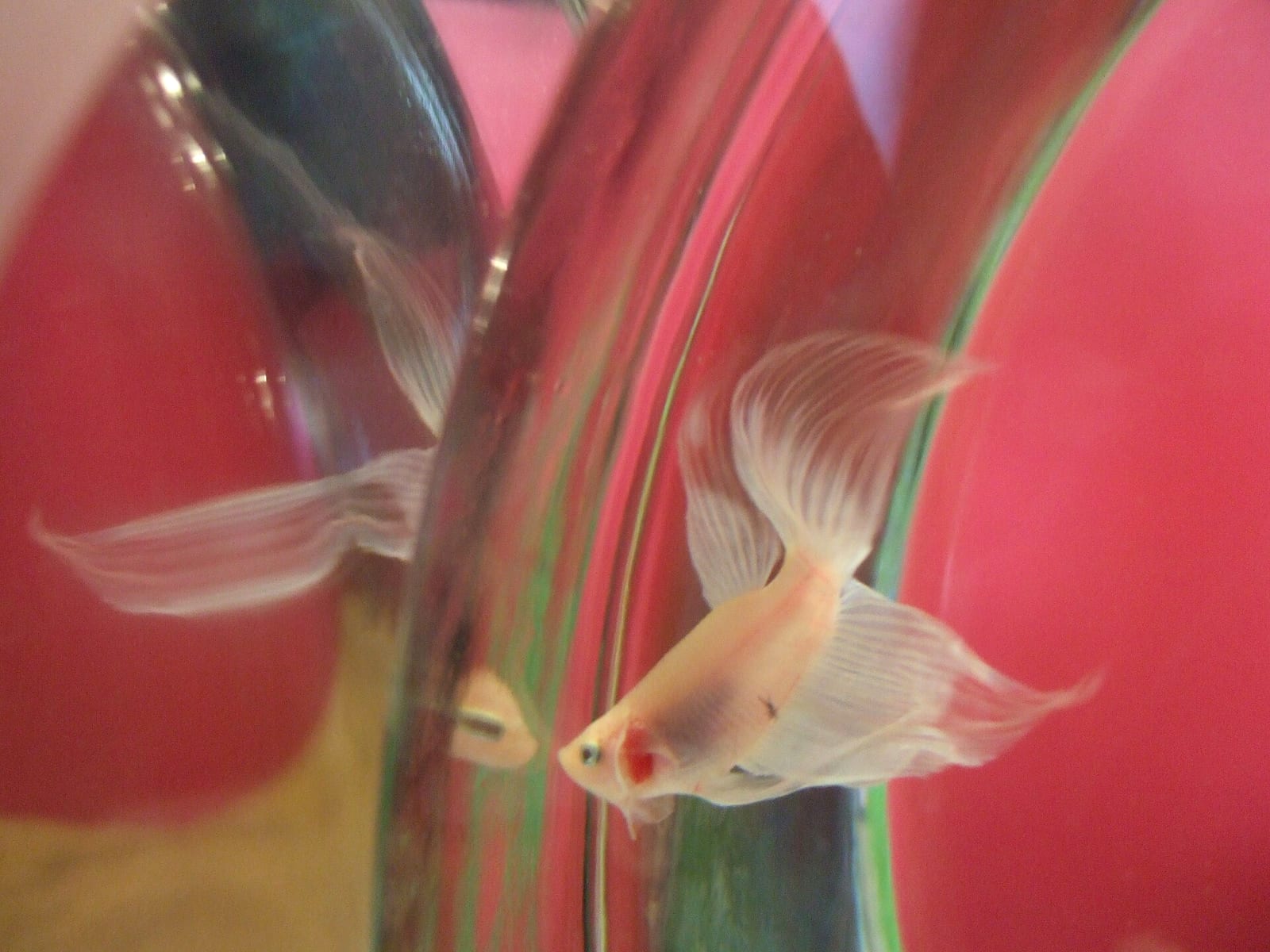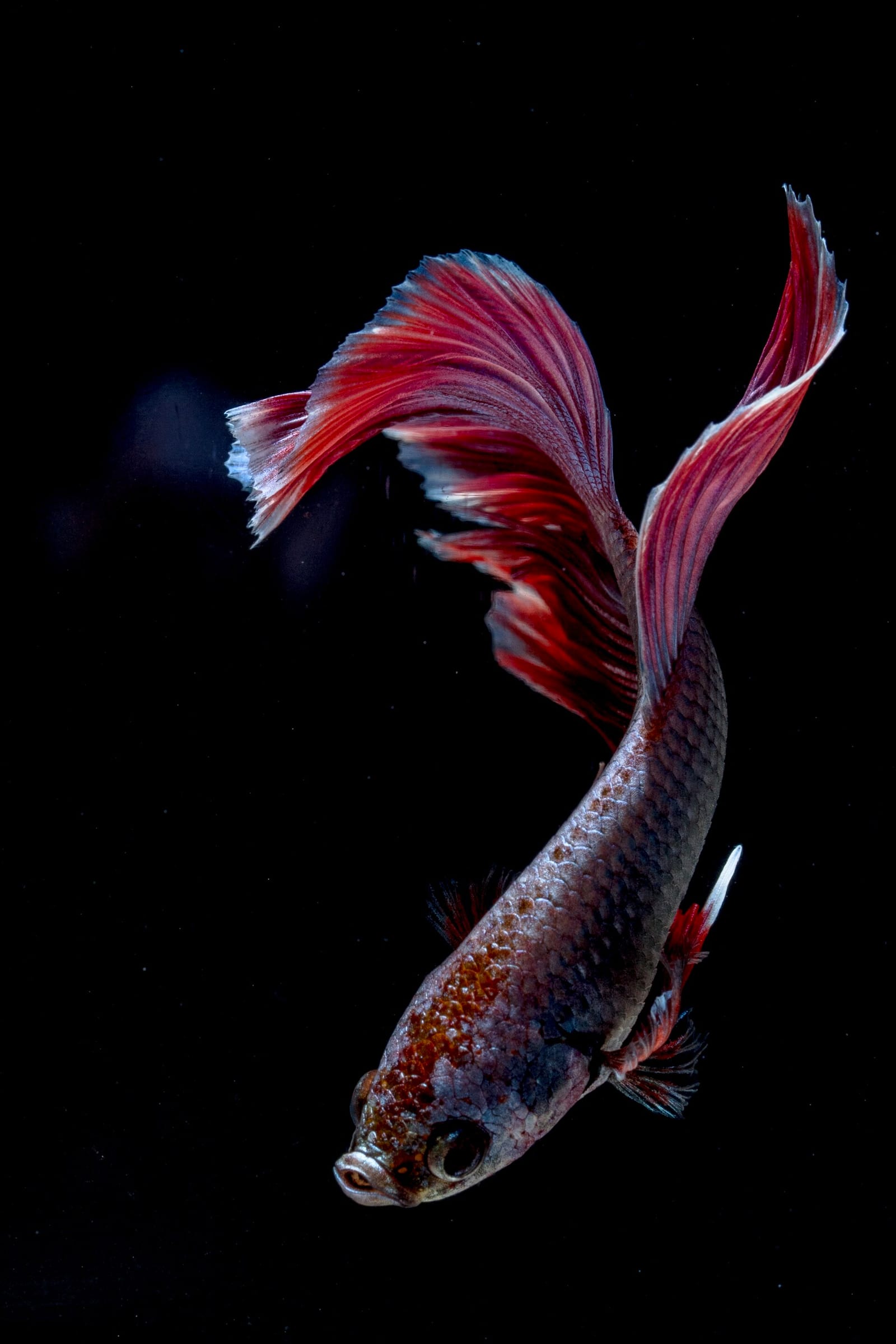
Tail biting is behavioral. The fish bites itself. No bacteria, no parasite, no medication. The treatment is changing what is wrong with the environment (Sneddon et al., Defining and assessing animal pain, Animal Behaviour, 2014).
This matters because tail biting looks enough like fin rot that many keepers treat it with antibiotics, which do nothing to the behavior, delay finding the actual cause, and add unnecessary chemical stress to the tank.
How to confirm it is tail biting
The bite leaves a distinctive mark: a semicircular notch at the caudal fin edge. The curve of the notch corresponds to the bite radius of the fish’s mouth. The tissue that remains has clean edges with normal color, not ragged, not darkened.
If you can observe the fish for 30–60 minutes, particularly during active periods after lights-on or feeding, you may catch the behavior directly. Many keepers who set up a camera or watch patiently see the fish curl, bite, and then release. It is not subtle once you know to look.
Confirming it is not fin rot:
- Fin rot edges are ragged and irregular, with discoloration (brown, black, white) at the margin
- Fin rot progresses daily; the margin continues eroding
- Tail bite notches do not deepen or spread unless the fish re-bites
Causes
Chronic stress
Any persistent stressor can trigger and maintain tail biting. Common causes:
- Constant reflection aggression: a highly reflective tank wall or background that continuously triggers the threat display response. The fish is never at rest. Some bettas redirect this chronic activation into self-stimulatory behavior.
- Ammonia, nitrite, or elevated nitrate: chemical stress is not always visible as lethargy. Some fish express stress as increased activity and aberrant behavior.
- Vibration or movement near the tank: a tank near a speaker, television, or frequently-trafficked path is a source of startle stress.
- Temperature below optimal: cold water suppresses normal behavior patterns in complex ways; some bettas show increased behavioral aberrations in cool tanks.
Boredom and understimulation
A betta in a bare tank with no cover, no hunting opportunities, and no environmental variation has fewer behavioral outlets. The species evolved in a densely vegetated environment with insects, zooplankton, and varied micro-terrain. A bare tank is sensory deprivation.
Adding plants (real or silk) with multiple levels of cover, a varied feeding routine (live or frozen food a few times a week), and visual interest items (a mirror used briefly 2-3 times weekly for enrichment flaring, then removed) provides outlet for the behavioral energy that might otherwise go into tail biting.
Excessive fin length
Long-finned bettas swim with their caudal fin in constant motion. When the tail is very long (rosetail and extreme halfmoon forms especially), it sweeps into the lateral visual field during normal swimming. The fish perceives this motion as an intruder and bites. This is a reflexive, territorial response, not a deliberate or correctable behavior in the way that stress-driven biting might be.
Most susceptible forms: Rosetail, over-halfmoon (caudal spread >180°), extreme veiltails. The plakat body plan is almost never involved.
What to do
Work through this in order:
-
Test the water. Ammonia zero, nitrite zero, nitrate below 20 ppm, temperature 76–82°F. Fix any parameter out of range before addressing behavioral causes.
-
Reduce reflection. Apply dark paper to three sides of the tank (outside of the glass). Leave the front clear for viewing. This eliminates the most common reflection trigger within 24–48 hours.
-
Enrich the environment. Add plants (at minimum one broad-leaf plant the fish can rest on, and enough cover to break up line-of-sight). Add a leaf hammock near the surface. Vary feeding with live or frozen food.
-
Move the tank if necessary. Away from speakers, televisions, frequently-walked paths.
-
Assess the fin form. If the fish is a rosetail or extreme long-fin and no behavioral modification resolves the biting, the fin length itself may be the irreducible cause. Consult an experienced keeper or veterinarian about fin reduction as a last resort, it’s invasive surgery on a small animal, not a grooming trim, and done wrong it opens the fish to secondary infection at exactly the site already prone to damage.
When to treat medically
Tail biting is not a bacterial disease and does not require antibiotics unless secondary infection develops at the bite site.
Secondary infection signs:
- The bite site develops ragged edges or discoloration (bacteria are colonizing the wound)
- The margin continues to change even when the fish has not been observed biting
If secondary infection is confirmed, treat as mild-to-moderate fin rot. See fin rot for the protocol. Continue addressing the behavioral cause simultaneously; antibiotics will not stop the fish from biting again.
Fin regeneration
Once the behavior is resolved, fin tissue regenerates in clean water at correct temperature (Noga, Fish Disease: Diagnosis and Treatment, 2nd ed., 2010). The new growth appears as clear, translucent tissue extending from the bite edge. Full regeneration of a significant notch may take 4–8 weeks. Bettas regenerate fin tissue well; the visible evidence of previous biting usually disappears entirely. None of that matters if the behavior hasn’t actually stopped, though, a fish still biting simply replaces whatever regrew overnight, and the fin makes no net progress until the underlying cause is resolved.
The two environmental changes that reduce tail-biting most reliably: adding plant cover (live or silk) to break line-of-sight to reflections, and Indian almond leaves (affiliate), their tannins reduce ambient stress and have been associated with lower aggression rates in captive bettas.