The modern betta color catalog contains dozens of named morphs. Most trace to combinations of about a dozen major gene loci plus selection. The 2022 phenotypic-architecture paper (PubMed 36129976) mapped many of these to specific genomic loci, providing the scientific foundation for what hobbyists had been observing through breeding records. This page is the practical reference: common morphs, genetic basis, breeding behavior. For deeper mechanics, see the genetics guide and the individual genetics articles.
Solid colors
Red. Erythrophore-dominant body. Solid red is inherited dominantly over solid yellow, and the 2021 genome study tied red, orange and yellow to one region of chromosome 19, in the RNF213 gene. Because red is dominant, a red fish can carry yellow, and two such reds can throw yellow offspring.
Royal blue. Heavy iridescent blue coverage. Royal blue is the in-between form of the three blues: crossing two royal blues produces turquoise-green, royal blue and steel blue offspring in a 1:2:1 ratio, so a royal never breeds true.
Steel blue. Paler, grayer blue, and the one blue that lacks red pigment cells in the upper scale layer. Under the 1:2:1 model, two steels produce steel, and a steel crossed with a turquoise-green produces royal blues.
Green (turquoise). The other end of the blue series from steel. Two turquoise-greens produce turquoise-green.
Black melano. Deep black. Melano is recessive, and breeders consistently report that melano females are usually infertile, so melano lines are kept going through females that carry the gene without showing it. See black melano.
Black lace. Dark black without infertility. Different allelic basis. Fertile both sexes.
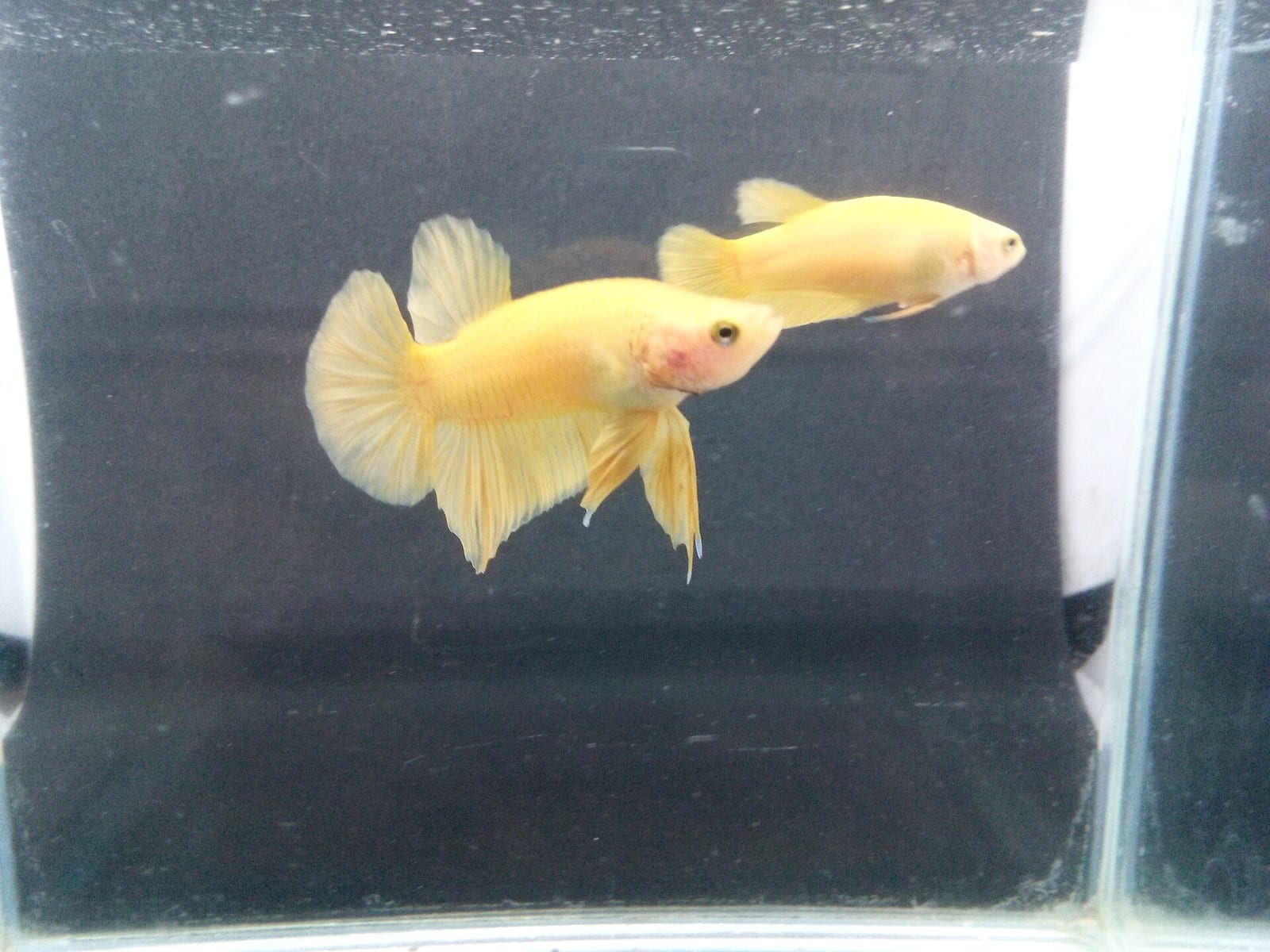
Yellow. Xanthophore-dominant, absent erythrophore or reduced red expression. Yellow requires multiple alleles; less predictable than red.
White (clear/opaque-white). Absent or minimal pigment. Can be cellophane (see below) or opaque white (Op gene with pale base).
Cellophane. Transparent fins, flesh-colored body showing through skin. No major pigment expressed. Flesh color comes from underlying tissues.
Pattern morphs
Cambodian. Pale body (often pinkish or white) with colored fins. The body carries little red or blue pigment while the fins keep theirs.
Butterfly. Color bands in fins with distinct edge where color changes to white or another color. Polygenic, selected across generations.
Pineapple. Yellow body with darker fin edges. Yellow base plus pattern gene.
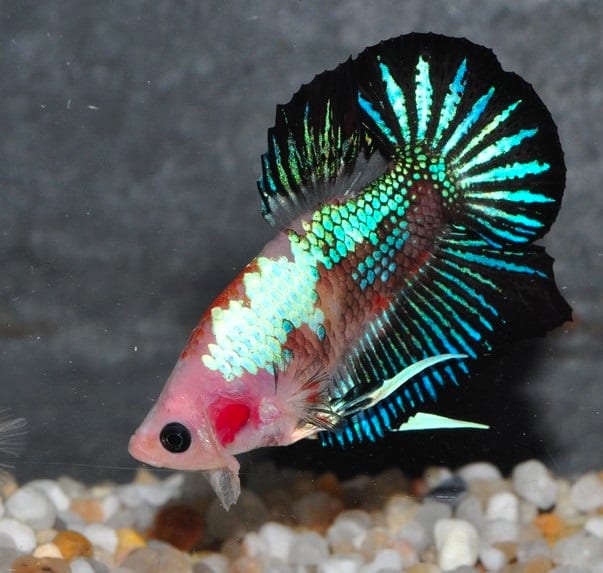
Marble. Irregular patches of color that shift through life. The 2021 genome study tied the mosaic pattern to two regions of chromosome 16, but how it works is still unknown. See marble gene.
Koi. Red, black, and white calico marble. Selected version of marble genetics.
Galaxy koi. Koi with iridescent spots added (opaque gene).
Candy. Pastel marble, often pale blue/pink/yellow mix.
Nemo. Red and black marble with orange accents. Named after the movie clownfish.
Iridescent intensification
Dragon. Thick metallic scale coverage. Opaque gene plus multi-generation selection. See dragon scale.
Super red dragon. Red base with full dragon scale.
Red dragon plakat. Dragon on a plakat (short-finned) body.
Copper. Iridophore with copper-brown cast. Often mistaken for light brown.
Gold dragon. Yellow-gold metallic scale coverage. Rare.
The metallic sheen on all of these is structural color, so it shifts with viewing angle and lighting the way pigment never does (iridescence explains why). Lighting covers choosing a fixture, and for a 5-gallon its default is the NICREW ClassicLED Plus, with a built-in timer and adjustable brightness.
Check NICREW ClassicLED Plus on Amazon Affiliate link. As an Amazon Associate we earn from qualifying purchases. See our disclosure.
Less common morphs
Chocolate. Dark brown body, often yellow fins. Melanophore plus xanthophore.
Orange. Xanthophore plus erythrophore partial expression. Less common than red.
Salamander. Orange-red body with white marble-like patches.
Mustard gas. Blue body, yellow fins with dark edges. A classic older morph.
Black orchid. Black base with fin extensions and faint iridescent tips.
Paradise. Mimics paradise fish (Macropodus) color pattern. Rare, selective.
Show standards vs. pet market
IBC Exhibition Standards categorize competition classes by color and pattern. Show bettas are judged against specific criteria for each class. Pet market colors are less strict: anything with strong visual appeal sells.
Pet-store common colors (2020-2026):
- Red
- Royal blue
- Galaxy koi
- Dragon variants
- Marble
Serious collector colors:
- Black melano
- Yellow dragon
- White platinum
- Chocolate
- Wild-type (rare, mostly from wild-type breeding programs)
Red and royal blue outsell every other color at the pet-store level. Among collectors, top-quality koi and galaxy koi specimens carry the highest price tags, regardless of which bucket they fall in for general availability. True wild-type is the genuine rarity: greenish-brown, short-finned, and subtle, it’s the ancestral phenotype a century of breeding for saturated color has all but erased from the pet trade.
How the main colors are inherited
| Color | How it’s inherited | What a pairing produces | Source |
|---|---|---|---|
| Turquoise-green, royal blue, steel blue | One locus, three forms; royal is the in-between form | Royal × royal: turquoise, royal and steel at 1:2:1. Steel × turquoise: royal. Steel × steel: steel | Zhang et al. 2021, citing Umrath |
| Red vs yellow | Red dominant over yellow | Red × yellow: red, unless the red parent carries yellow | Zhang et al. 2021 |
| Black melano | Recessive; females usually infertile | Melano male × carrier female: melano and carriers | Breeder reports, IBC forum |
| Marble, koi, candy, nemo | Linked to two regions of chromosome 16; mechanism unknown | Unpredictable; siblings differ, and patterns change with age | Zhang et al. 2021 |
| Dragon | Opaque gene plus generations of selection | Dragon parents raise the odds, not a fixed ratio | See dragon scale |
Color and fin type combine into the names you see for sale: halfmoon royal blue, plakat red dragon, crowntail red, double-tail galaxy koi, and dozens more. Each combination has its own breeding lines, and the color rules above apply whatever the fin type.
Color at purchase vs. adult color
A betta’s color can change from purchase (week 10-12) to adult peak (month 6-9):
- Colors may intensify (iridescence deepens, red darkens).
- Patterns may shift (marble notably).
- Fins may extend and gain fin-specific coloration.
Don’t assume the fish you bring home is the fish you’ll have in 6 months. For marble fish, assume significant pattern change.
Color loss in aging fish
Old fish (3+ years) often dull:
- Iridescence fades.
- Red desaturates.
- Pattern becomes more diffuse.
Normal aging, not disease.
Buying for color
If a specific color matters to you, buy from a breeder who can show parent fish of the same color. Pet-store bettas are mass-farm products; specific color lines trace to specific breeders.
If you want predictable adult color, buy a fish closer to adulthood (4-6 months, not 10 weeks). Younger fish change more.
Color choice isn’t purely aesthetic. Melano females are infertile (see black melano), extreme dragon coverage can compromise vision, and heavily line-bred show colors tend to run shorter lifespans than mixed-genetics pet-store fish. Weigh that before chasing the most intense version of any color.
If you’re breeding for color, read the specific genetics articles and source documented lines. Solid colors breed mostly true from solid parents; patterns like marble and butterfly don’t, and predicting a specific pattern out of a complex cross takes real breeder experience.
The color catalog is the floor, not the ceiling
New color morphs appear each year through hobbyist selection. The catalog above is the 2020-2026 mainstream. Hobby publications and AquaBid listings constantly introduce new combinations.
Follow IBC standards for the formal classification. Follow Aquabid and breeder Instagram accounts for the leading edge.
Color is the most visually obvious dimension of betta keeping. It’s also the dimension with the deepest selective-breeding history. A red halfmoon in 2026 is the result of 100 years of pet-trade color selection. Appreciate the lineage behind the fish. Color expression reflects nutrition as well as genetics: bettas on high-protein, carotenoid-rich diets show more saturated reds and cleaner whites than those on filler-heavy food. New Life Spectrum Betta Formula (affiliate) is the reference choice for color-focused keepers.