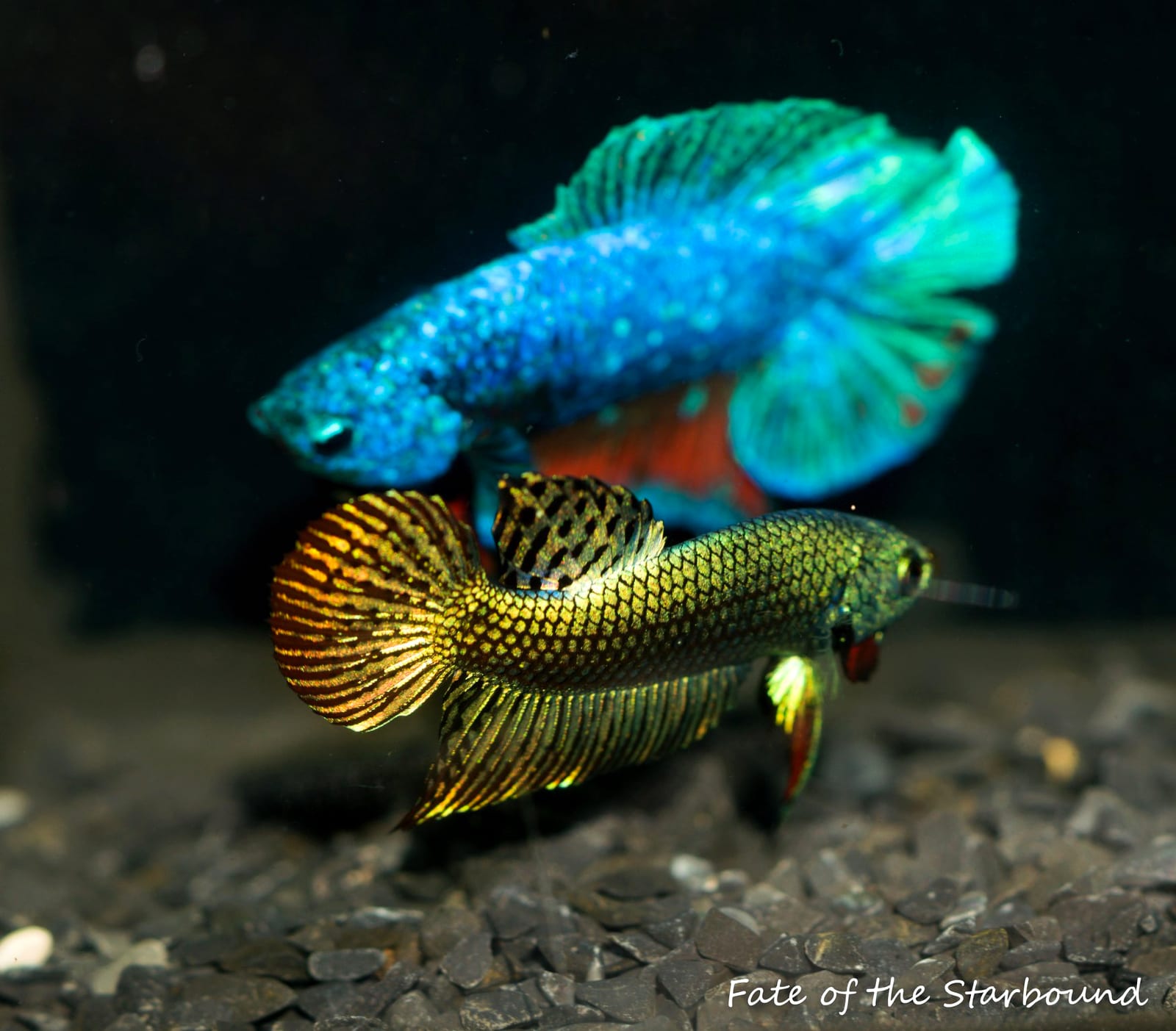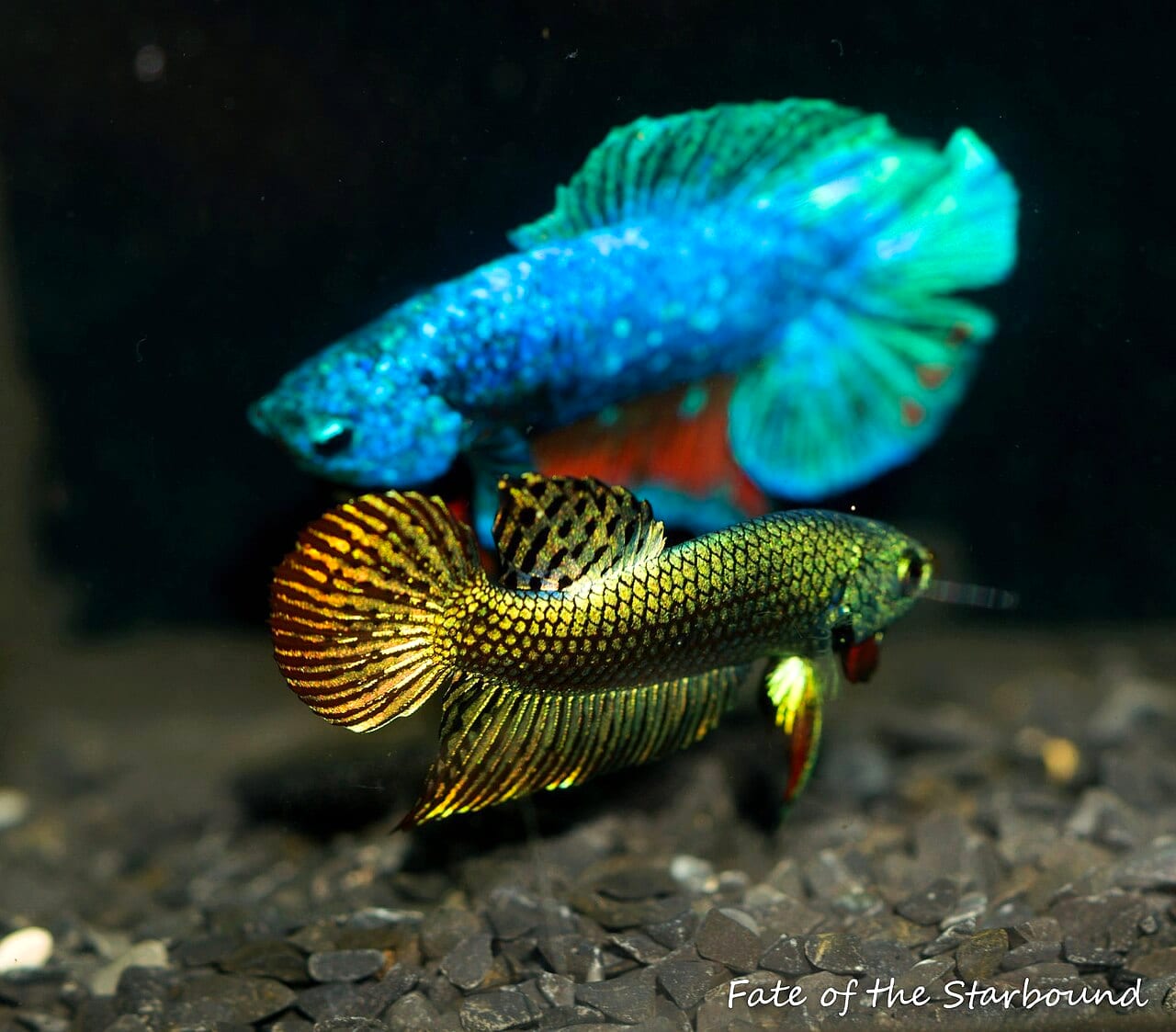
Dragon scale is the metallic, scale-outlined iridescent phenotype produced by the opaque gene (Op) combined with multi-generation selection for maximal iridophore density. A dragon betta looks like it’s wearing armor: thick bright scales over a contrasting body color, often with a near-mirror finish. The genetics is polygenic, not single-locus. Extreme selection for dragon intensity has welfare costs (shortened lifespan, compromised vision in severe cases) that thoughtful breeders manage against.
The opaque gene
The Op allele intensifies iridophore expression. A single copy of Op produces partial opacity; homozygous Op/Op produces full expression.
Interaction with other pigments:
- Red body + Op = red dragon. Red base visible between metallic scales.
- Blue body + Op = blue dragon. Iridescent-on-iridescent produces intensified blue metallic.
- Yellow body + Op = yellow dragon. Rare; often looks almost white.
- Black (melano) body + Op = black dragon or super black. Black base with iridescent overlay.
The multi-generation selection
The opaque gene alone doesn’t produce modern show dragon. That requires selective breeding across 5 to 10 generations:
- Start with a fish carrying Op plus modest iridophore density.
- Cross to partners with high iridophore density in the same color line.
- Select offspring with the thickest, most uniform scale pattern.
- Repeat for generations.
The result: iridophore density far exceeding what the Op gene alone produces. The modifier loci that shape this expression are polygenic and still poorly mapped.
The welfare tension
Extreme dragon phenotypes develop iridophore coverage onto surfaces where it shouldn’t be:
- Eye surface (“diamond eye”): iridophores extend over the cornea, reducing vision partly or fully. The fish can still navigate a tank but cannot hunt small prey effectively. Welfare concern.
- Gill covers: thick iridophore plating reduces gill flexibility.
- Head and mouth: over-extensive coverage can impair feeding.
The IBC Exhibition Standards explicitly note iridophore coverage of the eye as a fault. Serious breeders select against it. Casual breeders selling “extreme dragons” on AquaBid sometimes include fish with obvious eye coverage. Buyer beware.
Dragon crosses
| Cross | Offspring |
|---|---|
| Dragon × Dragon | Mix of dragon intensities; some over-intensified |
| Dragon × Non-dragon | Mostly intermediate, lower density |
| Dragon × Dragon siblings | Highest risk of over-intensification (diamond eye) |
Outcrossing periodically (breeding back to a non-dragon of the same color) restores genetic diversity and reduces extreme expression. Line-breeding dragon to dragon indefinitely produces progressive welfare problems.
Visually identifying dragon
Look for:
- Thick scale outlines. Each scale has a visible metallic edge, unlike normal iridescence which is more uniform.
- Metallic sheen. The overall effect is near-mirror rather than colored transparency.
- Contrast between scale and body. Dragon on a red body shows red “windows” between metallic scales; on a blue body it’s metallic-over-iridescent.
- Dense coverage across body but usually not fins. Fins show the underlying color more directly.
“Full mask dragon” is a sub-type with iridophore extending onto the head/face.
Common modern dragon color morphs
- Red dragon: red base, metallic scales. Most common.
- White dragon: pale base, near-silver metallic scales.
- Black dragon (super black, black copper): melano base, metallic overlay.
- Yellow dragon: yellow base, rare.
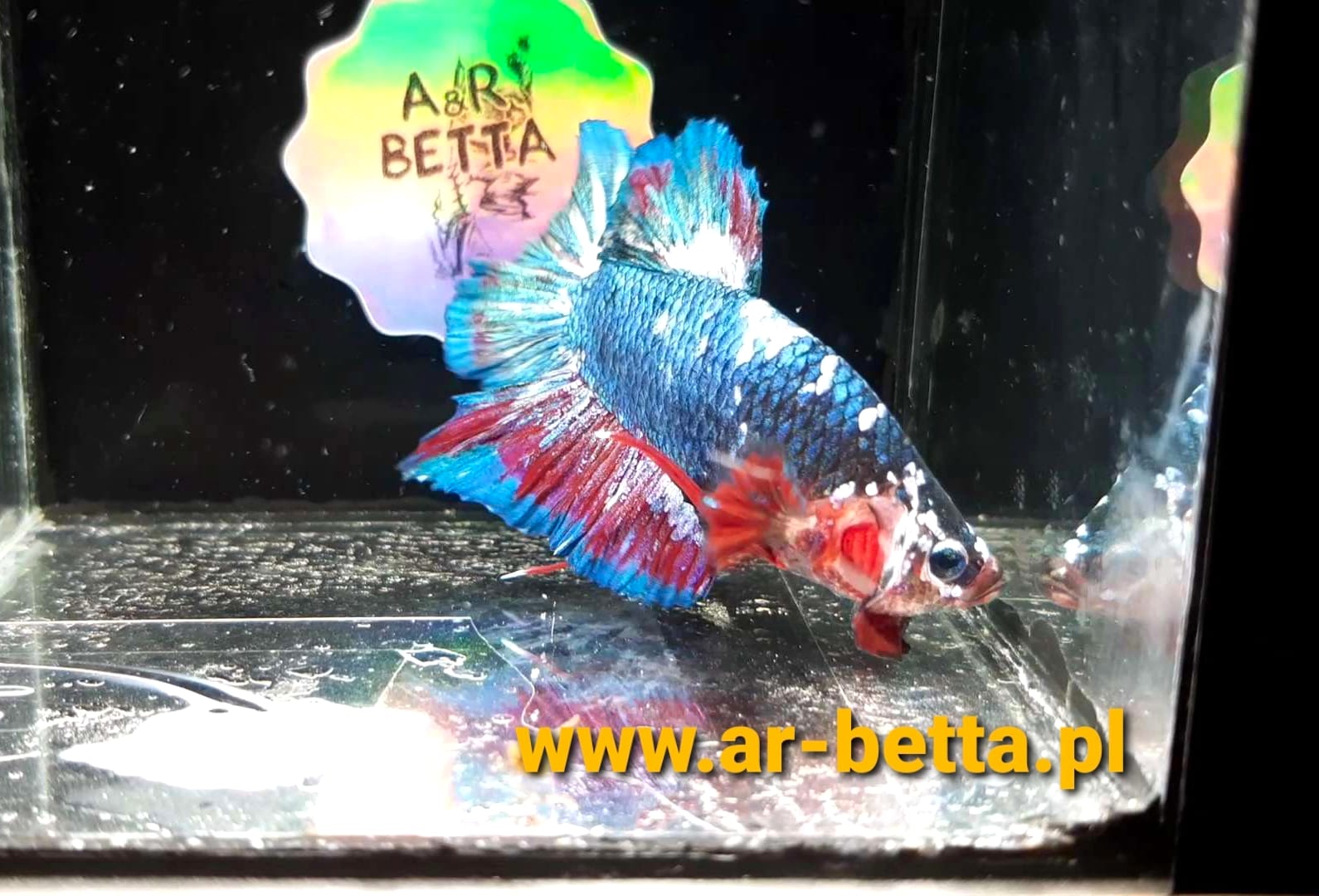
- Koi dragon: marble base + dragon intensification. Gaining popularity.
Breeding strategy for dragon line-building
Line-building time: 3 to 5 years to establish a stable dragon line with predictable outcomes.
Starting fish: acquire dragon breeding pair from named breeder. AquaBid auctions from Thailand have established dragon lines.
Record keeping: note iridophore density per fry, score on a 1-10 scale. Select top 20% for breeding.
Outcross every 3-4 generations to a non-dragon same-color fish, to restore heterozygosity.
Cull for welfare: any fry showing eye coverage at week 6 is culled. Don’t breed or sell welfare-compromised fish.
The ethics of dragon breeding
Dragon is visually striking and popular, which creates selection pressure for more intense expression than welfare permits. The responsible breeder stops at “beautiful dragon that still sees” rather than “maximum iridophore at any cost.”
Signs a breeder has crossed the line:
- Dragons for sale with visible eye coverage.
- “Extreme dragon” marketing with obvious welfare compromise.
- No health or vision information in listings.
- Offspring from dragon × dragon × dragon × dragon without outcrossing.
The 2022 genetic-architecture paper (PubMed 36129976) noted inbreeding signatures in heavily selected show strains. Dragon lines show this clearly. The cost isn’t abstract: heavily line-bred dragon strains trend toward 2-3 years of lifespan against 3-4 years for less intensively selected color lines, the direct price of narrowing the gene pool to chase scale density.
What this means for buyers
If you’re buying a dragon fish:
- Ask about eye health. Can the fish hunt live food?
- Look at the eyes yourself. Clear pupils are good. Iridophore coverage on the iris or pupil is a red flag.
- Ask about parent longevity. Lines that consistently hit 3+ years are better selected.
- Prefer moderate-intensity dragon over extreme.
Alternative if you want dragon but worry about welfare
Half-dragon phenotypes (one parent dragon, one non-dragon) produce F1 fish with partial dragon expression, full vision, normal health. They’re less show-extreme but more sturdy. An F1 half-dragon in your tank lives a longer, healthier life than a heavily line-bred full dragon.
Dragon scale is one of the hobby’s most visually stunning phenotypes and one of its clearest examples of welfare-vs-aesthetics tension. Breed and buy with that tension in mind.
Dragon scale bettas with advancing scale overgrowth benefit from clean, well-oxygenated water and low stress. Indian almond leaves (affiliate) (1 per 5 gallons) soften water and release antibacterial tannins that support slime coat integrity, relevant when scale overgrowth creates micro-abrasion sites.