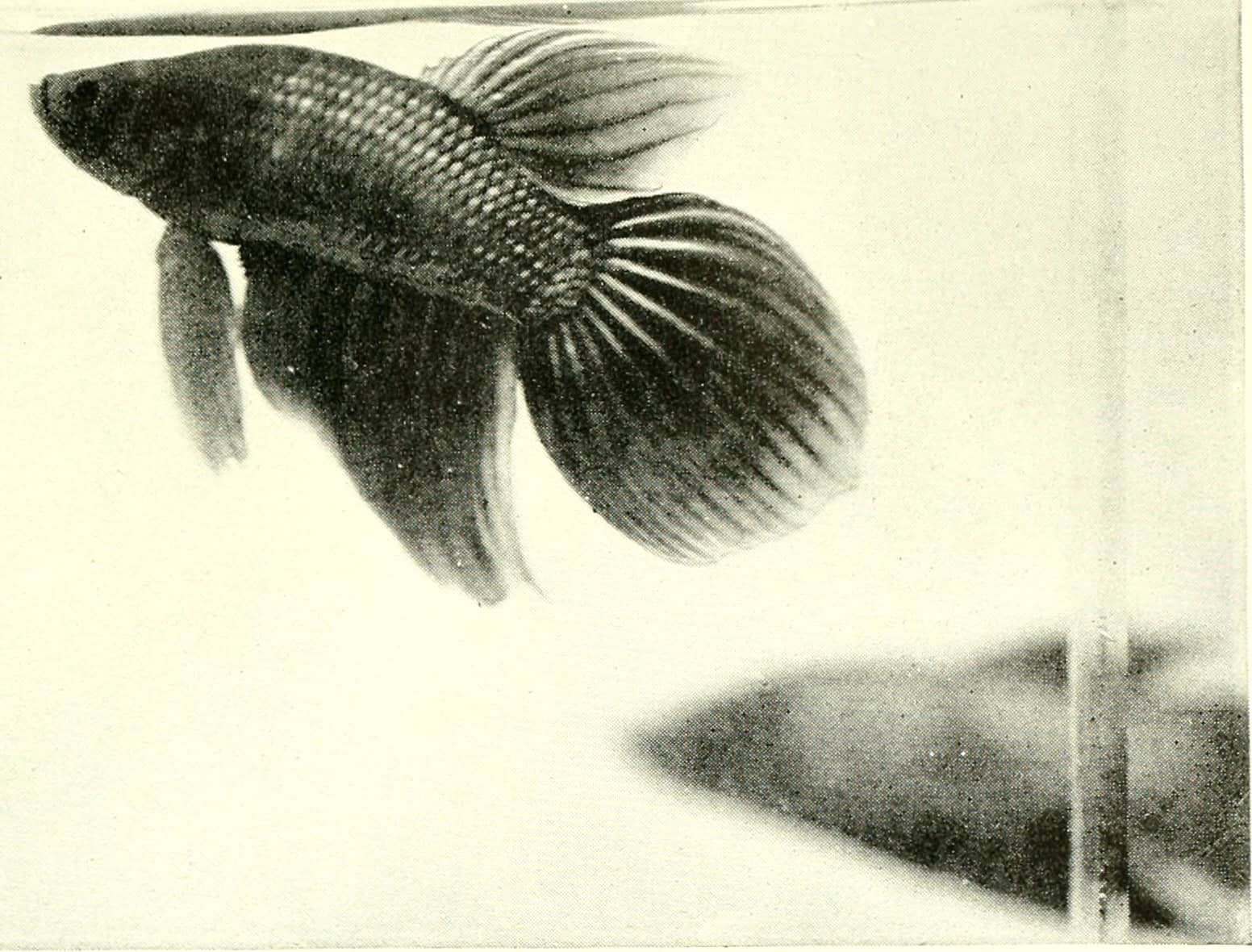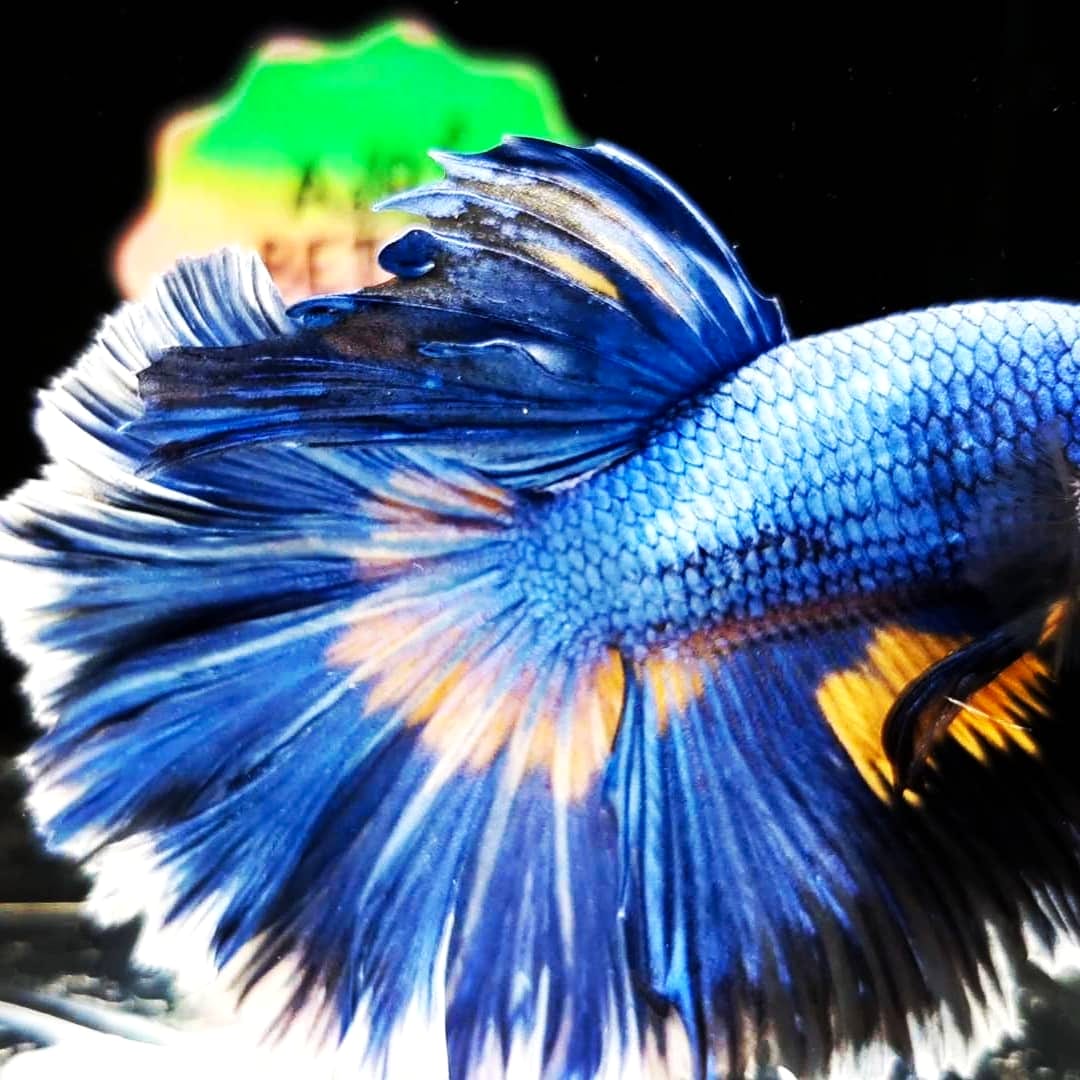
The betta’s transition from Southeast Asian fighting fish to Western aquarium staple took about 75 years: from Paul Matte’s 1896 Berlin import to the IBC’s formalization of show breeding standards in the late 1960s. The next 30 years produced every major ornamental fin form in the modern hobby.
1896: Germany
The first documented live Betta splendens in Europe arrived in Germany. Paul Matte, an aquarium fish dealer and breeder in Berlin, imported specimens from Thailand in 1896. He exhibited them at the Berlin Aquarium and published accounts of the species in German aquarium literature.
The fish Matte imported were wild-type or near-wild-type plakat form: compact, short-finned, the shape that 600 years of Thai fighting selection had produced. They were notable for their aggression and their labyrinth-organ air breathing, both of which made them subjects of scientific interest as well as aquarium curiosity.
By 1898, Matte reported successful captive spawning in Germany. This was the founding event of Western betta husbandry. The spawn records Matte and his contemporaries kept describe bubble-nest building, parental care, and the same behavioral patterns that betta keepers observe today.
Early 1900s: The United States
Bettas reached American aquarium hobbyists in the first decade of the 20th century. Frank Locke of San Francisco is frequently cited in hobbyist literature as an early importer, circa 1910. The US betta hobby grew through specialty fish importers in the Northeast and Pacific Coast cities.
The fish available in early 20th-century American pet stores were predominantly veiltails (the drooping, asymmetric-caudal form already selected in the European trade). The veiltail became the default ornamental betta in the West and remains the most common pet-store form today, despite being absent from IBC competition.
Hugh M. Smith, an American ichthyologist who served as the Siamese government’s fisheries advisor in the 1920s, documented the Thai plakat tradition in detail in his 1945 Smithsonian monograph The Fresh-Water Fishes of Siam, or Thailand (USNM Bulletin 188). Smith’s account establishes the pre-Western cultural baseline: by the time bettas were arriving in American fish stores, they had already been selectively bred in Thailand for 600 years.
1910: The renaming
Charles Tate Regan formally described Betta splendens in the Proceedings of the Zoological Society of London in 1910, using specimens sourced from Siam. Regan’s paper renamed the species from Theodore Cantor’s 1849 Macropodus pugnax and established the scientific nomenclature that has been used since. Regan’s paper also described B. imbellis, B. picta, and several other Betta species in the same publication.
The Regan 1910 paper is the taxonomic anchor for the entire Western scientific and hobbyist literature on bettas.
1967: The International Betta Congress
The International Betta Congress (IBC) was founded in the United States in 1967 as an organization for competitive betta showing and hobbyist networking. The IBC established the first formal written standards for judging ornamental bettas: criteria for body form, fin spread, symmetry, and color.
IBC show standards created the template for Western ornamental breeding. Rather than selecting for fighting ability, IBC judges selected for visual spectacle: the largest fins, the widest spread, the most vivid color, the most perfect symmetry. This was the formal institutionalization of the direction Western betta breeding had been drifting since the early 1900s. The 2022 genetic architecture paper (PubMed 36129976) later confirmed that show-line bettas carry distinct selection signatures compared to fighting-line fish, documenting in genetic terms the century of divergent breeding the IBC era produced.
The IBC remains the primary international governing body for betta showing, with affiliated clubs in the United States, Europe, and parts of Asia.
1970s–1980s: The Thai export industry
The development of formal show standards in the West coincided with the growth of the Thai ornamental fish export industry. Thailand’s Department of Fisheries began actively supporting ornamental fish breeding for export in the 1970s and 1980s. Thai breeders, working initially with the plakat form that had centuries of refinement behind it, began producing increasingly elaborate fin forms specifically for the Western market.
By the 1980s, Thailand was the dominant global supplier of ornamental bettas. The Thai industry developed and refined most of the fin forms that now dominate the hobby (halfmoon, crowntail, dumbo, and others) in response to Western show circuit demand, exported back to the country that had originally imported the wild form.
Early 1990s: The halfmoon standard
The halfmoon form (a caudal fin spread of exactly 180 degrees) was developed by a group of California-based breeders in the early 1990s. Peter Goettner is the most frequently cited contributor in the IBC community, though the development involved multiple breeders working in parallel.
Before the early 1990s, 180-degree spread was not achieved in the show circuit. Breeders had been selecting for increasingly wide spreads across decades, but the halfmoon threshold, where the caudal forms a true half-circle, was not consistently producible.
The first halfmoons were shown at an IBC event in the San Francisco Bay Area circa 1992. They were immediately recognized as representing a new standard. Within a decade, the halfmoon form dominated IBC competition and the premium segment of the Thai export industry (IBC).
Late 1990s: Crowntail emerges from Indonesia
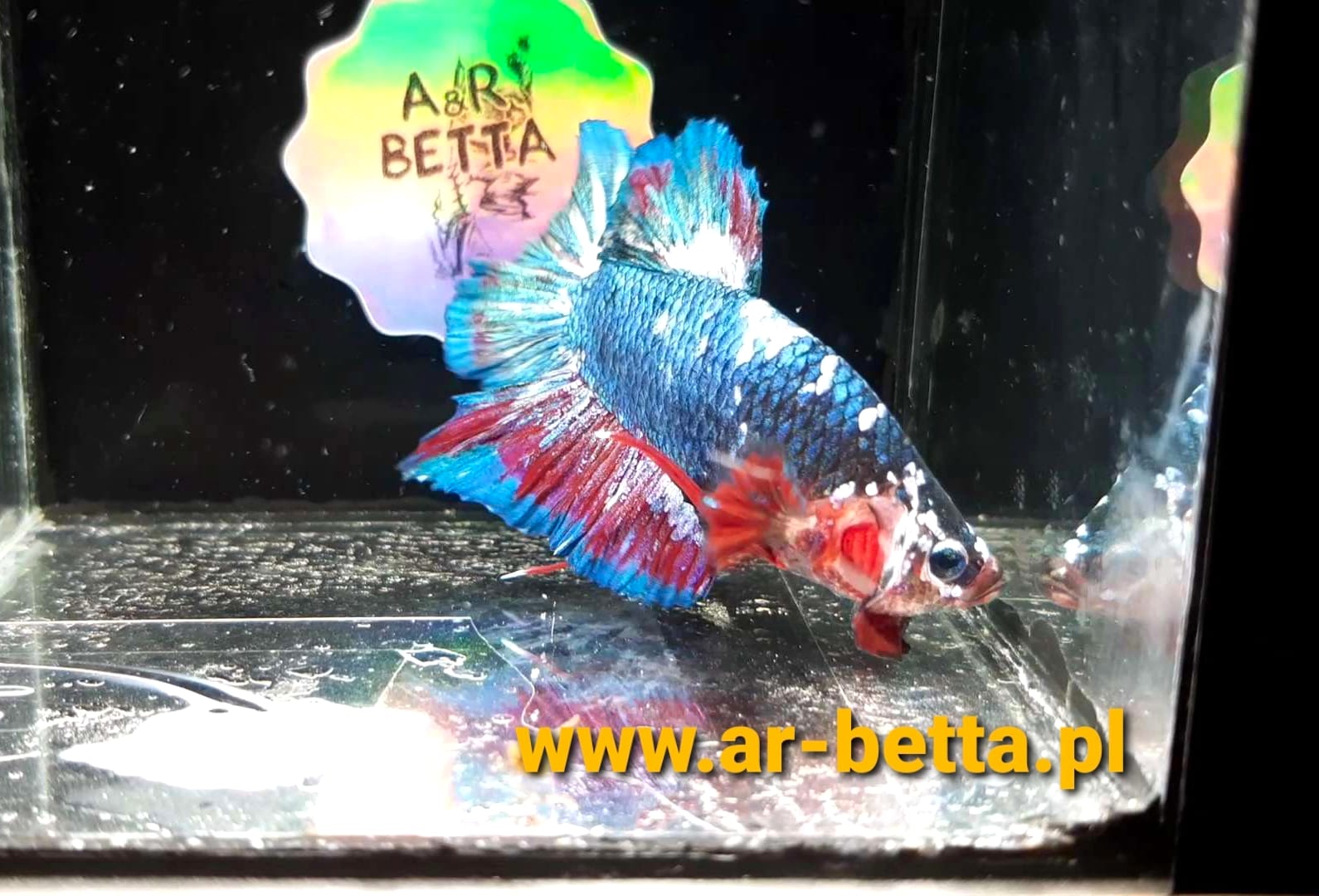
The crowntail form (reduced webbing between fin rays producing a spiked, crown-like appearance) was developed in Indonesia, credited primarily to a breeder named Ahmad Yusuf, in the late 1990s. The form reached the Western show circuit through IBC international connections in the early 2000s and was recognized as a separate show class.
The crowntail’s development outside Thailand, in Indonesia, was notable: it demonstrated that ornamental betta innovation had become a decentralized global activity, not exclusively a Thai export industry or a Western show-circuit product.
Today
The modern betta hobby is a global supply chain that runs from Thai and Indonesian commercial breeders to wholesale importers to retail stores, with a parallel hobbyist breeding community that operates across every continent. The IBC show circuit produces the most demanding ornamental standards. The Thai commercial industry supplies the mass pet market. The tools available to modern hobbyists, calibrated submersible heaters, biological filtration, liquid reagent test kits, eliminated most of the water-quality failures that killed fish in early 20th-century collections. Seachem Prime (affiliate) handles the dechlorination problem that predates municipal water treatment changes; the API Freshwater Master Test Kit (affiliate) closes the feedback loop.
The plakat form, the original fighting shape that Paul Matte imported in 1896, has experienced a significant revival in Western shows since the 2000s. The halfmoon plakat (HMPK) is now one of the most competitive show classes, combining the ancestral short-finned body plan with the 180-degree spread standard developed in California.
The fish in a pet store cup in 2026 is simultaneously the product of 600 years of Thai selective breeding and 130 years of Western ornamental selection layered on top. Both histories are in the fish.