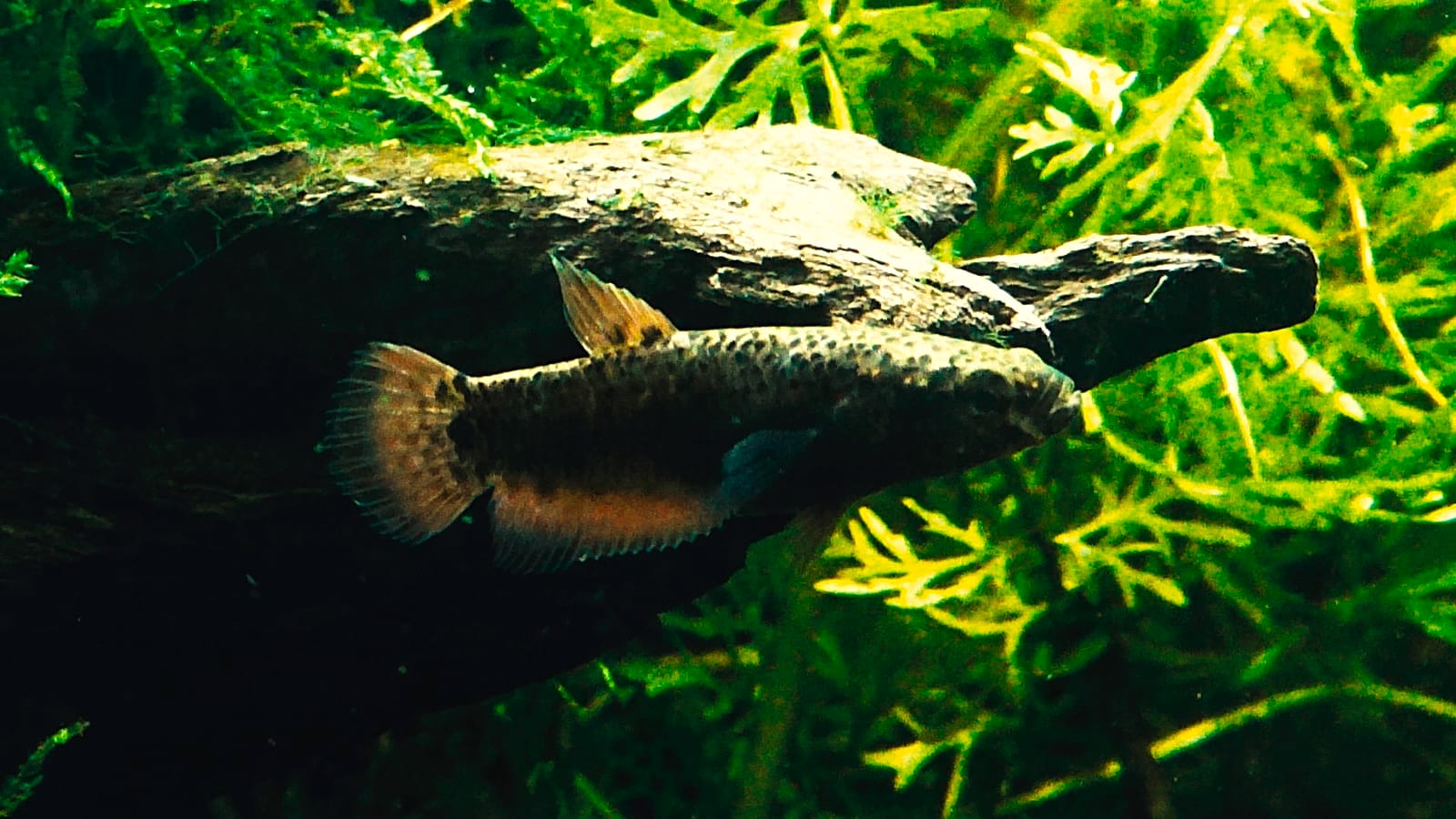
Betta channoides is a small mouthbrooding wild betta from the Mahakam River drainage in East Kalimantan (Borneo), described by Kottelat & Ng in 1994 and placed in the B. albimarginata species group (FishBase, Betta channoides). Males reach 4 to 5 cm with brilliant red-orange body color and white-tipped fins. A hardier and more beginner-friendly wild betta than macrostoma. Blackwater conditions, 23 to 25 °C, live food. The IUCN listed it Endangered on January 13, 2019, under criteria B1ab(v)+2ab(v), a designation tied specifically to its declining range and habitat quality, but it’s widely captive-bred among specialist keepers (IUCN Red List, Betta channoides).
Habitat
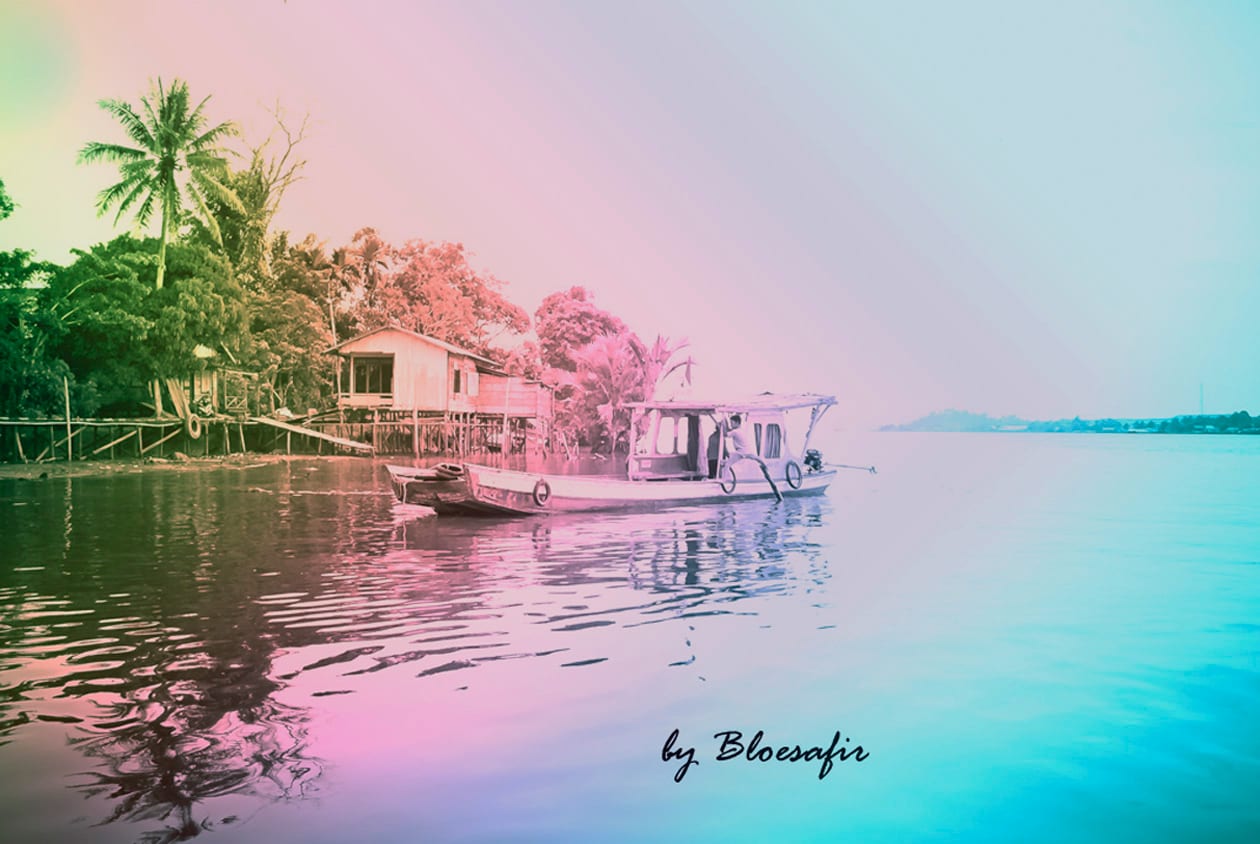
Native to blackwater forest streams in the Mahakam drainage of East Kalimantan, Indonesia. Documented populations span several sites across the upper basin, Mujup (the type locality, an unnamed blackwater stream entering the Mahakam’s northern side), Sungai Merimun, Muarapahu, and a peat swamp near Pampang village outside Samarinda, the last of which produced the most detailed captive-breeding research on the species to date (Seriously Fish, Betta channoides). Water is:
- Tannin-stained dark brown.
- Soft: dGH under 3.
- Acidic: pH 4.0 to 5.5.
- Low mineral: TDS under 40 ppm.
- Warm: 22 to 25 °C.
- Usually slow-flowing through heavily forested areas.
Appearance
Male:
- Body 4 to 5 cm, relatively compact.
- Intense red-orange body color in good conditions.
- Black throat patch.
- White-edged caudal and anal fins (the “albimarginata” complex feature).
- Black band through the eye.
Female:
- Similar size, 3.5 to 4.5 cm.
- Body pale orange-brown to cream.
- Less distinct fin edges.
- Often shows vertical stripes.
Very similar to Betta albimarginata (sister species). Differences are subtle; identification often requires a specialist. Both are documented in the taxonomic framework for Southeast Asian fighting fishes by Tan & Ng (2005) in the Raffles Museum Bulletin, which remains the key reference for the albimarginata complex. The species group’s IUCN assessments are indexed at the IUCN Red List.
What captive-breeding research actually shows
Most channoides husbandry advice online is hobbyist consensus: useful, but rarely tested against a control group. A 2024 study run by Indonesia’s National Research and Innovation Agency is one of the few controlled trials on record. Researchers collected 100 wild broodfish from the peat swamp near Pampang village and reared them at a facility in Depok, West Java, roughly 1,200 km from the species’ native range (Permana et al., Adaptation and Domestication of Betta channoides). Two of its findings are directly useful at home.
Rearing-container transparency measurably affects stress. Comparing a Styrofoam box, an opaque plastic container, and a glass aquarium over 30 days, the glass aquarium produced the lowest blood glucose readings in males, the standard physiological stress marker in fish, while survival rates didn’t differ significantly by container type. A fully viewable glass tank isn’t only an aesthetic choice for this species; it’s the lower-stress option.
Diet drove sexual maturation more than any other variable tested. Fish fed live Chironomus larvae (bloodworm) gained more weight and matured in greater numbers than fish fed Moina or mosquito larvae over the same window, seven of eight males matured on the bloodworm diet against five of eight on Moina. That’s a sharper, study-backed case for bloodworm as the priority conditioning food, not just one option among several “live foods.”
Notably, the study’s successful spawning happened warmer than the water parameters usually quoted for wild channoides: broodstock matured and bred at 27.5 to 30.8 °C, well above the 22 to 25 °C typically cited for the native stream. That doesn’t make the lower range wrong. Captive-bred lines several generations removed from the wild may simply tolerate a broader band than their wild-caught ancestors did, but it’s worth knowing if a tank runs a degree or two warm and the fish are still thriving.
Keeping requirements
| Parameter | Seriously Fish profile |
|---|---|
| Temperature | 23–30 °C (73–86 °F) |
| pH | 4.0–6.5 |
| Hardness | 1–5 dGH |
| Adult size | About 40 mm standard length |
| Tank | Base of 45 × 30 cm (about 41 litres) for a pair or small group |
| Breeding | Paternal mouthbrooder |
| Range | Mahakam River basin, East Kalimantan, Borneo |
Tank: 10 to 15 gallons for a pair. Densely planted with blackwater-tolerant plants, driftwood, Indian almond leaves (affiliate). Open water at the surface for gulping air.
Filter: gentle sponge filter. Avoid strong currents.
Water:
- pH 4.5 to 5.5.
- dGH under 3.
- TDS 30 to 50 ppm.
- Temperature 23 to 25 °C.
- RO water remineralized minimally.
Lid: tight. Jumps more than splendens.
Cover: heavy plant cover and driftwood. Fish hide extensively.
Feeding
Live food starting:
- Live blackworms.
- Live or frozen bloodworms.
- Daphnia.
- Microworms (fry and small adults).
- Cyclops and small cherry shrimp fry.
Transition to frozen over weeks. Pellet acceptance is individual; many never take.
Reproduction
Mouthbrooder, similar to macrostoma but smaller scale:
- Courtship short and less dramatic than splendens.
- The pair repeats a brief embrace cycle 10 to 15 times per spawning bout: the female releases just 3 to 5 eggs per instance, the eggs are caught and gathered, and the male ends up holding the accumulated clutch once the female is spent.
- Hobbyist reports put total clutch size as wide as 20 to 80 eggs. A 2024 controlled trial of 12 breeding pairs recorded a tighter and more typical range, 18 to 47 larvae per spawn, averaging 30.67 ± 9.23, with the size of the male (more than the female) correlating with larger broods (Permana et al., 2024/2026). Incubation runs 10 to 12 days, shorter than macrostoma’s 14.
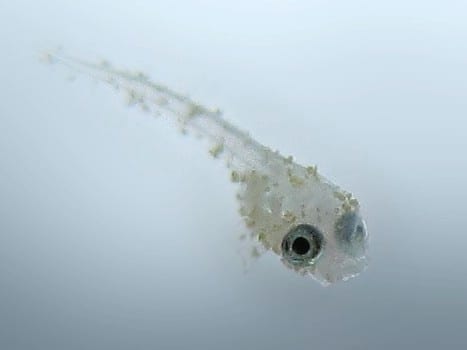
- Fry released at 5 to 7 mm, smaller than macrostoma fry at release but still free-swimming and immediately able to take baby brine shrimp.
Pairs bond loosely. Females generally don’t attack mouthbrooding males, but provide cover regardless.
Captive breeding is well-established. A pair in proper conditions produces successful broods every 4 to 6 weeks.
Fry care
Easier than splendens fry in some ways:
- Released larger (5-7 mm).
- Accept BBS immediately.
- Fewer developmental stages to navigate.
- Growth is slower; 5-6 months to adult size.
Keep in same blackwater conditions as adults. Small daily water changes with siphon through airline tubing.
Captive-breeding research documents a specific feeding progression worth following rather than staying on brine shrimp out of habit: fry finish absorbing their yolk sac by day 7, after which Artemia nauplii are the primary food through roughly day 14, Moina takes over from day 15 to 30, and Tubifex becomes the main food source from day 31 onward into adulthood (Permana et al., 2024/2026). Sticking to that schedule means less ongoing brine shrimp culturing than many keepers assume is necessary.
Sourcing
Captive-bred, readily available:
- IBC breeder network.
- AquaBid specialist auctions.
- European wild-betta breeders.
- Some specialty US retailers.
Pairs are $40 to $120. Better-established captive lines command premium pricing.
Why channoides instead of macrostoma
Reasons to start here if you’re new to wild bettas:
- Smaller fish, smaller tank requirement.
- Better availability of captive-bred stock.
- Hardier in captive conditions.
- Equally stunning color at a smaller scale.
- Similar mouthbrooding experience.
- Easier to find pair replacements if needed.
Macrostoma is the trophy species. Channoides is the one to actually succeed at.
Common mistakes
- Using unsoftened tap water. Hard alkaline water is lethal to channoides over weeks.
- Too much filter current. Blackwater natives come from slow pools.
- Overfeeding. Small fish need small amounts.
- Temperature too high. 27°C stresses them.
- Community tank, including pairing with B. splendens. Different water chemistry and different aggression patterns don’t mix well; a species-specific setup is essential.
Long-term experience
A well-kept channoides pair in a 15-gallon blackwater tank typically breeds multiple times per year. The male tending fry in his mouth is behavior you won’t see in any pet-trade splendens setup. Fry numbers are modest and manageable for home-scale keeping, a 2024 captive-breeding trial recorded 18 to 47 larvae per spawn across 12 pairs, averaging 30.67, well short of the hundreds some bubble-nesting species produce. Channoides is also the subject of an important biogeographic note: the species is endemic to East Kalimantan’s Mahakam drainage rather than the Borneo-wide ranges of some related species, a narrow distribution documented by Tan & Ng in their 2005 review of Southeast Asian fighting fishes (Tan & Ng, Raffles Museum Bulletin, 2005). That endemism is why sourcing captive-bred stock matters so much: a few wild-caught specimens from a restricted range can represent a meaningful fraction of the accessible population. It’s also why the species has an active government-backed conservation angle behind it, Indonesia’s National Research and Innovation Agency runs an ex-situ breeding and restocking research program for channoides specifically, and the IBC itself classifies the species under its wild-betta, small-mouthbrooder show category, treating captive breeding as conservation-relevant work rather than a purely cosmetic hobby exercise.
Lifespan in captive conditions: 5 to 8 years with good husbandry. Significantly longer than splendens.
The fish rewards the effort. Smaller, quieter, more natural than any domesticated betta, with a reproductive behavior that most fishkeepers never witness.