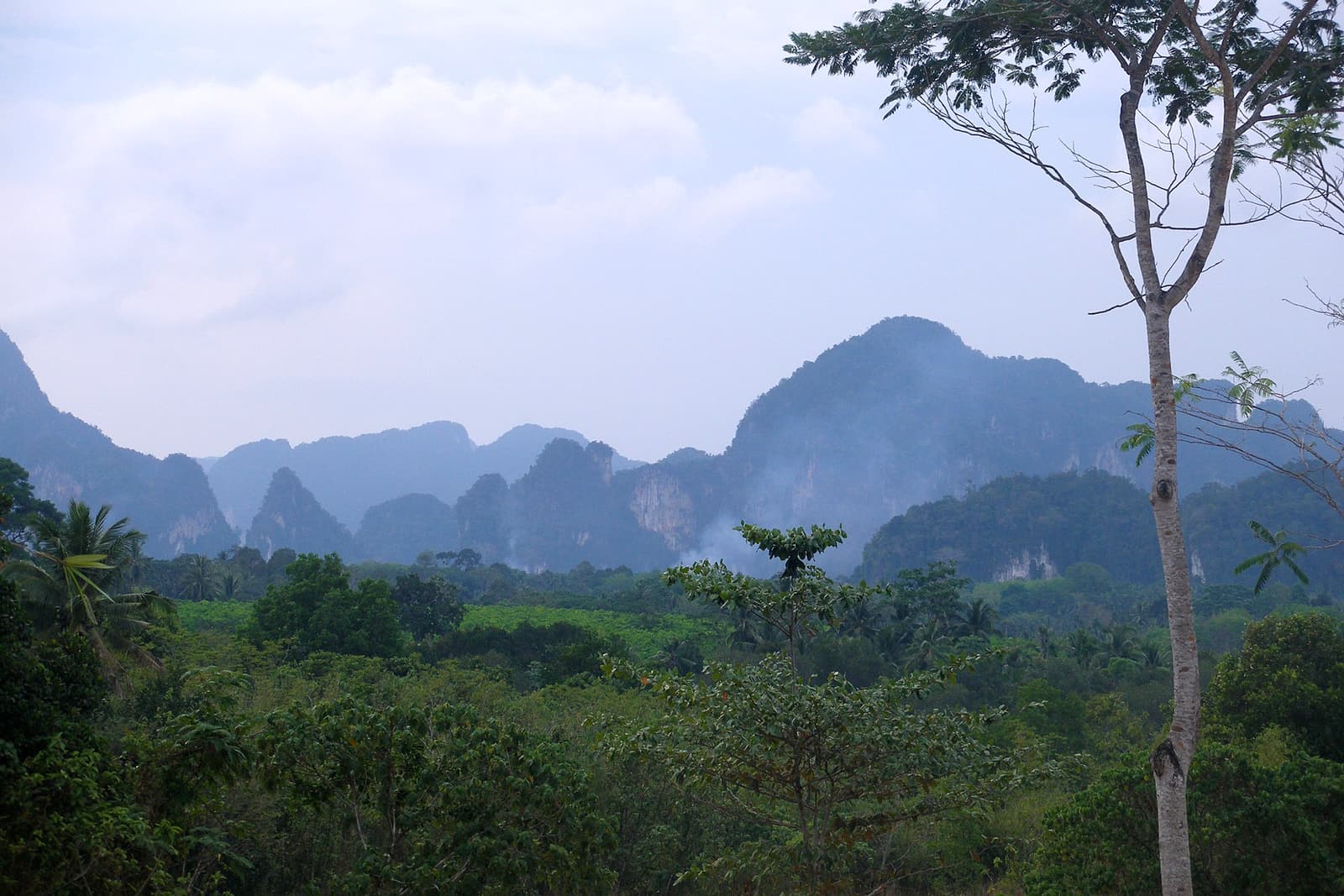
Betta simplex breaks several expectations built up by experience with B. splendens. It does not build bubble nests. It is not reliably aggressive toward other males. It prefers clear, hard, alkaline water rather than soft, acidic blackwater. And it lives in one of the most scenically beautiful habitats of any betta: the limestone karst streams and cave pools of Krabi Province, a landscape that also happens to be one of Thailand’s most intensively developed tourist destinations.
That last detail is the conservation problem.
Taxonomy and description
Betta simplex was described by Maurice Kottelat in 1994 in Ichthyological Exploration of Freshwaters, based on specimens from Krabi Province, southern Thailand. The name comes from the Latin simplex, simple or straightforward, a nod to the fish’s plain coloration next to the ornamental strains bred from B. splendens. It belongs to the Betta pugnax group, a clade of paternal mouthbrooding bettas distinct from the bubble-nesting Betta splendens complex.
The pugnax group includes Betta pugnax (Malay Peninsula), Betta pi (northern Thailand), Betta prima (Thailand and Cambodia), and several related species. All are mouthbrooders. All are more subdued in male-male aggression than splendens.
Distribution and habitat
Betta simplex is essentially endemic to Krabi Province in southern Thailand. Its range is narrow: several drainages within the karst limestone terrain of the province, including streams, cave pools, and spring-fed channels.
Habitat characteristics:
- Water clarity: High. The limestone bedrock filters the water, producing very clear conditions with high visibility.
- Chemistry: Slightly hard, neutral to slightly alkaline (pH 7.0–8.0), moderate GH and KH. The opposite of the dark, soft, acidic peat-swamp water of many other wild bettas.
- Temperature: 25–28°C, typical for southern Thai lowland streams
- Vegetation: Emergent and submerged aquatic plants; some cave systems with very sparse light
This habitat type is unusual within the genus Betta. Most wild bettas prefer soft, acidic, tannin-stained water. Betta simplex in clear, hard, alkaline water is a distinct ecological niche.
Identification
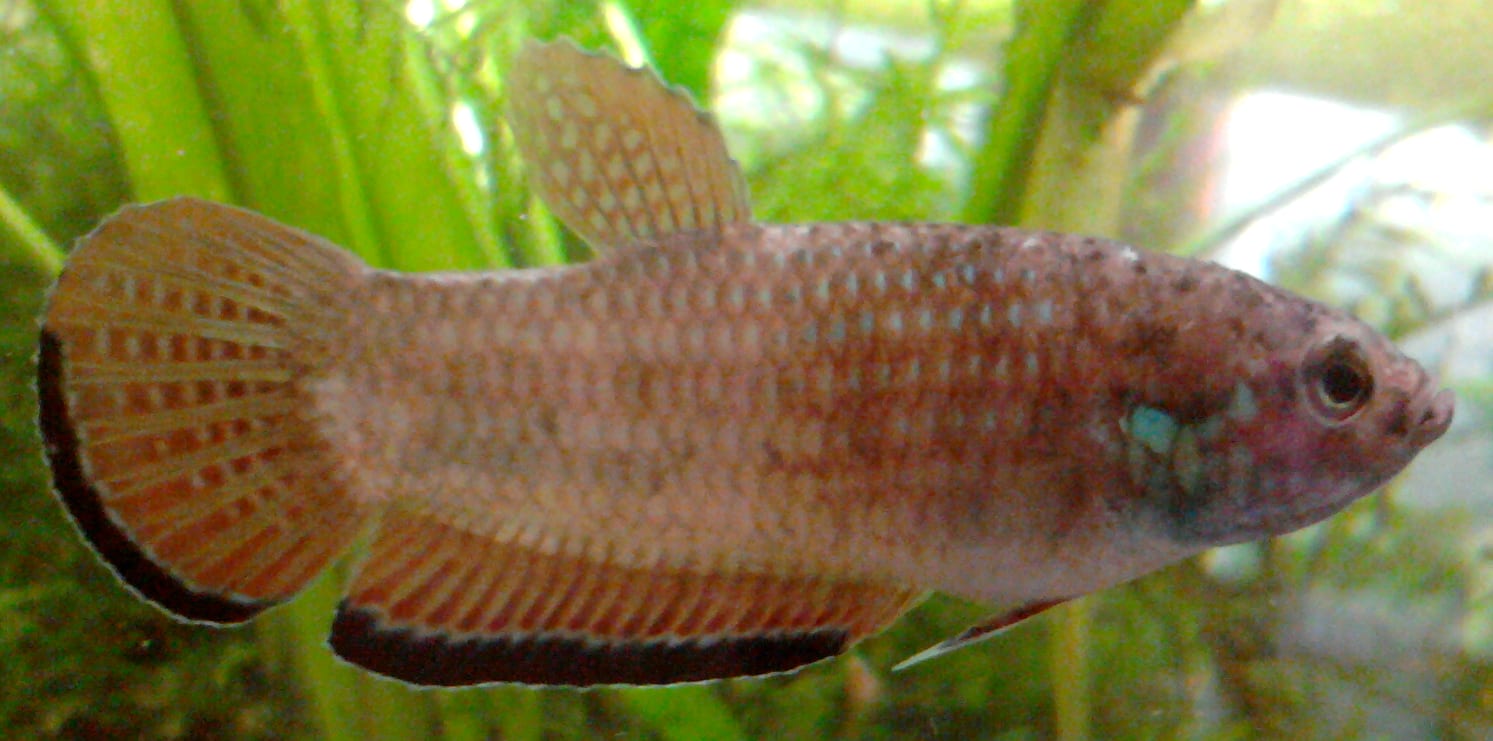
Adult males: 5–6 cm standard length. Coloration is relatively subdued compared to ornamental bettas: brown base with iridescent blue-green scale margins, reddish caudal and anal fin margins in breeding condition. The fins are short and rounded (this is a mouthbrooder, not selected for elaborate finnage). During courtship and aggression display, the iridescence intensifies noticeably.
The opercular (gill cover) membrane shows blue-green iridescent patches, a characteristic of many mouthbrooding bettas.
Reproduction: paternal mouthbrooding
This is the most significant behavioral difference from B. splendens. After spawning:
- The female releases eggs; fertilization occurs as the male collects them
- The male takes the fertilized eggs into his mouth
- He incubates them for approximately 12–14 days without eating, brooding the developing fry
- At the end of the incubation period, he releases free-swimming fry
The male should not be disturbed during incubation. Stress can cause him to spit the brood prematurely, killing the developing fry.
Breeding setup differences from splendens:
- A pair can be kept together long-term in a sufficiently large, planted tank, as male aggression toward females is much lower than in splendens
- No bubble nest infrastructure needed
- Shallower tanks are not specifically required
- The spawning embrace is gentler than in splendens
Male aggression and group keeping
Unlike B. splendens males, which fight to serious injury or death if cohoused, B. simplex males can often coexist in well-planted tanks of 20 gallons or more. Display behavior and mild chasing occur, but escalation to damaging fights is less common.
This is not a blanket guarantee. Monitor any group setup carefully, and be prepared to separate individuals if aggression escalates. The reduced aggression is a spectrum, not an absence.
Conservation status
IUCN Red List 2021: Near Threatened (NT).
The Near Threatened listing reflects:
1. Restricted range. Betta simplex is essentially a Krabi endemic. It does not occur across a broad geographic range that would buffer against local threats.
2. Tourism development. Krabi is one of Thailand’s fastest-developing tourist destinations. The karst limestone landscape that creates simplex habitat (the streams, springs, and cave systems) is also the landscape most attractive to resort and infrastructure development. Water table disruption from construction, water extraction for resort use, and physical habitat modification all affect the streams where simplex occurs.
3. Collection pressure. Betta simplex is sought by wild betta hobbyists. Wild-caught specimens from a restricted range face collection-driven population reduction.
The species is covered in more depth, alongside other Krabi endemics, at Krabi’s Endemic Bettas.
Captive care
Betta simplex care differs from B. splendens in water chemistry requirements:
| Parameter | Betta simplex | Betta splendens |
|---|---|---|
| pH | 7.0–8.0 | 6.5–7.5 |
| GH | 100–250 ppm | 50–200 ppm |
| KH | 80–160 ppm | 40–120 ppm |
| Temperature | 24–28°C | 24–28°C |
| Flow | Gentle to moderate | Gentle |
| Tank size | 15+ gallons (pair/group) | 5+ gallons (solo) |
Municipal tap water in many areas is perfectly suited for simplex without modification. It is the blackwater species that require significant water chemistry adjustment, not this one.
A 20+ gallon planted tank allows keeping a pair or small group. Dense planting with hiding spots reduces any male-male tension. Java fern, Vallisneria, and floating plants all work well.
Diet: the same as other bettas: high-protein pellet staple with live or frozen supplementation.
The original species description is Kottelat 1994 in Ichthyological Exploration of Freshwaters (vol. 5, no. 1). The 2021 IUCN Red List assessment is freely accessible. The Seriously Fish profile covers husbandry detail validated by the wild-betta keeping community.
Availability
Betta simplex is not a pet-store fish. It is available from specialist wild betta importers and dedicated hobbyist breeders. Captive-bred specimens are available and strongly preferable to wild-caught fish given the Near Threatened conservation status. The SeriouslyFish species database and wild betta hobbyist forums are starting points for finding captive-bred sources.
Water chemistry accuracy is critical for Betta simplex. Unlike most wild bettas that tolerate estimation, this species needs verified alkalinity. The API Freshwater Master Test Kit (affiliate) covers pH, ammonia, nitrite, and nitrate; pair it with a GH/KH kit to confirm carbonate hardness is in range.