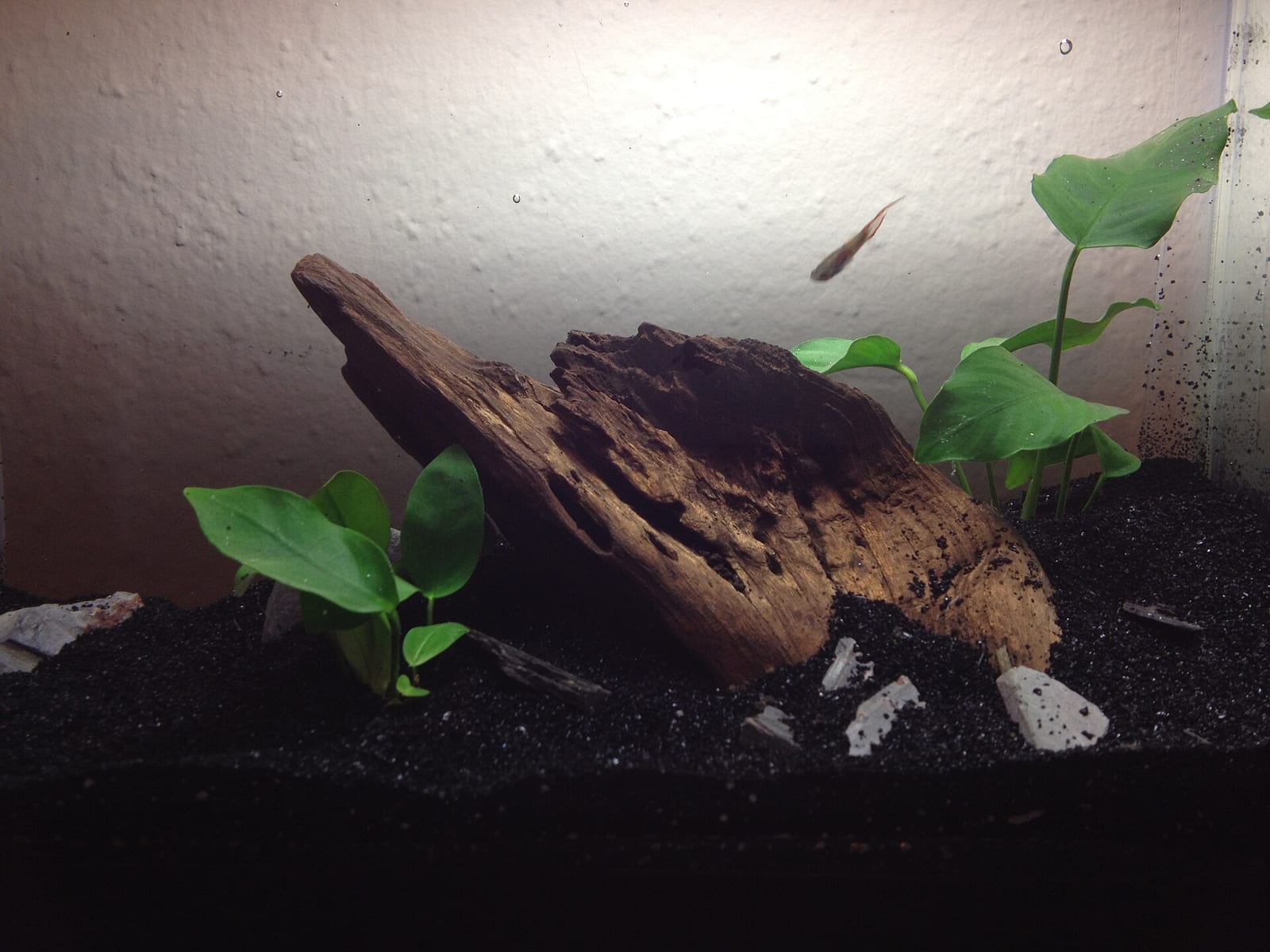
Fine inert sand or small rounded gravel, roughly 0.5 to 2 mm across, laid about an inch deep, is the right floor for most betta tanks. Pick aquasoil instead only when you are growing root feeders, and plan for it to leach ammonium into the water for two to three weeks after setup. Everything else on this page is the reasoning behind those two sentences.
This page has affiliate links. As an Amazon Associate we earn from qualifying purchases. See our affiliate disclosure.
Quick comparison
| Substrate | Typical grain | Depth | Plants | Cycle effect | Buy |
|---|---|---|---|---|---|
| Inert aquarium sand | 0.25 to 2 mm | 1 in | Rhizome and stem, root tabs for the rest | Neutral | CaribSea Torpedo Beach |
| Fine natural gravel | 2 to 5 mm | 1 to 1.5 in | Adequate with root tabs | Neutral | Search gravel |
| Clay plant gravel | 1 to 3 mm | 1.5 to 2 in | Good, no ammonia spike | Neutral | Seachem Flourite Black Sand |
| Aquasoil | 1 to 5 mm | 2 to 3 in | Best available | Leaches ammonium for weeks | Fluval Stratum |
| Bare bottom | none | none | Potted or tied only | Neutral | n/a |
Does a betta tank need substrate at all?
No. A bare-bottom tank is a legitimate choice, and breeders use it constantly: fry are easier to count, uneaten food is visible, and a siphon clears the floor in ten seconds. If you are running a spawning setup or a quarantine tank, skip substrate entirely.
For a display tank the case for substrate is not filtration. Aquarium Science measured the substrate’s contribution in poorly filtered tanks at 10% to 20% of total biological filtration, which is real but small next to a decent sponge filter. The case is that plants need somewhere to root, that a dark floor makes a betta’s color read properly against it, and that a fish with nothing under him is a fish in a display case. Bettas are ambush fish from shaded, leaf-strewn water, and the rice paddy habitat they come from has a soft bottom covered in decaying plant matter.
What grain size is safe for betta fins?
Two failure modes, and only one of them is the one people worry about.
Sharp edges tear fins. This is real. A veiltail’s caudal is a thin membrane between soft rays, and a betta drifts along the bottom constantly. Anything with a fractured, glassy edge will eventually catch it. The test the hobby uses is stretching a pair of pantyhose over the material and pulling: if the nylon snags, the fins will too. Do it before the substrate goes in the tank, not after. Crushed glass “gravel”, broken lava rock and cheap dyed chips are the usual offenders, and the same check applies to every plastic plant and ornament you were about to add.
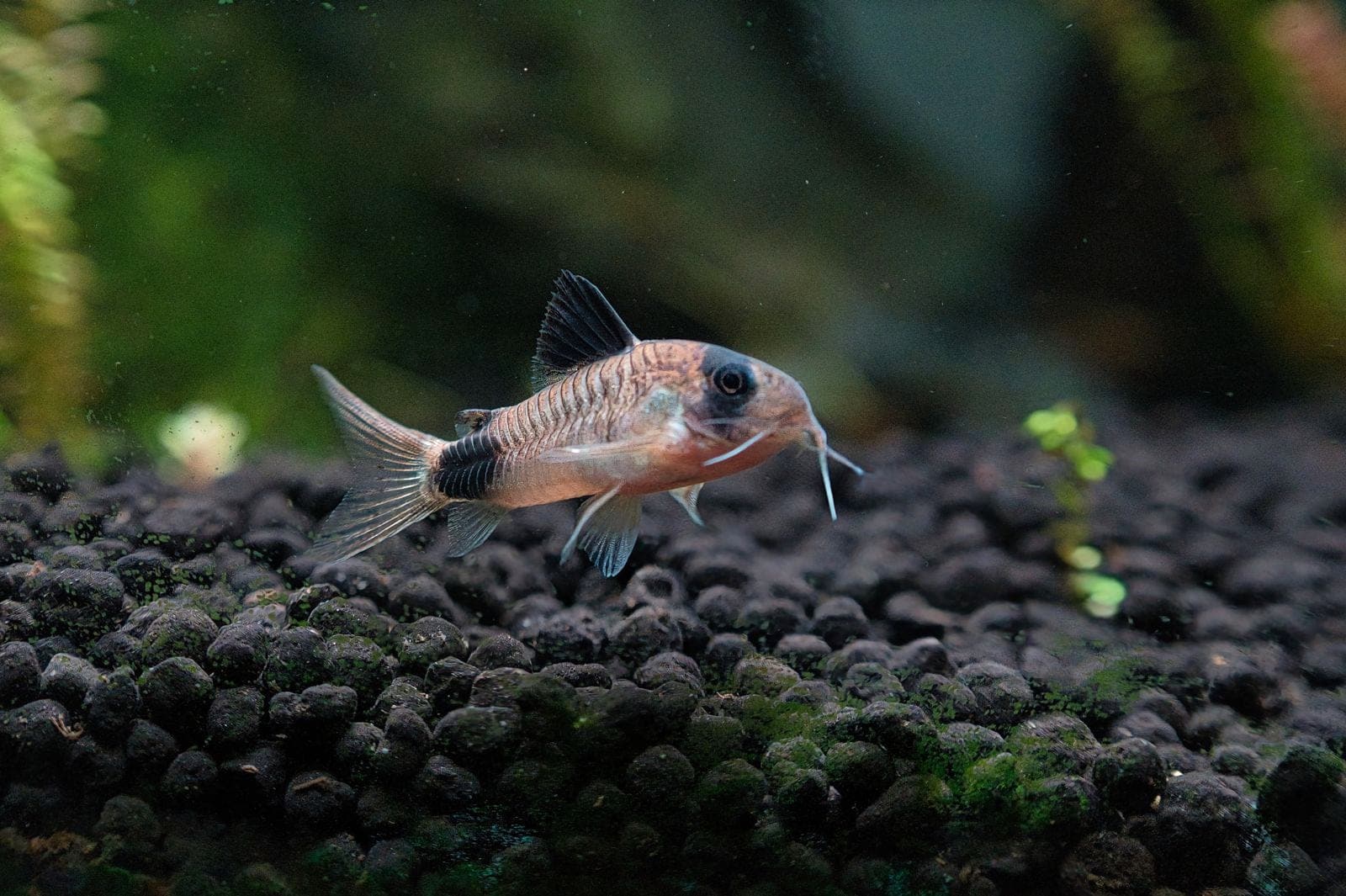
Barbel abrasion is not a betta problem. Bettas have no barbels. They are anabantoids, not catfish, and the whole barbel-erosion argument you will find in half the substrate guides online was borrowed from corydoras keeping and pasted onto a fish that does not have the anatomy. If you plan to keep corydoras as tank mates, the concern applies to them, and even there the mechanism is contested: Aquarium Science attributes barbel damage mainly to bacteria breeding in food trapped between oversized grains, not to mechanical wear, and recommends staying under 3/16 of an inch for that reason.
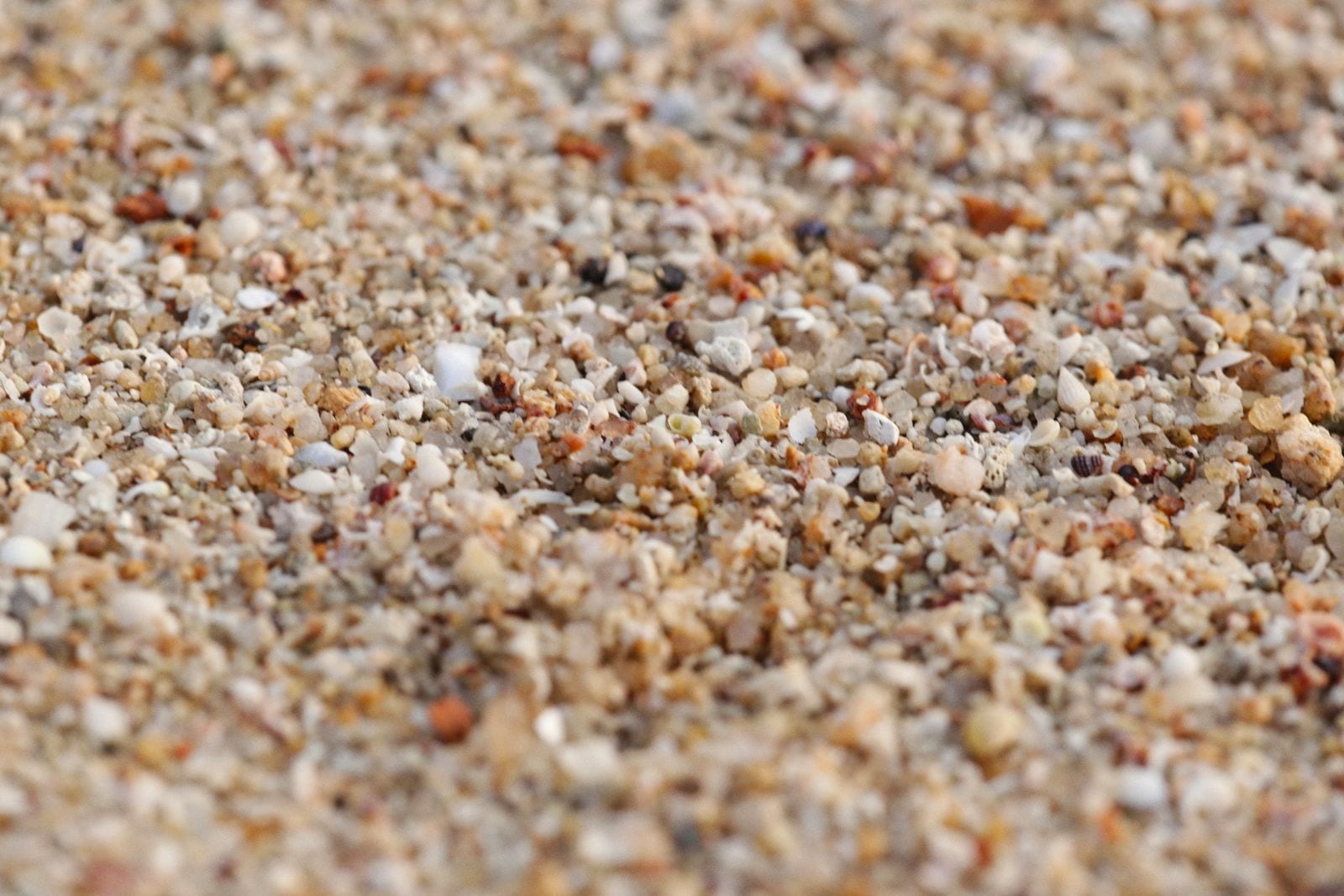
The practical band for a betta tank is 0.5 to 2 mm. Below about 0.3 mm you are into powder that clouds the water for days and gets pulled into any pump you add later. Above about 5 mm, pellets fall between the grains and rot there. Aquarium Science is blunt about the top end: pea gravel, meaning anything wider than a barley grain at 7 mm, is the one substrate it tells you not to use.
For reference, CaribSea publishes the numbers for its Super Naturals line rather than leaving you to guess: Sunset Gold runs 0.25 to 1.0 mm, Torpedo Beach runs 0.5 to 2.0 mm, and both are pH neutral, so neither will drag your water parameters around. Most brands do not publish a grain size at all, which tells you something.
Sand, gravel or aquasoil?
Sand is the default answer for a betta. Fine grains pack tight, so waste sits on the surface where a siphon can reach it instead of vanishing into the bed. It looks like the fish’s actual habitat. It is cheap. The two real drawbacks: a pale sand bed shows every scrap of detritus, which is a maintenance-visibility feature dressed as a cosmetic flaw, and fine sand kicked into an impeller shortens pump life. Neither matters much in a 5-gallon running an air-driven sponge filter, which is what the tank setup guide recommends anyway.
Gravel in the 2 to 5 mm range is the traditional choice and works fine. Its advantage over sand is that a gravel vacuum actually pulls waste out of the bed rather than skimming it off the top. Its disadvantage is that anything you drop, including pellets your betta missed, goes down between the grains where you cannot see it. Natural mixed-tone gravel hides mulm better than a mono-color bed does, which is why aquarium-science types keep recommending the boring brown stuff over black.
Aquasoil is baked, nutrient-loaded clay granules. It grows plants better than anything else you can put in a tank, and it comes with a genuine cost you should know about before you buy it. That cost is the next section.
What does aquasoil do to your cycle?
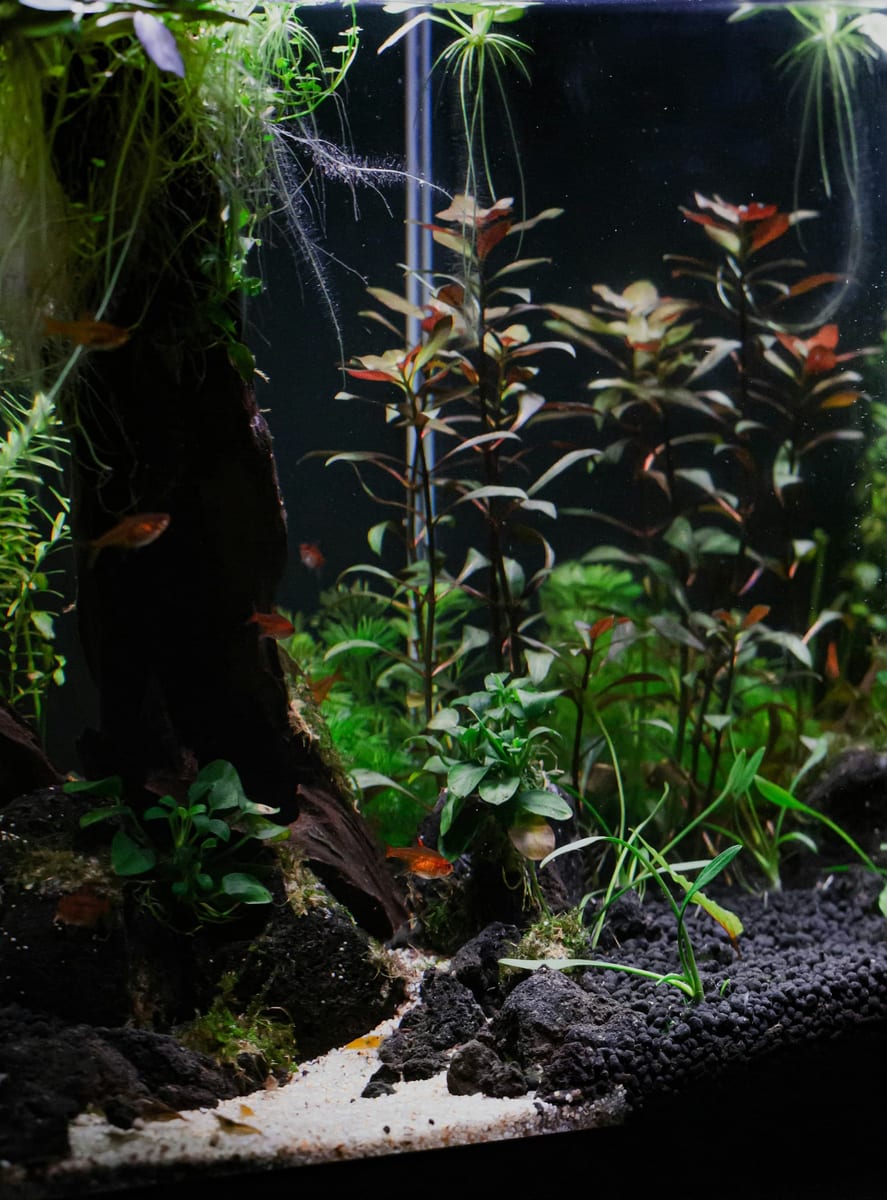
It floods it. ADA is candid about its own product: immediately after Aqua Soil Amazonia is laid in an aquarium, a large amount of ammonium leaches into the water, and their guidance is to add fish or shrimp two to three weeks after planting, not on day one. Aquasoil is also deliberately acidic, sitting around pH 5.0 to 6.0 and pulling carbonate hardness down with it, which is fine for a betta but will move your pH if your tap water is soft.
There is a way to read that as a feature. A fishless cycle needs an ammonia source; fresh aquasoil is one, running for free, for weeks. If you are already committed to the 3-to-6-week fishless cycling protocol, aquasoil hands you the ammonia and you skip the dosing bottle. What you cannot do is set up an aquasoil tank on Saturday and put a fish in it on Sunday. Test before the fish goes in, every time, with a real liquid test kit rather than strips.
Inert sand, natural gravel and clay-based plant gravels like Flourite do none of this. They are chemically quiet. They add surface area for nitrifying bacteria and otherwise stay out of the way, which is why they are the safer recommendation for a first tank.
How deep should the substrate be?
An inch is enough for an inert bed with rhizome plants. Anubias and Java fern are normally tied to wood or rock and do not need to be rooted in the bed at all, so under them a shallow layer is purely cosmetic.
Root feeders want more. Cryptocorynes and swords put down real root mass, and the common recommendation for those is 2 to 3 inches, banked toward the back so the front stays shallow and the tank still looks deep. The compromise most 5-gallon betta tanks land on is a slope: an inch at the front, two inches at the back where the crypts go.
The counter-argument you will hear is that deep beds go anaerobic and release hydrogen sulfide when disturbed. Treat that one with some care, because the hobby genuinely disagrees. Aquarium Science calls it a myth outright and points at Toonen’s 2005 comparison of 27 saltwater tanks across a range of sand depths and grain sizes, which found no significant differences in ammonia, nitrite or nitrate between treatments. This site’s own tank setup guide takes the cautious line and recommends an inch. Both positions can be true at once at the scale we care about: an inch is plenty for the plants most betta keepers grow, so the question rarely becomes load-bearing. If you want a deep planted bed, take it, and stir the back corners when you vacuum.
Whatever depth you choose, root feeders in an inert bed need fertilizer at the root. Seachem’s own directions for Flourish Tabs are one tab per 4 to 6 inch radius, six tabs for a standard 10-gallon, replaced every three to four months. A 5-gallon takes three. That is about $2 a year, and it is the difference between crypts that hold and crypts that melt.
Check Seachem Flourish Tabs on Amazon Affiliate link. See our disclosure.
What substrate should you avoid?
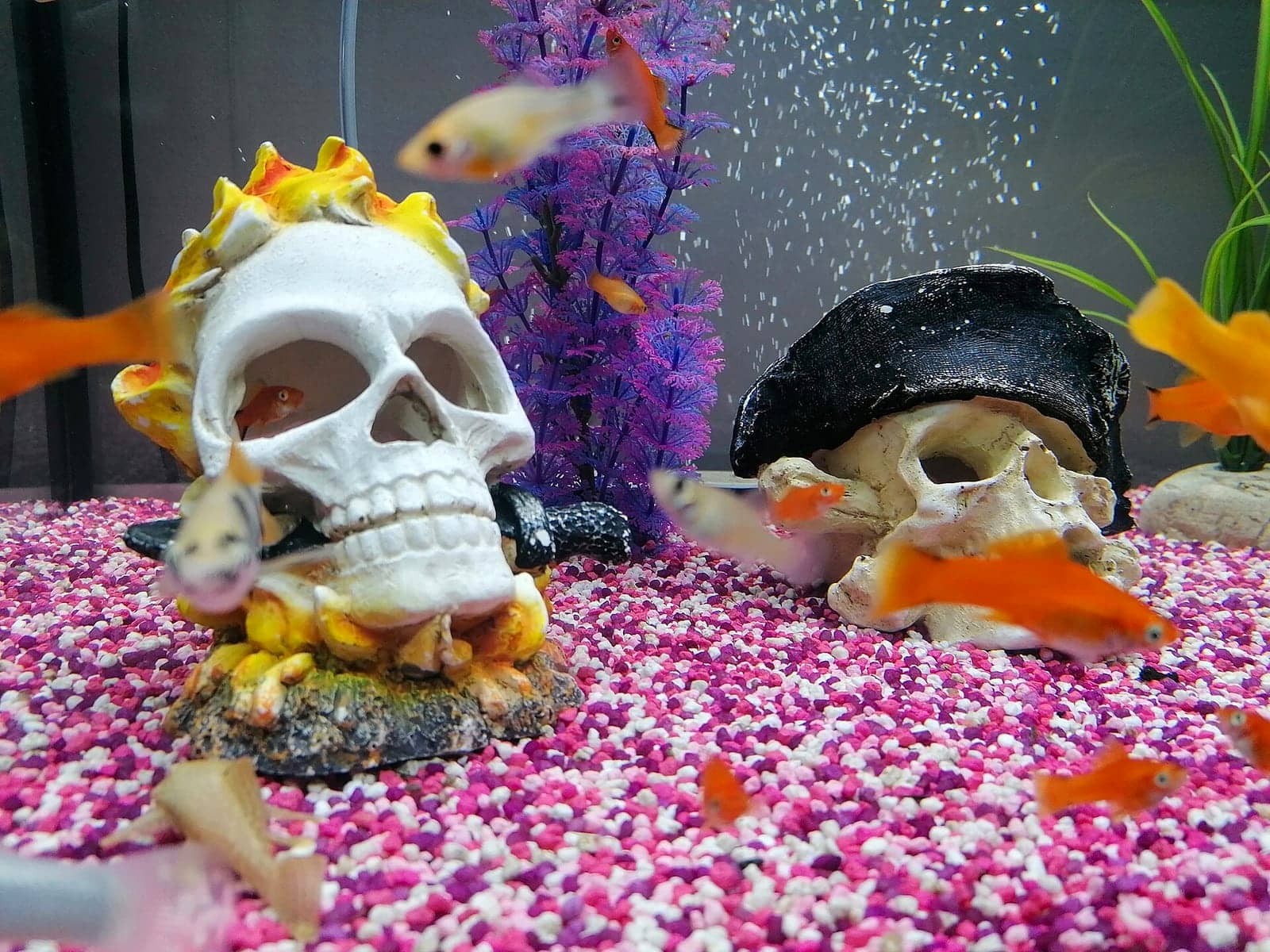
Dyed gravel. Coatings chip. Reputable brands use inert pigment and most of the fear about leaching is overstated, but the cheap end of this category is coated crushed rock with fresh fracture faces, and that is the material most likely to fail a pantyhose test. It also fights the fish: a betta photographed against hot pink is a betta whose color you cannot see.
Glass marbles and river pebbles. The gaps between marbles are food traps you cannot siphon, and they are the single most common substrate in the bowls this site spends a lot of time arguing against.
Crushed coral and aragonite raise pH and hardness. Useful for a Rift Lake tank, wrong for a fish whose native water runs soft and acidic.
Play sand from a hardware store is usable but not free of work: it is dustier than aquarium sand and takes far longer to rinse. Pool filter sand is the better hardware-store option, coarser and much easier to clear.
Anything you have not rinsed. Even pre-washed aquarium sand runs cloudy for a few hours. Rinse in a bucket until the water pouring off is clear, which for sand means longer than you expect.
What we would actually buy
For a standard planted 5-gallon: CaribSea Super Naturals sand. Torpedo Beach at 0.5 to 2.0 mm is the safest all-round pick, pH neutral, pre-washed enough to be tolerable, and a natural tone that hides mulm. Sunset Gold is finer at 0.25 to 1.0 mm if you want a paler bed. A 20 lb bag is far more than a 5-gallon needs, so buy once and keep the rest for the next tank.
Check CaribSea Super Naturals on Amazon Affiliate link. See our disclosure.
For a planted tank without the ammonium period: Seachem Flourite Black Sand. Fracted porous clay gravel, not chemically coated, and Seachem states it will not alter pH. It grows plants well through cation exchange rather than by dumping nutrients into the water column, which means no cycling penalty. It is dusty on arrival and needs a serious rinse.
Check Seachem Flourite Black Sand on Amazon Affiliate link. See our disclosure.
For a heavily planted build where plant growth is the point: Fluval Plant and Shrimp Stratum. Volcanic soil from the Mount Aso foothills, sold in an 8.8 lb bag that suits a nano tank rather than the 20 lb bags aimed at 4-foot displays. Same caveat as all aquasoil: cycle it out before the fish arrives.
Check Fluval Stratum on Amazon Affiliate link. See our disclosure.
You will also want a gravel vacuum sized for a nano tank. A full-size siphon in 5 gallons empties the tank before you have finished one corner.
Check nano gravel vacuums on Amazon Affiliate link. See our disclosure.
How much do you need, and how do you put it in?
Roughly 1 pound per gallon per inch of depth for sand, a little less for gravel. A 5-gallon at one inch takes about 5 lb; the same tank with a two-inch back slope takes closer to 8 lb.
- Rinse in a bucket, in batches, until the runoff is clear. Sand takes several passes.
- Pour it into the empty tank and level it, banking toward the back if you are planting root feeders.
- Set hardscape directly on the glass where you can, not on top of the bed, so it cannot sink and shift later.
- Fill by pouring onto a plate or a bag laid on the substrate, which stops the whole bed from lifting.
- Plant, then fill the rest of the way and start the filter.
- Cycle before the fish goes in. Aquasoil especially, but every tank.
Substrate is a one-time, low-cost decision that you will be looking at every day for the next four years. Get the grain size right, get the depth right for what you intend to plant, and then stop thinking about it.