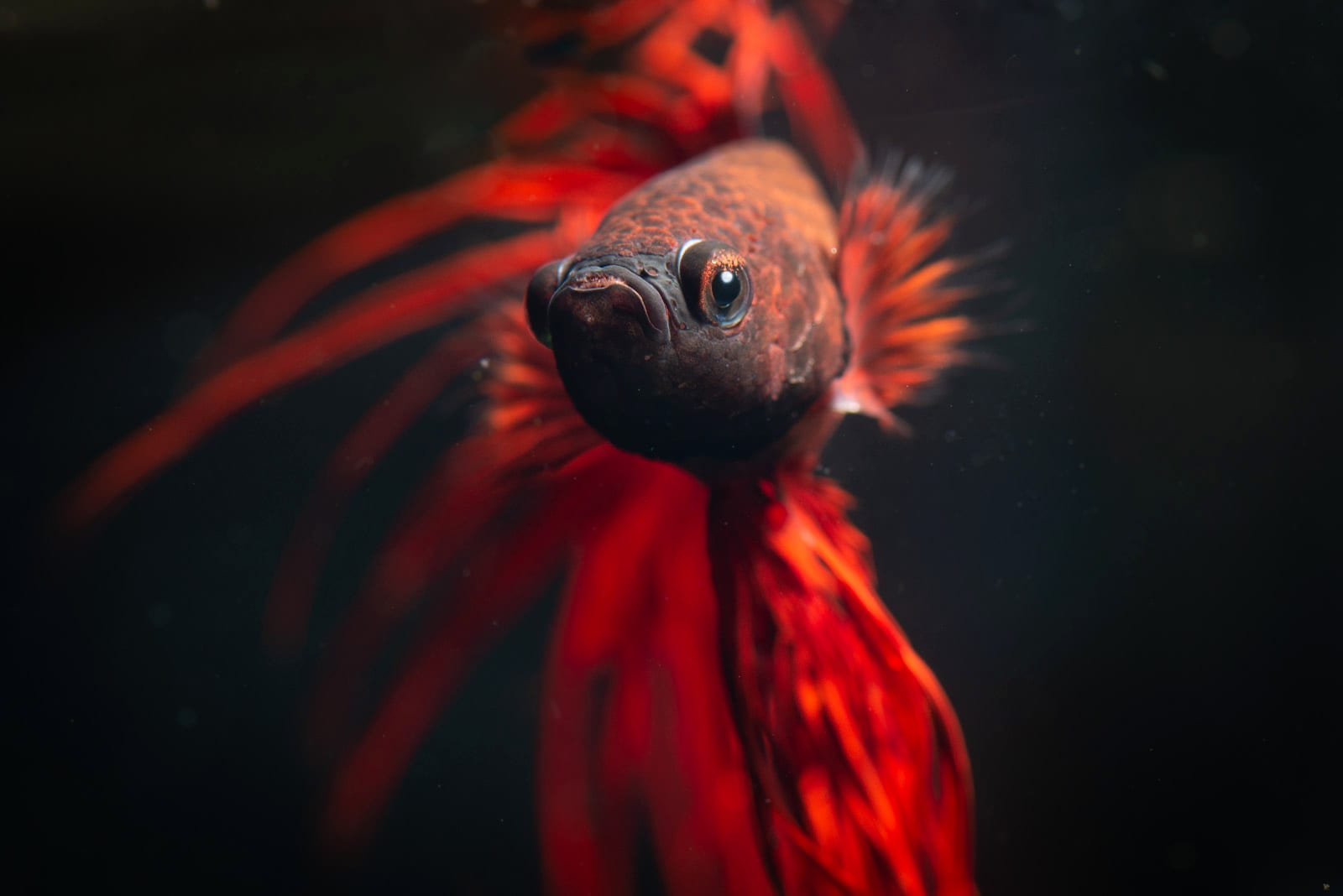
A betta lying at the bottom of the tank is normal if it is night, if the fish surfaces for a breath every few minutes, and if it swims up and eats when you approach the glass. It is a problem if it is happening in daylight, if the fish ignores food, or if the fins are clamped tight against the body. Check three things in that order: temperature, ammonia and nitrite, and whether the fish can reach the surface without struggling. Most cases resolve at one of those three.
Is it sleep or is it illness?
Start here, because the answer costs nothing and clears roughly half of these.
Bettas rest on the substrate. They have no eyelids, so there is no closed-eye cue, and a resting betta looks exactly like a fish that has given up. They also rest for a large share of the day, mostly after dark. Do betta fish sleep covers the full rest pattern.
The separation is behavioral, not postural. Walk up to the tank. A resting fish notices you, rouses within a few seconds, and comes up. An ill fish stays down.
| Signal | Sleep | Something wrong |
|---|---|---|
| Time of day | Dark hours, or dim room | Middle of the day, lights on |
| Response to you at the glass | Rouses, moves within seconds | Stays put, no reaction |
| Response to food | Comes up and eats | Ignores it, or takes and spits |
| Fins | Relaxed, partly spread | Clamped tight to the body |
| Color | Slightly faded, restores on waking | Dull and stays dull |
| Body angle | Upright or gently tilted | On its side, nose-down, or tail-up |
| Surfacing for air | Regular, unhurried | Struggling up, or not surfacing at all |
| Breathing | Steady gill movement | Rapid gill movement at rest |
The colour fade during rest is real and it worries people. Pigment cells contract during inactivity and the fish looks washed out, then colours back up on waking.
Two entries in that table are not ambiguous. On its side is not a rest position. Neither is a fish that has stopped surfacing. Both move straight to the checks below.
Check one: is the water cold?
This is the most common cause and the fastest to confirm. Look at a thermometer in the water, not the room, and not a stick-on strip reading the glass.
Bettas are tropical. Seriously Fish gives a range of 22-30°C for the species, and the practical target for a home tank is 76-82°F (24-28°C). The laboratory husbandry review keeps research colonies at 28°C.
A fish is ectothermic, so its metabolic rate follows the water. Cold water produces exactly the picture this page is about: reduced activity, time spent motionless on the bottom, slowed digestion, reduced appetite, and a fish that looks depressed rather than sick. It also suppresses immune function, which is why cold tanks and bacterial infections travel together.
Three situations produce a cold tank and none of them announce themselves:
- No heater at all. A room at a comfortable 70°F leaves the water in the low seventies, below the range, permanently.
- A failed heater. They fail silently and the indicator light lies. Confirm with a separate thermometer.
- A room that swings overnight. A tank that reads 78°F at 8pm can be at 71°F by 6am in winter, and the fish spends the coldest hours flat on the substrate. A small tank swings faster than a large one.
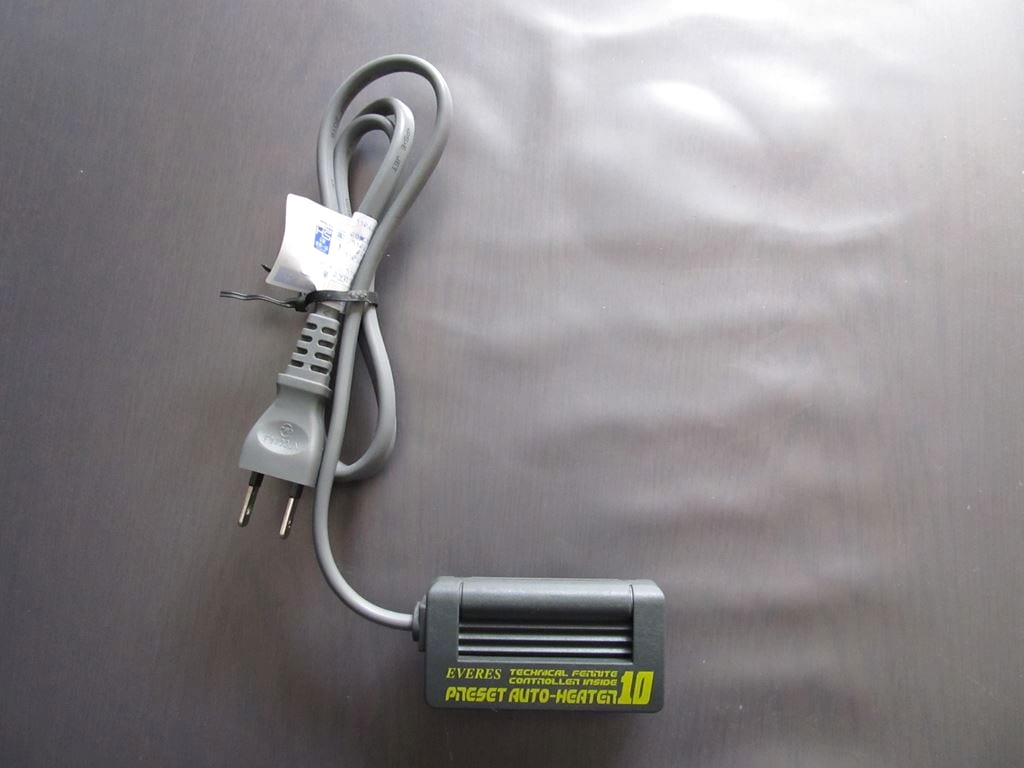
The fix: an adequately sized heater and a thermometer you actually read. If the tank is cold, raise it slowly. Merck’s guidance for thermal change during handling is a maximum around 1°F, or 1°C, per hour, and a fish already stressed by cold does not need a thermal shock added. Temperature has the full treatment, and best heaters covers sizing.
Check two: test ammonia and nitrite
If the temperature is right, this is the next test, and it does not wait for other symptoms.
Merck’s aquatic-systems reference lists lethargy and poor appetite as the presenting signs of ammonia exposure, with spinning, disorientation and convulsions in acute cases. That is this article’s symptom, described from the other direction. Merck also reports that a calculated free ammonia concentration of 0.05 mg/L is already enough to cause histologic damage to gill tissue, so the concentration that produces a listless fish is far below anything that produces a dead one.
Nitrite gives a related but distinct picture. It converts hemoglobin to methemoglobin, which cannot carry oxygen, and Merck describes affected fish congregating in oxygen-rich areas or piping at the surface. A fish that alternates between lying on the bottom and hanging at the filter outflow is showing you an oxygen problem, and nitrite is a common source of one.
Use a liquid reagent kit. Strips return false negatives on ammonia at the concentrations that matter here, which is the argument laid out on best test kits. Test pH at the same time, because pH decides how much of your total ammonia reading is in the toxic form.
If either reads above zero, stop diagnosing and start the water change. The protocol is on ammonia poisoning, and the underlying cause is almost always covered by the nitrogen cycle.
Check three: can the fish reach the surface?
Watch for two minutes and count the trips up.
Bettas are obligate air breathers with a labyrinth organ, and they surface at regular intervals regardless of how much oxygen is dissolved in the water. A fish on the bottom that surfaces easily every few minutes has a different problem from one that struggles up, or one that has stopped going.
If it is struggling up or drifting back down, that points at buoyancy. The laboratory review names buoyancy disorders, floating or vertical posture, among its illness indicators. Swim bladder problems in bettas commonly follow overfeeding or constipation, and they are treatable. Swim bladder disorder has the fasting protocol and the distinctions that matter.
If it is surfacing constantly and gasping, the issue is oxygen or gill function rather than buoyancy. Merck puts optimal dissolved oxygen above 5 mg/L, with stress below that and possible mortality at or below 4 mg/L, and notes that oxygen saturation in freshwater at 25°C and sea level is 8.27 mg/L. Warm water holds less. A tank running hot with no surface agitation, plus gill tissue damaged by ammonia, is a fish working hard for every breath.
If it is barely moving at all, treat it as an emergency and go back to check two.
What else puts a betta on the bottom?
Current. A filter that is too strong for the tank pushes a long-finned betta around, and the fish responds by parking on the substrate behind the hardscape where the flow is weakest. The tell is that it sits low in exactly one place, always downstream of something. Baffle the outflow or move to a sponge filter. See best filters.
Heavy finnage. Halfmoons, rosetails and heavily finned show strains carry a lot of drag. Swimming costs them more and they rest more, and some spend most of the day on or near the bottom without anything being wrong. Judge these fish on responsiveness, not activity level.
Nothing to rest on. Bettas prefer resting against something. A bare tank offers only the floor, so that is where the fish goes. Broad-leaf plants and a leaf hammock near the surface give it somewhere better, and a fish that switches to resting on a leaf mid-water was never ill, it was under-furnished. Best live plants covers species.
Age. A betta’s typical captive lifespan runs about 3 to 5 years, and the last stretch of it looks like this: less time in open water, more time resting, slower response to food, gradual colour loss. There is no fix and no emergency. Warm stable water, easy access to the surface, and soft food. Lifespan covers what to expect.
Recent medication. Several common treatments reduce dissolved oxygen or stress the fish directly, and lethargy during a treatment course is often the drug rather than the disease. Increase aeration and finish the course.
A recent move. A fish moved, bagged, or acclimated in the last 48 hours may sit on the bottom while it recovers. Dim the lights and leave it alone. Acclimation covers doing this well.
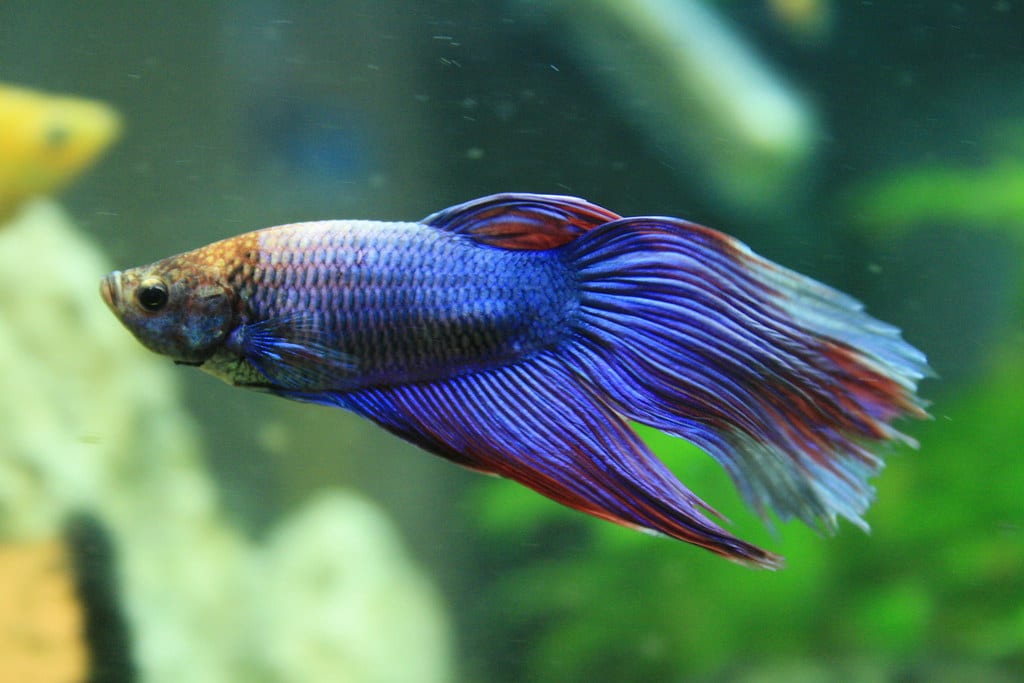
The ten-minute triage
In order, and stop when you find something:
- Is it dark, or the room dim? If yes, and the fish rouses when you approach, it is asleep. Leave it.
- Read the thermometer. Below 76°F, that is your answer. Raise it slowly, around 1°F per hour.
- Test ammonia, nitrite and pH with a liquid kit. Anything above zero on ammonia or nitrite, start a 50 percent water change now.
- Watch it surface for two minutes. Struggling or drifting means buoyancy. Constant gasping means oxygen or gills.
- Look at the fins. Clamped means stressed, and stress means one of the causes above rather than a diagnosis of its own.
- Look at where in the tank it is sitting. Behind hardscape and out of the flow means current. Same corner permanently in a shared tank means it is being pushed there.
- Offer food. A fish that eats readily has a narrower list of possible problems than one that will not.
When does this become urgent?
Same day, not tomorrow, if any of these are present alongside the bottom-sitting:
- On its side, or unable to stay upright
- Gills held open, or visibly red and inflamed
- Not surfacing for air at all
- Spinning or disoriented movement, which Merck flags as the acute presentation of ammonia toxicity and pairs with the instruction to test ammonia and pH whenever neurologic signs appear
- Abdominal swelling with raised scales, which is dropsy and carries a poor prognosis
- White cottony growth, gray patches, or eroding fin margins
For those, water quality is still the first test. It is either the cause or it is the thing making everything else worse, and the fish is not going to recover in bad water regardless of what else is wrong.