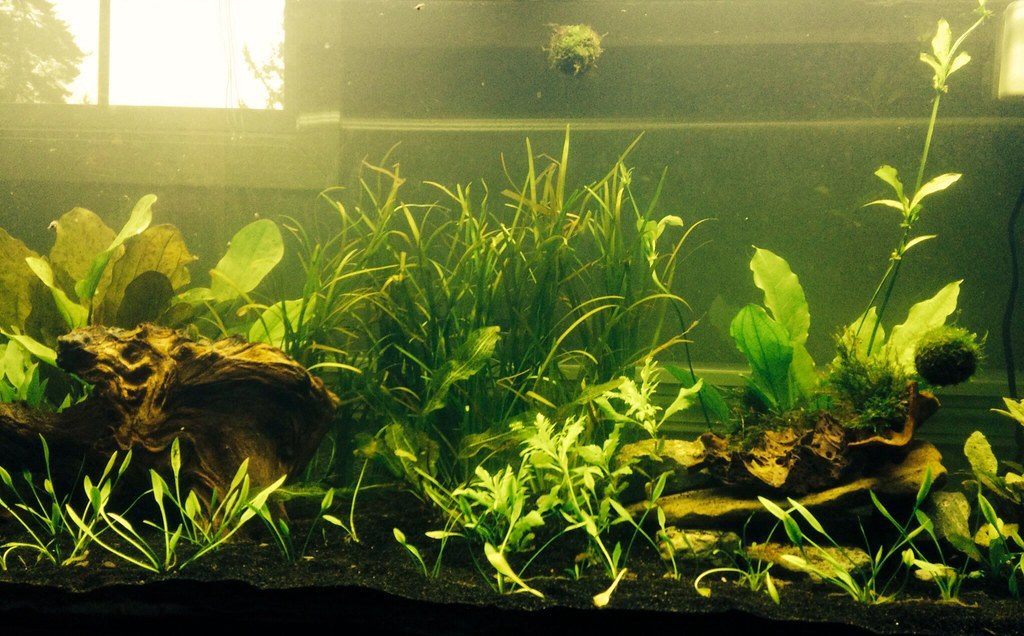
Cloudy water in a betta tank is almost always one of four things: substrate dust in the first day, a white bacterial bloom in the first month, a green algae bloom driven by light, or brown tannins from wood and leaves, which are not cloudiness at all. Three of the four fix themselves. Test the water before you change any of it.
This page has affiliate links. As an Amazon Associate we earn from qualifying purchases. See our affiliate disclosure.
What colour is it, and when did it start?
Those two questions separate the four causes almost completely, so answer them before doing anything.
| What you see | When it started | Cause | What to do |
|---|---|---|---|
| Fine grey haze, like dust in a sunbeam | Within minutes of filling | Substrate dust | Nothing. Hours. |
| White or grey, like a splash of milk | Days 3 to 30 of a new tank, or days after overfeeding | Bacterial bloom | Nothing, mostly. Feed less. |
| Green, from a faint tint to pea soup | Weeks in, worsens over days | Free-floating algae | Cut the light. Blackout. |
| Brown or amber, but clear | After adding wood or leaves | Tannins | Nothing. It is not cloudiness. |
| Sparkling and fizzy, clearing from the bottom | An hour after a water change | Dissolved air | Nothing. Overnight. |
| White and it smells | Any time | Something died | Find it. Change water now. |
Only the last row is urgent. Everything above it is either self-correcting or a lighting decision.
The last row is also the one most likely to be missed, because a betta owner counts one fish and stops looking. A snail that died behind the driftwood, a piece of a leaf that got stuck in a decoration, or the last inch of a pellet that sank under the substrate will all foul a 5-gallon fast, and a 5-gallon has no volume to absorb it.
Substrate dust: the cloud that clears itself
If the water went cloudy the moment you filled the tank, it is the substrate, and it will be clear by tomorrow morning.
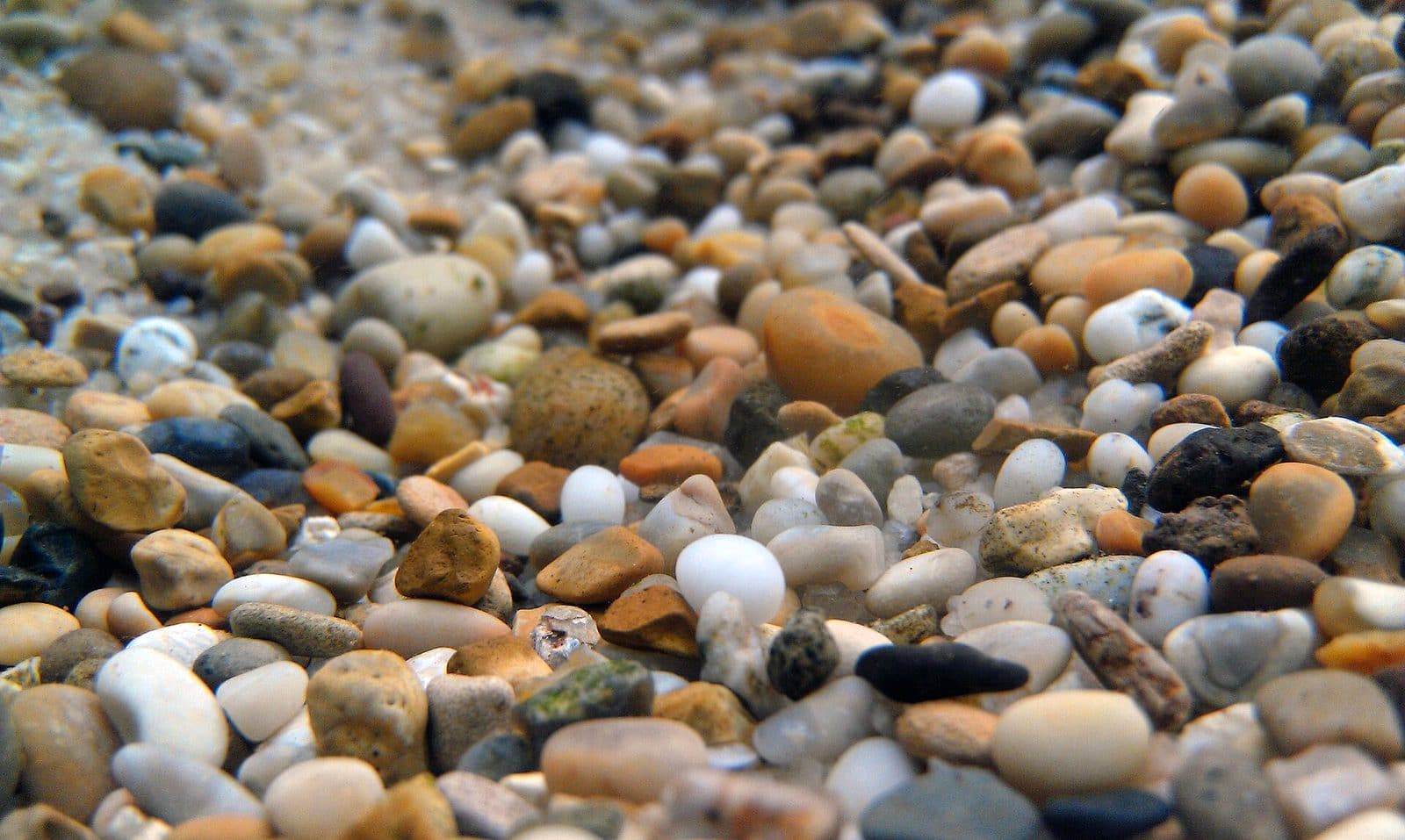
Gravel and sand arrive with fine mineral dust on them from bagging and shipping. Fill the tank and that dust goes into suspension, giving a fine, even, slightly grey haze that looks like the water itself is dirty. It is not dissolved in anything. It is a physical particle load, and the filter will pull it out in a few hours to a day.
Two things speed it up and one thing makes it worse:
- Rinse the substrate before it goes in. In a bucket, with a hose, until the runoff is close to clear. Ten minutes of tedium avoids the whole thing. See best substrate for which materials shed the most.
- Pour water onto a plate. Set a saucer or a plastic bag on the substrate and fill onto that, so the stream never hits the gravel directly.
- Do not stir it to check. Every time you put a hand in, the whole load goes back up.
Aquasoil is the exception worth naming. Fired clay soils release a much finer haze that can take several days rather than several hours, and can come back every time you disturb the bed. That is normal for the product and not a fault.
What is actually in the water during a bacterial bloom?
Bacteria, at first. Then, within about a week, something more interesting.
The sequence is worth understanding because it explains why the usual responses do not work. Aquarium Science lays it out as a chain: food and faeces release dissolved organic compounds into the water, those compounds feed heterotrophic bacteria in the water column, and those bacteria reach counts in the hundreds of millions, at which point they cloud the water on their own. Heterotrophic simply means the bacteria eat what we eat, meaning proteins, fats and carbohydrates. Then a population of much larger single-celled organisms moves in to graze on the bacteria, and those keep the water cloudy after the bacteria themselves have crashed.
The mechanism is not specific to aquariums, which is a useful sanity check on it. Drinking-water researchers measure exactly the same relationship: in a 2015 PLOS ONE study, as assimilable organic carbon fell from 291 to 109 micrograms per litre over 72 hours, bacterial cell counts rose from 1.2 to 1.8 times ten to the fifth cells per millilitre. Available carbon goes down, bacteria go up. That is the same trade happening in your tank, in a much dirtier and much warmer system.
Three consequences follow, and each one contradicts something the hobby tells you to do.
A bloom is a symptom of surface area, not of dirt. Those bacteria are in the water column because there is not enough colonised surface in the filter to hold them. A mature filter media full of brown biological gunk supports the same population in a place you cannot see, competing for the same dissolved carbon. Aquarium Science compresses the entire list of bloom causes into one sentence: there is not enough brown gunk in the filter. That is why blooms are a new-tank phenomenon, and why they end.
Cloudy is not the same as toxic. These are mostly not pathogens. A bloom that lasts a week in a cycling tank is a nuisance. A bloom that runs for a month is a signal that something is continuously feeding it, and prolonged blooms do stress fish.
Overfeeding is the number-one trigger in an established tank. If a tank that has been clear for a year goes milky, the question is what changed on the input side. A holiday feeder, a well-meaning house sitter, or a switch to a larger pellet all do it. The feeding page has the actual portions.
Why the reflex water change is usually the wrong move
Because it treats the water, and the bloom is not really in the water. It is in the balance between how much organic carbon enters the tank and how much colonised surface exists to process it, and a bucket of fresh water changes neither.
Aquarium Science is blunt about the cycling case: the bacterial cloud is common while cycling a new aquarium, many people panic and start changing their water, and changing the water simply prolongs the agony, because it removes the ammonia the filter needs to build its colony. Leave the tank alone and the population transfers from the water column to the filter media, and the water clears.
That is the correct diagnosis. Here is where this site parts company with the same source, and the disagreement matters enough to state directly. Aquarium Science recommends keeping ammonia during a fish-in cycle below 3 to 4 ppm but not below 2 ppm. That number is far outside what the veterinary literature on this species will support. The 2022 Comparative Medicine husbandry review for Betta splendens states that ammonia has detrimental effects on health at levels above 0.25 ppm, and the nitrogen cycle page here has held to that for the same reason. Two ppm of ammonia in a tank with a fish in it is not a cycling strategy. It is a slow poisoning that happens to end with a cycled filter.
So the rule that survives both positions:
Change water because the test tells you to, not because the water looks wrong.
If ammonia or nitrite is reading above zero with a fish in the tank, change water today and keep changing it, and use a conditioner that binds ammonia between changes. If both read zero and the tank is merely cloudy, a large water change buys you a few clear hours and then the cloud returns, because you did not touch the cause.
Check the API Freshwater Master Test Kit on Amazon Affiliate link. See our disclosure.
Check Seachem Prime on Amazon Affiliate link. See our disclosure.
What definitely makes a bloom worse
Four actions, all of them things people do specifically because the water looks dirty.
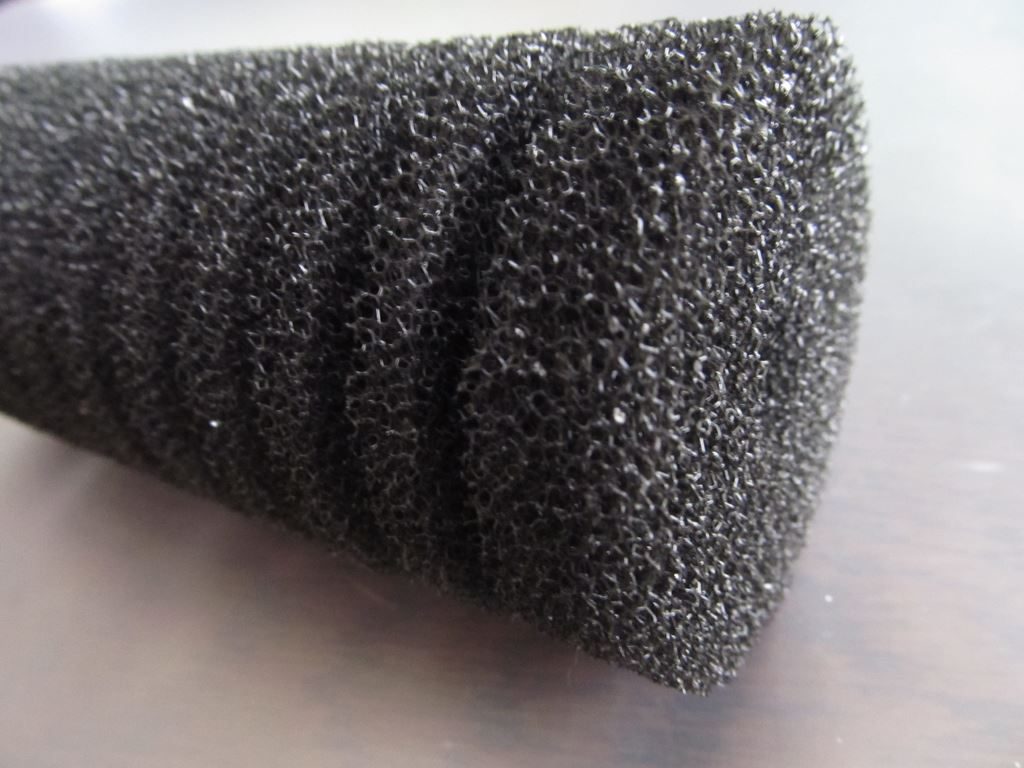
- Cleaning or replacing the filter media. This is the worst of them, and cartridge-based filters are designed to encourage it. The colonised surface you just rinsed away under a tap was the thing that was going to end the bloom. When media genuinely needs cleaning because flow has dropped, swish it in a bucket of old tank water and put it straight back.
- Replacing the whole filter. A new filter is an uncycled filter, whatever the box says about the tank being established. The bacteria live on the media, not in the glass box.
- Deep-vacuuming the substrate mid-bloom. It puts detritus into suspension and strips another reservoir of biology at the moment you need it most.
- Dosing more bottled bacteria on top of a bloom. Some of those products are heterotrophic organisms in a bottle, which is to say more of what is already clouding your water.
Aeration is the one intervention that is always safe and usually helpful. Bacteria consume oxygen in proportion to how many of them there are, and a heavily blooming tank has a genuine oxygen demand. More surface agitation, or an air stone, costs nothing and removes a risk. Keep the flow gentle, because Seriously Fish is clear that this species wants calm water, and the best filters page covers how to get aeration without a current.
Check the NEWKOSEA double sponge filter on Amazon Affiliate link. See our disclosure.
If the tank is genuinely uncycled and there is a fish in it, a live nitrifying culture with independent data behind it will shorten the window. Which products actually contain the right organisms, and which are marketing, is covered on the nitrogen cycle page.
Check Dr. Tim’s One and Only on Amazon Affiliate link. See our disclosure.
Green water is a different animal entirely
Green is algae, not bacteria, and nothing in the section above applies to it.
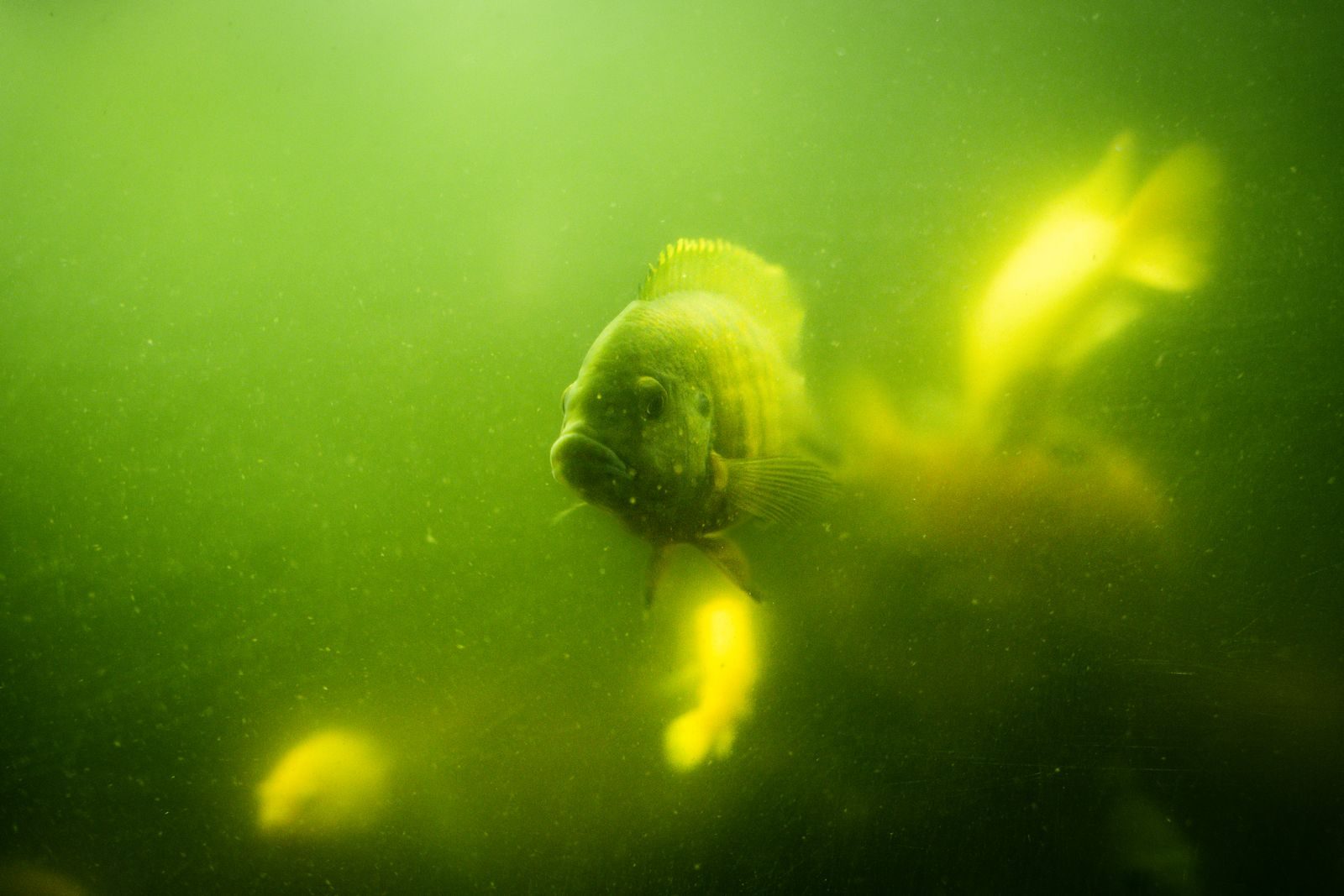
Free-floating single-celled algae bloom on light and nutrients, and they multiply until they run out of one or the other. A tank can go from faintly tinted to genuinely opaque in three or four days. Unlike a bacterial bloom, this one does not end by itself, because the input driving it is the light fixture and the light fixture is on a timer you set.
The distinguishing test is trivial: fill a white cup from the tank and look down into it against daylight. A bacterial bloom is grey or white. Green water is green.
Three causes, and they usually arrive together:
- Too many hours of light. Eight to ten is the working range, with the full argument on the lighting page.
- Direct sun on the tank. Any tank on a windowsill will do this eventually, and it swings temperature at the same time.
- Nitrate with nothing consuming it. Under-planted tank, over-fed fish, or both. Check nitrate against the water parameters table.
The cure that works is a blackout: total darkness for several consecutive days, following the Aquasabi protocol that is set out step by step in the lighting article. Keep the tank aerated during it, because the dying algae consume oxygen as they break down, and do a large water change immediately afterwards.
Then cut the photoperiod to about six hours and add floating plants, or you will be doing this again in a month.
Brown water is not cloudy water
It looks like a problem and it is a decision.
Driftwood, cholla, catappa leaves and peat all leach tannins, which stain the water amber to deep tea-brown while leaving it perfectly transparent. Hold a sheet of white paper behind the tank. If you can read print through the water and the colour is even, that is tannin, not turbidity.
Tannins are mildly acidic, and this is closer to the water a wild betta actually lives in than tap water is. The Indian almond leaves page covers what they do and do not do, and water chemistry covers the effect on pH. Nothing here needs fixing unless you dislike the look, in which case activated carbon in the filter pulls the colour out within a few days and has to be replaced when it saturates.
Worth separating from a genuine warning sign: brown water that appeared without any wood or leaves going in, and that smells, is not tannin. Go back to the last row of the table.
When cloudy water is an emergency
One case, and it is easy to identify: the water is white or grey, it appeared quickly, and it smells.
That combination means a large organic input is decomposing in the tank. Something died, something was dumped in, or a large quantity of food went in and never came out. The bacteria feeding on it are producing waste faster than any filter can process, and in a 5-gallon a betta has nowhere to go.
The response is the opposite of everything above:
- Find the source and remove it. Move decorations, check under and behind everything, look under the substrate at the front corners.
- Large water changes, repeated. Aquarium Science recommends several 90 to 100 percent changes for a food-dump scenario, on the reasoning that the dissolved organic load has to leave the tank rather than be diluted slowly. Match temperature and dechlorinate.
- Test ammonia immediately and again in twelve hours.
- Dose an ammonia-binding conditioner at full dose with each change.
- Do not touch the filter media, even now.
This is the only cloudy-water scenario where speed matters. Every other one on this page rewards leaving the tank alone.
What not to buy
Three products sell hard against this problem and are worth a paragraph each because they cost money and buy very little.
Chemical clarifiers and flocculants work by binding fine particles into clumps large enough for a filter to catch. They do clear the water, and on a bacterial bloom they clear a symptom while the cause continues. They also clog filter media, which is the exact tissue you need functioning.
UV sterilisers genuinely work, often overnight, and Aquarium Science says so plainly while still not recommending them for this: the underlying problem remains, so it is a bandage. A UV unit is a reasonable long-term addition to a larger system. It is an expensive way to hide a new-tank bloom in a 5-gallon.
Adsorbent resins marketed for water polishing were tested against cloudy water by that same source and failed. Mechanical polishing floss does work, and it needs replacing every few days, which is a real chore for a cosmetic gain.
The thing that is worth buying, if you do not already have one, is a gravel vacuum, because a routine partial water change that lifts detritus out of the substrate is the single best defence against every version of this except green water.
Check the Aqueon mini siphon gravel cleaner on Amazon Affiliate link. See our disclosure.
The cloudiness that appears an hour after a water change
Worth its own note because it frightens people who just did everything right.
Cloudiness that shows up within an hour of a water change and is gone by morning is dissolved air, not biology. Tap water sits in the mains under pressure, which forces air into solution. Release that pressure into a tank at room temperature and the air comes back out as microscopic bubbles, which scatter light and read as a white haze. Aquarium Science describes exactly this, notes it dissipates overnight, and calls it harmless and confusing, which is fair on both counts.
The tell is that it sparkles rather than dulls, and that it clears from the bottom of the tank upward as the bubbles rise.
What to do, in order
- Look at the colour, against a white background, in a cup rather than through the glass.
- Smell it. If it smells, go to the emergency section.
- Test ammonia, nitrite and nitrate. Change water if the test says so, not if the water says so.
- Count back over the last week. New tank, new substrate, new fish, extra feeding, filter cleaned, holiday, sunny weather. One of those is nearly always the answer.
- Then do nothing for a week, unless step 2 or step 3 said otherwise.
- Fix the input. Feed less, cut the photoperiod, stop cleaning the filter, add plants.
The reason patience is the main instruction here is that all four of the common causes end by themselves once the thing feeding them stops. The tank that stays cloudy for months is nearly always a tank being actively managed into staying cloudy, one well-intentioned filter cleaning at a time.
Related on this site
- The Nitrogen Cycle: Why Uncycled Tanks Kill Bettas
- How to Cycle a Betta Tank: Fishless, Fish-In, 6-Week Timeline
- Betta Fish Water Parameters: The Complete Reference Table
- Betta Water Chemistry: pH, Hardness, Ammonia Basics
- Betta Fish Light Schedule: Hours, Timers and Real Darkness
- Indian Almond Leaves for Betta Fish: What They Actually Do
- Best Filters for Betta Tanks in 2026
- Best Water Test Kits for Betta Tanks: What to Buy and Skip