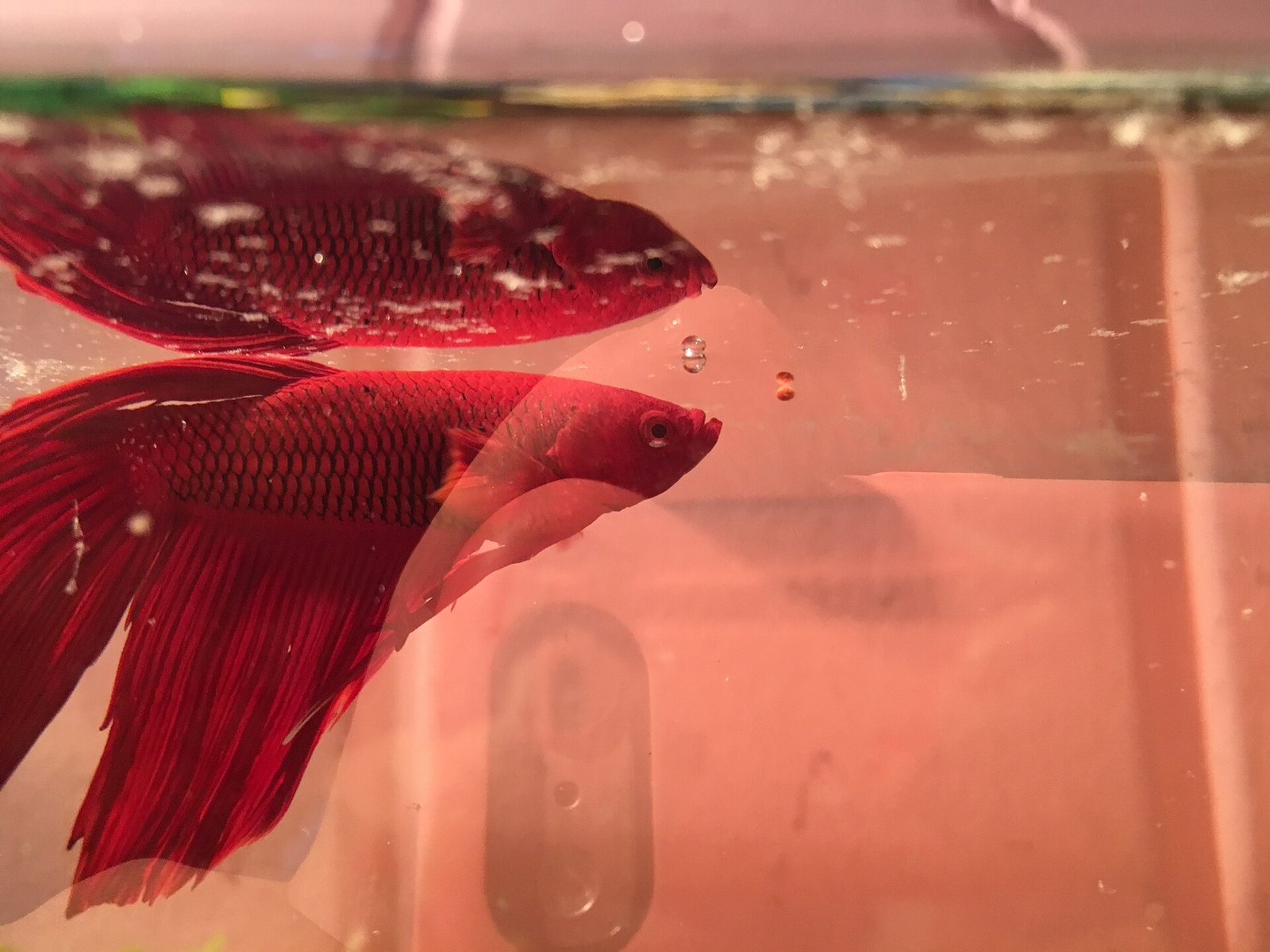
Bettas learn. Laboratory work has trained them to swim through a ring on cue, to cross a tank to avoid a current, and to associate a signal with what follows it. Individuals differ from each other in boldness and aggression in ways that hold up over repeated testing, which is what behavioural science means by personality. Owner recognition is the popular claim, and it is the one with no study behind it.
If you want the catalogue of what each behaviour looks like and which ones mean trouble, betta behavior is that page. This one is about the mind doing the behaving.
This page has affiliate links. As an Amazon Associate we earn from qualifying purchases. See our affiliate disclosure.
What is actually established, and what is hobby talk
Here is the honest ledger. Nothing on this page contradicts it.
| Claim | Status | Evidence |
|---|---|---|
| A betta can learn an arbitrary physical task for a reward | Demonstrated | Ring swimming, 12 of 15 females, Elcoro et al. 2008 |
| A mirror image works as a reward | Demonstrated | Thompson 1963, replicated repeatedly since |
| A betta can learn a warning signal and act before the unpleasant thing arrives | Demonstrated | Six males, bubble-curtain signal, Hurtado-Parrado et al. 2019 |
| Individual bettas differ consistently in boldness and aggression | Demonstrated | Repeatability is the standard criterion, met in this species |
| Tank size and furnishing change how a betta behaves | Demonstrated | Oldfield and Murphy 2024, Brown et al. 2024 |
| A betta learns the routine and anticipates feeding | Very likely, untested here | Associative learning in this species is established; the specific case is not published |
| A betta recognises its owner’s face | Plausible, never tested in this species | Archerfish did it. No betta study exists |
| A betta loves you | Not a scientific claim | No measurement corresponds to it |
| A betta gets bored | Not directly measurable, but the proxy is real | Abnormal behaviour falls with enrichment |
Everything below expands one of those rows.
Do betta fish recognise their owner?
Probably something like it. Nobody has tested it in this species, and the honest answer has to say so.
The behaviour keepers describe is consistent and easy to check. The fish comes to the front glass when a particular person enters the room, ignores other people, follows a hand along the tank, and does none of this for the first fortnight after purchase. That much is real, and you can confirm it in your own tank in a week.
What is genuinely open is the mechanism. There are at least three, and they predict identical behaviour:
- Learning the pattern. Food arrives after the room light changes and a large shape approaches. The fish learns the sequence. This requires no recognition of anyone.
- Discriminating people by gross cues. Height, clothing colour, gait, the time of day. Also learning, at a slightly finer grain.
- Discriminating faces. The claim people usually mean.
The third one is not absurd, because a fish has done it. Newport and colleagues trained archerfish to spit at one human face for a food reward, then asked them to pick that face out of a set of novel ones. The fish reached an average peak performance of 81 percent in the first experiment, choosing the learned face from up to 44 new ones, and 86 percent in a second experiment where brightness and colour cues were standardised away. The authors’ point was the interesting part: archerfish have no neocortex and no plausible evolutionary reason to have a dedicated human-face module, so the ability has to be learned from general visual machinery. If that machinery is general, a betta plausibly has some of it.
Plausibly. Not demonstrably. No published work has run the equivalent test on Betta splendens, so anyone telling you your betta knows your face is extrapolating across a family gap of tens of millions of years. It is a reasonable extrapolation and it is still an extrapolation.
The useful thing about this, and the reason it is not merely a curiosity: a fish that stops responding to you is telling you something. A betta that came to the glass every morning for six months and now does not has changed, and change is the single most reliable early illness signal in this species. Betta not eating is where that goes next.
Can you train a betta to do tricks?
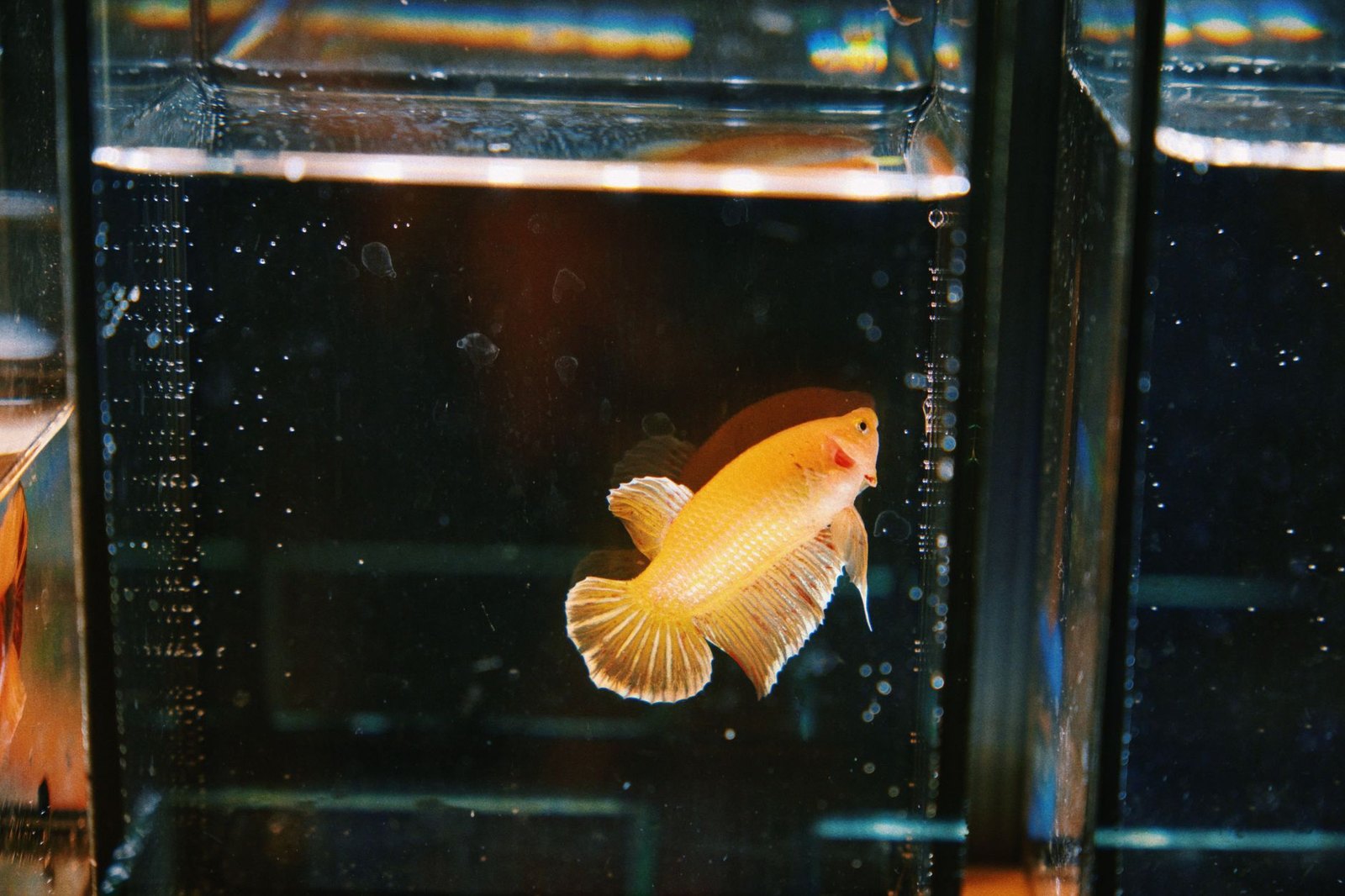
Yes, and the literature got there sixty years before the hobby did.
Thompson published the founding result in Science on 5 July 1963, under the title Visual Reinforcement in Siamese Fighting Fish: a male betta will learn to swim through a ring if doing so produces a mirror image of a rival. The fish is not working for food. It is working for something to threaten. That finding has been replicated and extended for decades, and the most useful modern version for a keeper is Elcoro, da Silva and Lattal’s 2008 study in the Journal of the Experimental Analysis of Behavior, which ran the procedure on females.
Their setup is almost domestic. A plastic ring 4.5 cm across, hung in the tank. Swimming through it produced a 10-second period during which the lights behind the mirror were extinguished, making the mirror reflective. The result: ring swimming was acquired and maintained when mirror presentations were immediate and delayed, and 12 of 15 female fish learned it. When the mirror stopped depending on the response, the responding fell away. That is the signature of genuine operant learning rather than a fish that happened to be swimming a lot.
A second study is worth knowing about because it shows the fish learning something more forward-looking. Hurtado-Parrado and colleagues built a shuttle tank in 2019 and used water flow as the thing to be avoided, with curtains of air bubbles as a warning cue in the last five seconds before a flow arrived. Six males, daily 20-minute sessions. The fish learned to cross compartments to end a flow that had started, and also to cross during the interval to prevent one that had not. Acting on a signal before the consequence arrives is not a trivial thing for an animal with a brain the size of a grain of rice.
How to train one at home
Food is the practical reinforcer, not a mirror, and the reason is in the next section.
- Use one pellet as the unit. A betta stomach is roughly the size of its eye, so a training session is three or four pellets total, taken out of the day’s ration rather than added to it. Feeding has the amounts.
- Start with a target. The cap of a pen, or a chopstick, held against the glass. When the fish approaches it, the pellet arrives. Most bettas have this inside a week.
- Move the target. Follow it left, follow it right, follow it up. You are now hand-training, which is the foundation of every other trick.
- Then the hoop. A ring of rigid airline tubing, roughly 4 to 5 cm across as in the published work, held in the water with the target on the far side. The fish goes through to reach the target. Fade the target out.
- Keep sessions to two or three minutes. Stop before the fish loses interest, not after.
- Never train a fish that is off its food, and never make the day’s whole ration contingent on performance.
The commonest failure is not the fish. It is the trainer feeding an extra ration during sessions, which produces a fat, unmotivated betta within a fortnight.
Check New Life Spectrum Betta pellets on Amazon Affiliate link. See our disclosure.
The mirror question, and why it is not exercise
Because the reward the fish is working for is a fight, and fights are expensive.
The mirror gets recommended constantly as betta enrichment, usually described as exercise. It does produce vigorous display, and it is the standard laboratory method for eliciting one: the 2022 husbandry review notes that male aggression can also be elicited by allowing the fish to see their reflection in a mirror. What the recommendation leaves out is the cost, and that cost has been measured in this species.
Ramos and colleagues put male bettas in front of either a size-matched live rival behind a transparent partition or a mirror image, then sampled their blood. The result, published in Hormones and Behavior in 2021: a pronounced increase in plasma androgens (11-ketotestosterone and testosterone) and corticosteroids (cortisol) levels in response to the aggression challenge, independent of stimulus type. A discriminant analysis across all the behavioural and endocrine measures could not reliably tell the mirror trials from the live-rival trials apart. As far as the fish’s endocrine system is concerned, a mirror is a rival. A display is a physiological event, not a lap of the pool.
There is a second reason to be cautious with rival stimuli, and it points at the rearing tank rather than at the mirror. Iwata and colleagues raised bettas in groups in an enriched environment and moved some to isolation at the juvenile or subadult stage, then ran mirror-image tests. Adults raised in a group showed lower levels of aggression than other adult fish, and the fish isolated as subadults carried the highest post-test cortisol. Aggression here is partly built by the environment rather than fixed at hatching.
Where this site lands:
A mirror is a stimulus, not an enrichment programme. Fifteen seconds, once every few days, is plenty. A mirror left leaning against the tank is chronic stress with a reflective surface.
The same logic applies to the reflective back wall that makes a betta flare at itself all evening. Dark paper on the outside of three panes kills it. Betta behavior covers the flaring side of this in full.
What enrichment actually changes
Swimming, foraging, resting behaviour and the abnormal stuff. Two 2024 studies moved this from hobby opinion to measured result.
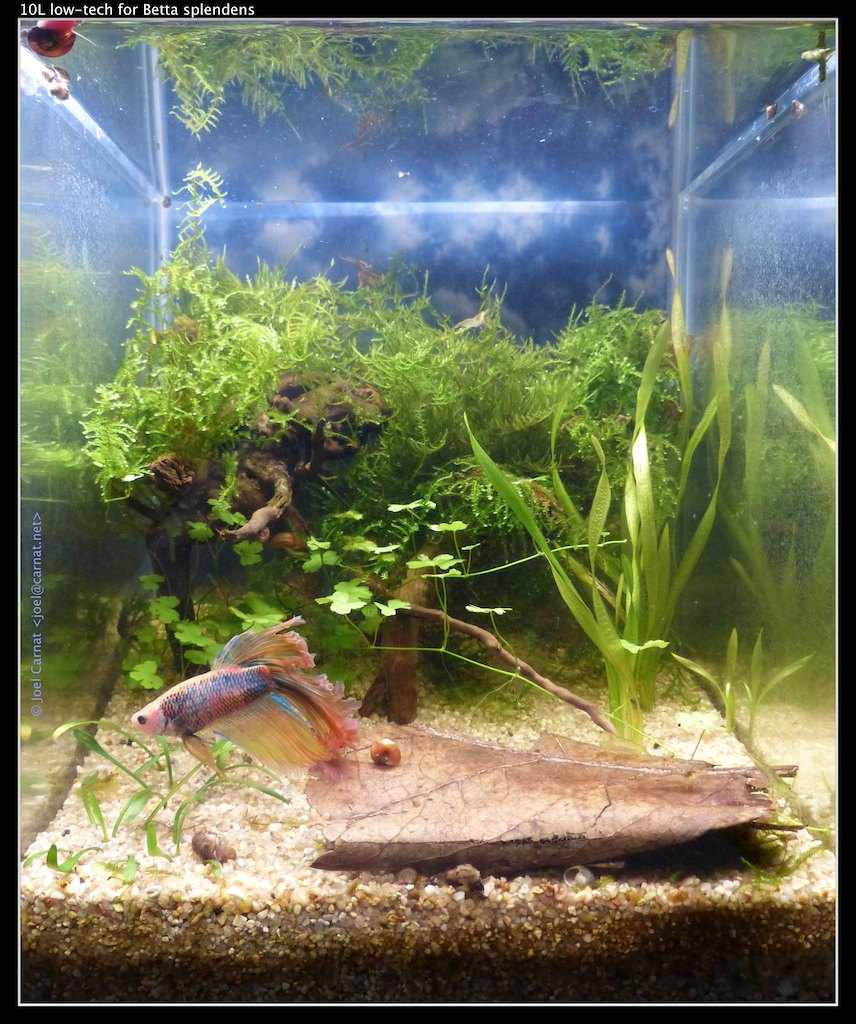
Oldfield and Murphy tested eight male bettas individually in a 0.5-litre bowl and in 10, 38 and 208-litre aquaria, each in a bare version and an enriched version with gravel, live plants and a large rock. Ten minutes of observation per treatment, every fish seeing every treatment. The headline: fish spent significantly less time swimming in 0.5-L bowls than they did in the three larger aquaria, and enriched containers elicited more swimming bouts than bare ones. Their conclusion is a floor, not a target: male bettas require physically enriched aquaria of at least 10 litres for full expression of swimming behaviour.
The Macquarie group ran a complementary design the same year, 13 males across housing from 1.5-litre jars to 19.3-litre aquaria. Fish in the larger tanks swam 92 seconds more per observation period and foraged more, and when furnishings were available they spent close to half their resting time using them. Their recommendation of a 5.6-litre minimum is aimed at retail display cups, and it is worth reading as a floor for the worst case rather than advice for a home tank.
What to build, in order of what the evidence supports:
- Floor area first. More footprint produces more swimming. Best 5-gallon tanks is the entry point, though a long 10-gallon is better and costs little more.
- Plant mass. Live plants beat plastic for the resting-surface function and for water quality both. Best plants covers the low-light five.
- Resting surfaces at several depths. Broad leaves near the surface, a smooth cave low down. The laboratory colony in the 2022 husbandry review noted fish lying on this plant like a hammock, which is exactly the behaviour to design for.
- Something to work for. Scatter-feed instead of dropping every pellet in the same corner. Foraging goes up in complex tanks because there is somewhere to forage.
- Change something occasionally. Move a piece of wood, add a leaf, rearrange one plant. The evidence for novelty in bettas specifically is thin, and the cost of doing it is zero.
Why individual bettas are so different from each other
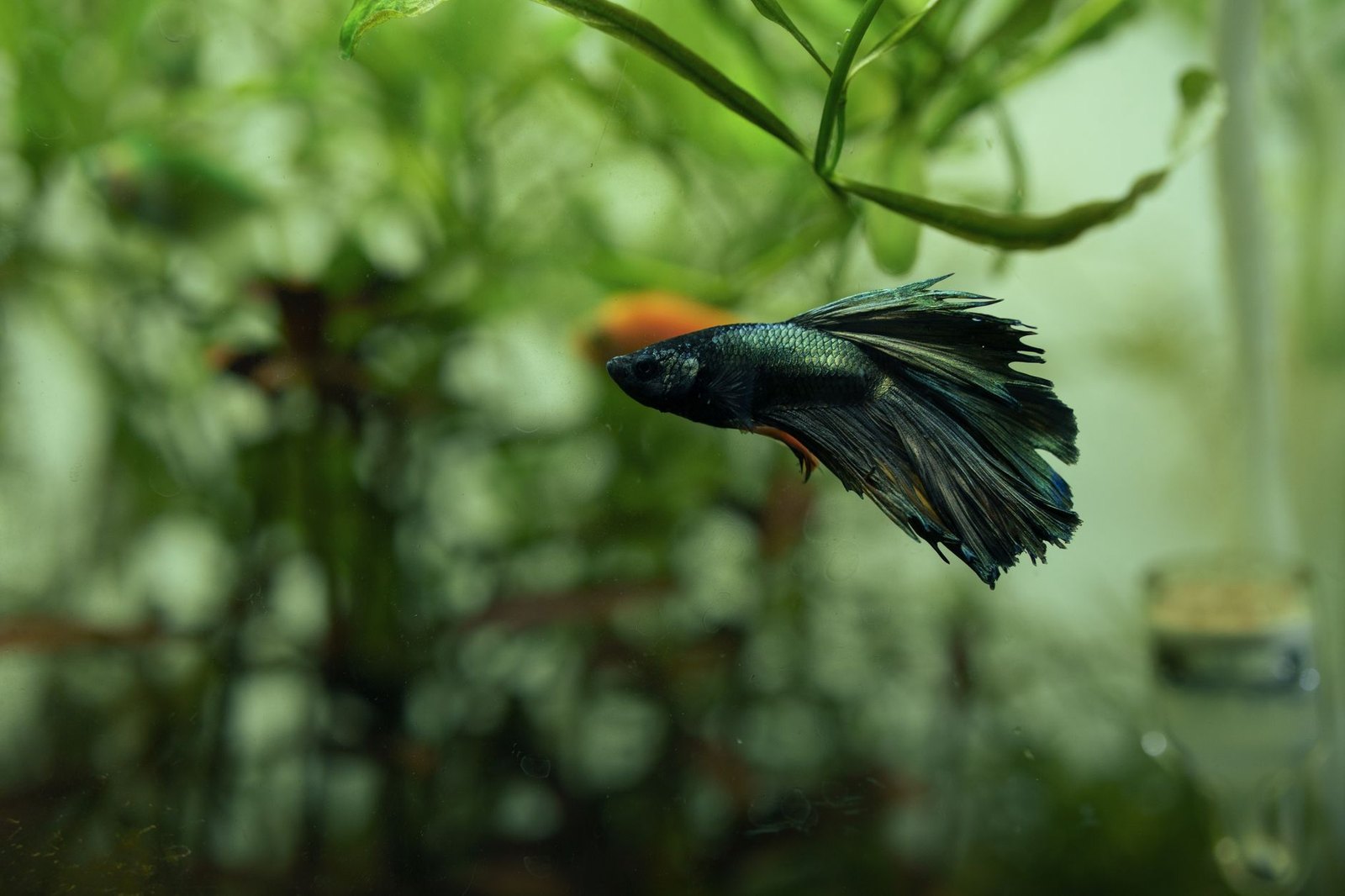
Because the differences are stable, and stable individual differences are what behavioural biology means by personality.
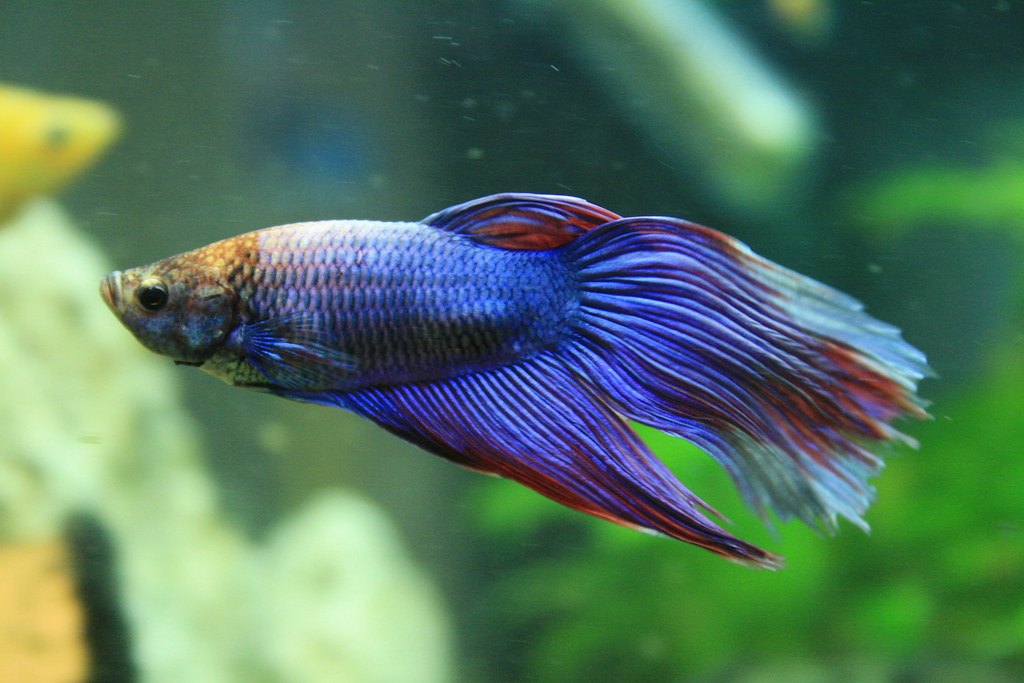
The word gets used loosely in the hobby and precisely in the literature, and the precise version is more interesting. A trait counts as personality when it varies between individuals and stays consistent within an individual across time and context. Aggression in male Betta splendens meets that bar: it varies enormously between fish and it repeats when you retest the same fish. Boldness, measured as willingness to explore a novel space rather than freeze in it, behaves the same way, and in this species boldness and aggression tend to travel together along with larger body size.
For a keeper, three practical consequences:
Your fish is not the average fish. Care advice describes a species. A given male may be a fish that flares at a passing shadow or a fish that ignores a mirror entirely, and both are normal. The tank mate rules on tank mates are written for the aggressive end of the distribution because that is the end that kills shrimp.
Temperament does not reliably follow colour or fin type. Plakats have a reputation for being sharper, which fits their breeding history, and it is a tendency rather than a rule. Buying a veiltail as an insurance policy against aggression is a mistake people make often.
A change in temperament is data. A bold fish that turns retiring, or a placid fish that starts glass surfing, has changed against its own baseline, and that is worth more than any comparison against a typical betta. Stress stripes and betta laying at the bottom cover the two most common versions.
What this does not mean
Three limits worth stating plainly, because the alternative is a page that flatters the reader and misleads them.
Learning is not affection. A fish that comes to the glass has learned that the glass is where food happens. That is a real cognitive achievement and it says nothing about how the fish feels about you. Anyone claiming otherwise is describing their own experience, which is fine as long as it is not dressed as a finding.
Intelligence is not a licence to under-house. The enrichment research runs the other way. A fish that learns, explores and forages needs somewhere to do those things, and the 2024 work is unambiguous that a small bare container suppresses all three. The betta vase myth is the version of this argument that needed making most.
Nobody has measured betta emotion. Fish welfare science has moved a long way on nociception and stress physiology, and none of that gets you to what a betta experiences. Enrich the tank because the behavioural evidence supports it, not because of a story about what the fish wants.
The practical summary of all of it fits on one line: give the fish room, structure and a routine, watch what your individual does with them, and treat any change against that individual’s own baseline as the signal it is.
Related on this site
- Betta Fish Behavior: What Normal Looks Like and What Is a Warning Sign
- Do Betta Fish Sleep?
- Betta Fish Stress Stripes: What They Mean and How to Make Them Go Away
- Bubble Nests: What They Mean
- Betta Tank Mates: What Actually Works and What Doesn’t
- Betta Feeding: What to Feed, How Often, How Much
- The Betta Vase Myth: Why Peace-Lily Setups Are Animal Cruelty
- Best Live Plants for Betta Tanks in 2026
- Betta Tail Biting: Why It Happens and How to Stop It